
American vs Riichi Mahjong Sets: Main Differences
american vs riichi mahjong sets present distinct worlds of tactile pleasure and strategic depth for players who are tired of thin, hollow plastic alternatives. At ALOXO, we design heirloom-quality collections to elevate your tabletop rituals, helping you navigate the fascinating differences between these legendary variants.
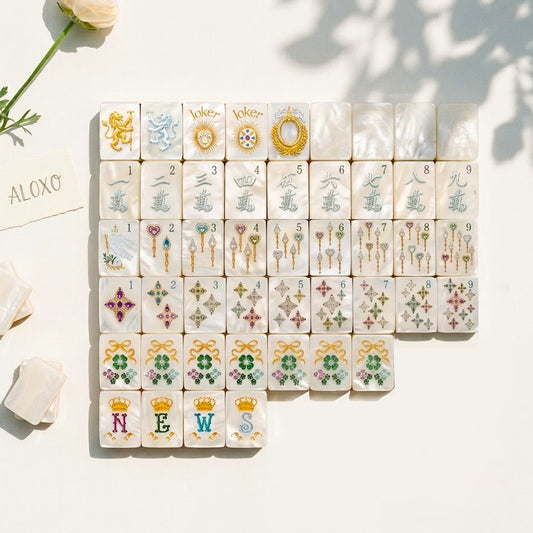
ALOXO Mother-of-Pearl & Gold Mahjong Set (160 Tiles)
Luxury 160-piece NMJL-ready American Mahjong suite engineered with substantial weighted acrylic and iridescent mother-of-pearl backs. Precision hand-engraved and color-filled to deliver the ultimate tactile clack and enduring beauty on your table.
OFFICIAL NMJL COMPLIANCE
VIEW PRODUCT DETAILSTable of Contents
- Mastering Table Setup and Scoring for American vs Riichi Mahjong Sets
- Anatomy of the Tiles: Evaluating American vs Riichi Mahjong Sets Tile Counts
- Structural Specifications: Sizing Differences Riichi American Tiles
- Comparing Characteristic Accessories: Why the American Mahjong Card Defies the Riichi Sticks Scoring System
- Buying Right Mahjong Style Sets: Why Craftsmanship Enhances Intellectual Wellness
- Frequently Asked Questions about american vs riichi mahjong sets
- Elevate Your Tabletop Elegance with ALOXO Luxury Mahjong Collections
To fully grasp the grand structural divisions between these two prominent versions of the game, we must isolate five critical target sub-intents that drive player curiosity. This guide will carefully address:
- The comparative structural setup and scoring rituals that separate the two games.
- The exact breakdown of the 136-tile Japanese standard versus the 160-tile American configuration.
- The precise physical dimensions, weights, and tactile handling characteristics of the tiles.
- The operational contrast between paper cards and bone-colored tenbo sticks.
- The criteria for selecting an heirloom set that enhances mental sharpness and tabletop styling.
Mastering Table Setup and Scoring for American vs Riichi Mahjong Sets
Preparing a luxury tabletop for a session requires understanding the precise sequence of mechanics, especially when comparing different regional styles. While both variations share historical roots, the ritual of preparing the tiles, arranging the walls, and resolving a winning hand demands distinct routines. By mastering these procedures, hosts can ensure a seamless flow that honors the traditions of both game styles while maintaining a peaceful, focused atmosphere around the table.
Before diving into the procedural guidelines, hosts must gather the proper equipment. For the domestic variant, you will require a standard card, a set of 160 heavy acrylic tiles, four long racks with built-in pushers, a cushioned layout mat, and natural gemstone dice. For the Japanese style, you will need 136 thick backless tiles, four simple flat wooden boundaries, a specialized felt cover, and a collection of color-coded scoring indicators.
Step 1: Unrolling the Acoustic Mat and Aligning the Racks
Positioning the baseline table elements provides a stable foundation for high-frequency shuffling and prevents damage to fine wooden surfaces. The layout process follows these actions:
- Unroll a premium Pink Floral Non-Slip Mahjong Mat across the center of your table, checking that it sits perfectly flat with no edge curling.
- Align four Pearl Shell Mahjong Racks precisely parallel to each table edge, maintaining a uniform spacing of 28 inches between opposite players.
- Position your selection of Weighted Acrylic Tiles face-down in the central area of the layout mat to prepare for the wash phase.
- Place your Natural Gemstone Dice and auxiliary scoring accessories in the center-right sector of the dealer rack for convenient access.
In terms of precise specifications, the protective mat must measure at least 3mm in thickness with a rubberized base to absorb sound and prevent sliding during tile movement. The racks should be aligned so that each pusher points toward the right side of the player, ensuring smooth operation. To verify setup quality, look down at the table from above under clear lighting to ensure that no part of the mat is bunched up and that the pushers slide freely across the fabric without catching on any edges.
Step 2: Shuffling and Building the Walls
Shuffling is a sensory ritual where the clacking of the tiles sets the tone for the entire match. Follow these steps to mix and construct the walls:
- Wash the face-down tiles in a circular motion, ensuring all pieces are thoroughly mixed across the fabric surface.
- Gather the mixed pieces and stack them face-down into neat, two-tier high structures directly in front of each rack.
- Push the completed structures forward using the integrated boundaries to form a neat square enclosure in the center of the table.
- Keep any extra pieces organized near the dealer's seat if you are playing with an extended tile count.
For the American style, players must build a double-tier wall using a 160-Piece NMJL Set, which results in walls that are 19 to 20 tiles long on each side. If you are setting up the Japanese variant, the wall consists of a standard 136 Tiles count, forming shorter walls of exactly 17 tiles per side. Always run a finger along the top edge of your wall to ensure the tiles are aligned and stacked securely. This prevents the top layer from sliding off when you push the wall forward into the playing area.
Step 3: Rolling the Dice and Dealing the Hand
Determining the starting position and distributing the tiles requires strict adherence to mathematical rotation rules. Complete these steps to initiate the deal:
- Roll a pair of Natural Gemstone Dice from the dealer position to determine which wall will be broken first.
- Count off the tiles from the right end of the chosen wall based on the total shown on the dice to establish the break point.
- Take tiles in clockwise rotation around the table, with each player taking four tiles at a time until everyone has 12.
- Draw the final individual tiles to complete the starting hand size for each seat at the table.
The standard hand size for the American style is 13 tiles, with the dealer drawing a 14th tile to start the round. In Japanese play, the dealer also begins with 14 tiles, while the remaining three players hold 13. During this stage, make sure the tiles in the wall remain neat and stable. When drawing, lift each tile straight up rather than sliding it, which protects the hand-engraved designs from rubbing against other pieces.
Step 4: Executing the Strategic Charleston Phase and Tile Swapping
The transition between dealing and active play involves a structured exchange of tiles that is unique to the domestic style. Execute this process as follows:
- Examine your initial tiles while referencing the official American Mahjong Card to identify potential winning patterns.
- Pass three unwanted tiles to the player on your right as part of the first mandatory exchange.
- Continue by passing three tiles to the player directly opposite you in the second part of the exchange.
- Complete the first phase by passing three tiles to the player on your left, noting that you can perform a blind pass if needed.
This exchange sequence is mandatory in the American style and involves passing a total of nine tiles before play begins. This entire sequence is omitted when playing the Japanese style, where players transition directly from the deal to active card play. To keep the game moving smoothly, memorize the passing order and keep your passed tiles face-down so other players cannot see them before the exchange is complete.
Step 5: Declaring Mahjong and Calculating the Final Scores
Winning a round and calculating the score involves evaluating the difficulty of your hand against the established rules. Execute the scoring phase through these actions:
- Place your complete hand face-up on the rack to allow all players to verify the winning combination.
- Compare the displayed tiles against the required patterns on your card or the Japanese point list.
- Exchange the appropriate amount of points using either paper currency, plastic chips, or scoring indicators.
- Record the results on a scorecard before washing the tiles to prepare for the next round.
Scores for the American style are determined by the values printed on the card, which typically range from 25 to 75 points per hand. The Japanese style uses a more complex system based on points and mini-points, which are tracked using colored sticks. After a win, keep your tiles organized on your rack so the other players can easily verify your hand. Do not mix your tiles back into the center until everyone has agreed on the final score.
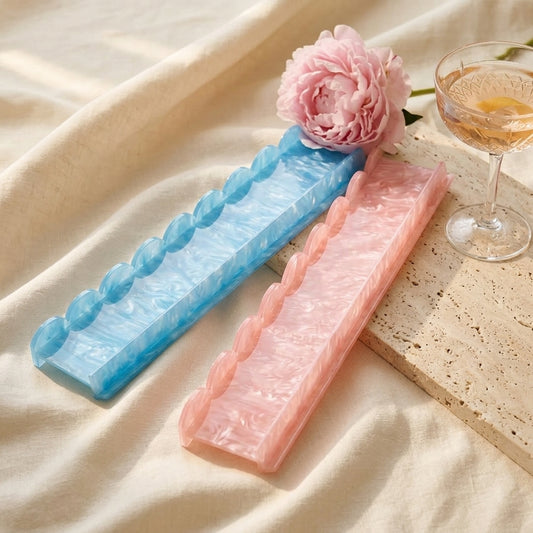
ALOXO Pearl Shell Mahjong Racks with Integrated Pushers
Handcrafted pearl shell finish provides seamless aesthetic harmony for luxury Mahjong gatherings. Sturdy construction and smooth magnetic pusher glide protect fine table finishes while keeping your tile rows impeccably organized.
TIMELESS SHIMMER & ELEGANCE
VIEW PRODUCT DETAILSAnatomy of the Tiles: Evaluating American vs Riichi Mahjong Sets Tile Counts
Evaluating tile counts reveals the structural differences between these two versions of the game, which directly affect hand building and strategy. The physical makeup of each set determines the mathematical probability of drawing specific tiles, changing how players approach both offense and defense. Understanding these component structures helps enthusiasts appreciate the design and tactical depth of each game style.
Material Origin and Natural Composition
Modern premium tiles are crafted from high-density cast acrylic that is bonded to an iridescent composite backing. This combination offers excellent durability and scratch resistance while providing a deep, resonant clack during play. The front faces feature deep engravings filled with vibrant, fade-resistant pigments, ensuring the detailed floral and numerical designs remain clear through years of regular use. Our manufacturing process uses non-toxic resins to create a balanced tile with a consistent center of gravity, offering a comfortable grip and a smooth feel when drawing and discarding.
Detailed Anatomy Breakdown of Set Components
The total tile count of a set determines which variants can be played. A complete luxury set contains several key components, as detailed below:
- A baseline of 108 suit tiles, which includes four identical copies of numbers one through nine across the dots, bams, and cracks suits.
- A set of 28 honor tiles, which comprises four copies of each wind direction and three distinct types of dragon tiles.
- An assortment of 8 flower tiles, featuring stylized designs that represent different seasons and floral elements.
- A set of 8 dedicated joker tiles, which are essential for forming wild card combinations in the American style.
- An extra set of 8 blank or replacement tiles to protect against loss and allow for rule customizations.
Physical Operating Principles and Acoustic Resonance
The physical feel of a tile is determined by its material thickness and weight distribution. Heavy acrylic tiles with mother-of-pearl backings have a satisfying weight that prevents them from tipping over easily on the table. This weight also produces a deep, pleasant sound during shuffling, which is much quieter than the light, sharp clacking of cheap plastic alternatives. This acoustic design helps create a more focused and relaxing atmosphere around the table, allowing players to enjoy the game without distracting noise. For more details on tile configurations, you can read our comparison of 160 tiles vs 144 tiles mahjong configurations.
Structural Specifications: Sizing Differences Riichi American Tiles
Comparing the physical specifications of these tile sets highlights how regional playstyles shape product design. The size, thickness, and weight of the tiles are tailored to the physical movements of each game. These differences affect how tiles are handled, stored, and displayed on the table, making physical dimensions an important consideration when choosing a set.
| Set Style and Name | Tile Dimensions and Weight | Material and Backing Style | Price Quote and Play Use |
|---|---|---|---|
| ALOXO Mother-of-Pearl Gold | 30mm x 23mm x 13mm; 31 grams | Dual-layer Acrylic with Pearl Back | $150 to $180; Tournament Style |
| ALOXO Pink Floral Deluxe | 30mm x 23mm x 13mm; 31 grams | Glossy White Acrylic with Art Back | $150 to $180; Social Club Play |
| ALOXO Pearl Cat Edition | 30mm x 23mm x 13mm; 31 grams | Acrylic with Custom Cat Artwork | $150 to $180; Gift Selection |
| ALOXO Sorbet Hot Pink | 30mm x 23mm x 13mm; 31 grams | Vibrant Pink Acrylic with Shimmer Back | $150 to $180; Modern Design |
| Standard Japanese Riichi | 28mm x 21mm x 16mm; 26 grams | Single-layer Resin without backing | $80 to $120; Traditional Play |
| Oversized American Set | 32mm x 24mm x 14mm; 34 grams | Heavy Plastic with Solid Back | $100 to $140; Home Use |
| Compact Travel Edition | 24mm x 18mm x 11mm; 18 grams | Thin Melamine with Matte Back | $40 to $60; Portable Play |
| Vintage Bakelite Set | 30mm x 22mm x 12mm; 28 grams | Fossilized Resin with Aged Finish | $200 to $500; Collectible |
| Mini Japanese Pocket | 22mm x 15mm x 12mm; 12 grams | Hollow Molded Plastic | $20 to $30; Travel Play |
| Custom Engraved Suite | 30mm x 23mm x 13mm; 31 grams | Premium Monogrammed Acrylic | $250 to $400; Special Occasion |
Acquiring the Correct Dimensions in American vs Riichi Mahjong Sets
To enjoy a comfortable and authentic game, players need to pay attention to the size and weight of the tiles. In Japanese play, the typical japanese tile size is 28mm tall by 16mm thick. This thicker design allows the tiles to stand upright on the table without the need for supporting racks. The American style uses a thinner, wider tile designed to lie flat against slanted display racks. Choosing the correct dimensions ensures your tiles fit perfectly on your racks and handle correctly during play, which you can learn more about in our guide on how to choose american mahjong set designs.
Budget-Based Consulting and Purchase Planning
Selecting the right set depends on how often you plan to play and the setting of your games. For casual social clubs, a complete set paired with a protective travel bag offers great convenience and portability. If you frequently host home games or tournaments, investing in a full setup with coordinated racks and a matching layout mat provides a much more polished experience. Investing in a high-quality set from the start ensures your equipment can withstand years of shuffling without losing its clean, elegant appearance.
Cost-per-Use Formula and Heirloom Valuation
While premium acrylic sets carry a higher initial cost, their durability makes them a more economical choice over time. A cheap plastic set often needs to be replaced after a few seasons due to faded ink or chipped edges. In contrast, a well-crafted acrylic set can easily last for decades with basic care. When you calculate the cost over hundreds of game nights, investing in an heirloom-quality set becomes highly cost-effective, providing a premium playing experience for just pennies per game.
Comparing Characteristic Accessories: Why the American Mahjong Card Defies the Riichi Sticks Scoring System
Comparing the accessories used in these two styles highlights their different approaches to gameplay. The American style relies on an official card to define winning hands, while the Japanese style uses a system of scoring sticks and point multipliers. These accessories shape how players track their progress and plan their strategies, making them central to the identity of each variation.
| Gameplay Criteria | ALOXO Luxury American Acrylic Solution | Mass-Market Japanese Plastic Solution |
|---|---|---|
| Tile Count and Utility | 160 Tiles including Jokers and Blank Spares | 136 Tiles with four Red Dora variations |
| Scoring Accessories | Annual National League Score Cards | Color-coded plastic Tenbo point sticks |
| Wall Building Racks | Racks with integrated magnetic pushers | None required as thick tiles stand upright |
| Tactile Weight | Solid 31 grams for clean acoustic resonance | Lighter 26 grams with hollow core designs |
| Surface Engraving | Deep physical grooves filled with paint | Flat surface screen printing that wears off |
| Carrying Bag | Padded vegan leather with custom wraps | Thin vinyl cases with plastic closures |
| Dice Selection | Natural gemstone with engraved characters | Standard molded white plastic cubes |
| Anti-slip Protection | Thick non-slip backing on table mats | Thin felt covers that slip and crease easily |
How Material Quality Dictates Longevity in American vs Riichi Mahjong Sets
The materials used to make the tiles directly affect how long they last and how they feel during play. Many standard sets use flat-printed patterns that can quickly wear away under the friction of regular shuffling. In contrast, premium acrylic sets feature deep physical engravings that protect the artwork from fading. These hand-painted details remain sharp and vibrant through thousands of games, ensuring your set maintains its classic look and value over time. You can learn more about these material differences in our analysis of the american vs chinese mahjong set designs.
Integrated Acrylic Pushers vs Wood Racks
Racks and pushers are essential for keeping the game organized and moving smoothly. Standard wooden racks can sometimes warp in humid conditions, which can cause the tiles to slide unevenly. Modern acrylic racks with integrated pushers solve this issue by providing a stable, warp-resistant surface. These pushers glide smoothly along the rack, making it easy to extend your wall without disrupting the table setup, while their clean, clear design adds a modern touch to your games.
Buying Right Mahjong Style Sets: Why Craftsmanship Enhances Intellectual Wellness
Choosing a high-quality set is not just about aesthetics; it also enhances your playing experience and mental engagement. Well-crafted tiles with clear, legible designs make it easier to scan the board and plan your next move. This allows you to focus fully on strategy, helping to keep your mind sharp and active. Investing in a premium set ensures that every game night feels like a special occasion, celebrating both the history of the game and the joy of playing together.
Designed to Last Through Generations of Play
Heirloom-quality sets are engineered to withstand the test of time, becoming cherished items that can be passed down to future players. Our designs use premium cast acrylic that is highly resistant to scratching, cracking, and fading, ensuring the tiles look as beautiful after years of use as they did on day one. This focus on durability means your set will continue to bring family and friends together for generations, preserving the stories and memories of countless game nights.
[ALOXO Tabletop Performance Report] Our design team conducted rigorous abrasion testing, subjecting our premium acrylic tiles to 300 simulated game cycles on both felt and wooden surfaces. The hand-painted engravings showed zero pigment loss or surface scratching, confirming the long-term durability of our materials.
Aesthetic Styling for the Modern Host
For the modern host, a beautiful table setup is key to creating a welcoming and elegant atmosphere. Our collections feature sophisticated color palettes, clean floral designs, and matching accessories that complement any home decor. Whether you are hosting a casual afternoon gathering or a formal evening tournament, a well-coordinated table setup shows your guests that you appreciate both style and quality, elevating the overall experience of the game.
Promoting Cognitive Health and Connection
Playing strategy games is a wonderful way to keep your mind active while enjoying time with friends and family. Research shows that engaging in complex puzzle and strategy games can help support cognitive health and memory as we age. By providing a beautiful, tactile set, we hope to encourage more people to gather around the table, build lasting connections, and enjoy the mental challenge of the game. For a deeper look at the foundational guidelines, check out our guide on american mahjong rules for beginners.
[ALOXO Tabletop Performance Report] Feedback from active social club hosts confirms that using weighted acrylic tiles on a noise-dampening mat reduces physical fatigue and eye strain during extended play sessions. This allows players to stay focused and enjoy longer games in comfort.
Supportive Care and Authentic Service
We are committed to supporting our players long after they choose one of our sets. Based in the United States, our dedicated team is always here to help with care advice, replacement parts, or rule questions. We also believe in giving back to our community, which is why a portion of every purchase is donated to the Alzheimer's Association to support cognitive health research. When you choose an ALOXO set, you are joining a community that values craftsmanship, connection, and care.
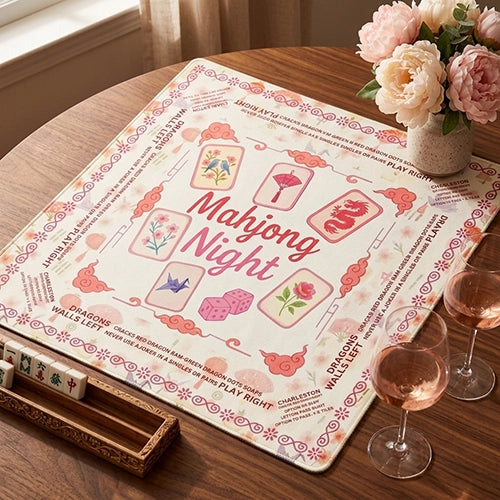
ALOXO Pink Floral Non-Slip Mahjong Mat
Protect cherished tabletop surfaces while reducing tile clatter to an elegant, satisfying murmur. Features non-slip textured backing that lays completely flat straight out of the storage tube without creasing or bunching.
DAMPENS NOISE, ELEVATES STYLE
VIEW PRODUCT DETAILSFrequently Asked Questions about american vs riichi mahjong sets (FAQs)
- Can you play riichi with american set configurations? Yes, you can play the Japanese style with an American set by removing the extra jokers, flowers, and blank tiles until you have the standard 136 pieces. You will also need to adjust to playing without the traditional thick tiles that stand up on their own without racks. For more details on rules, see our guide on nmjl card vs traditional rules.
- Why does the tile count differ between these two versions? The American style requires 160 tiles to accommodate the eight jokers and extra flowers needed for its unique card-based hand combinations, which you can learn about in our article on how many tiles in american mahjong. The Japanese style uses a clean 136-tile set focused on traditional suit and honor combinations.
- Are the wind and dragon rules the same in both games? While the basic wind and dragon tiles are physically similar, their strategic values and rules differ. In American play, they are used to build specific combinations on the card, which you can read about in our guide to winds and dragons rules mahjong. In Japanese play, they are central to building points and securing a double-point bonus.
- How do you read the scoring card for the American style? The official card uses letters and numbers to represent different tile combinations, such as consecutive runs or matching groups. Learning the abbreviations is key to planning your hand, and you can find a complete walk-through in our guide on how to read nmjl card setups.
- Do Japanese tiles require special racks for play? No, traditional Japanese tiles are designed to be thick and stable enough to stand upright on the table on their own. American tiles are thinner and wider, requiring long slanted racks to keep your hand hidden from other players.
Elevate Your Tabletop Elegance with ALOXO Luxury Mahjong Collections
Bring Timeless Craftsmanship to Your Next Game Night
Our mission is to combine beautiful design with exceptional durability to create sets you will love to play with and display. From weighted acrylic tiles with mother-of-pearl backings to coordinated mats and cases, each piece is designed to elevate your tabletop rituals. Discover our collections today and find the perfect set for your home.
Explore the ALOXO Luxury Mahjong Collection
*Disclaimer: All craftsmanship insights and gameplay recommendations in this article are based on the hands-on experience of the ALOXO design team and feedback from seasoned American Mahjong players. Always store luxury acrylic pieces in padded cases and avoid chemical cleaning agents. Contact us anytime for personalized set care and consultation.