
How to Practice Mahjong Alone: Solo Drills Guide
how to practice mahjong alone is the ultimate way to master strategies without the pressure of an active game table when struggling with cheap or hard to read tiles. By using a premium ALOXO set, players can build critical confidence and sharpen their tactical layout skills through quiet solo training sessions.
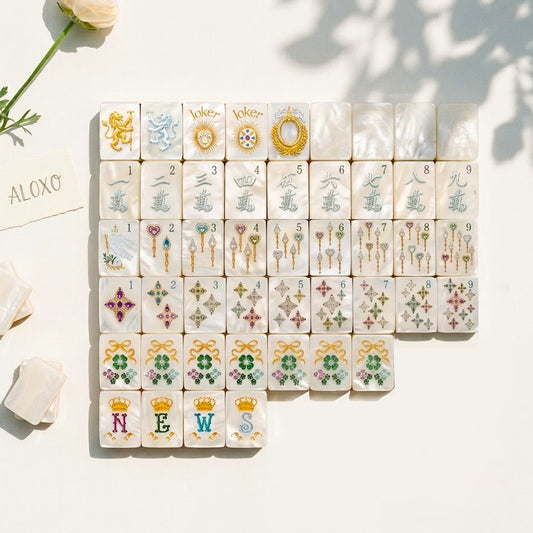
ALOXO Mother-of-Pearl & Gold Mahjong Set (160 Tiles)
Luxury 160-piece NMJL-ready American Mahjong suite engineered with substantial weighted acrylic and iridescent mother-of-pearl backs. Precision hand-engraved and color-filled to deliver the ultimate tactile clack and enduring beauty on your table.
OFFICIAL NMJL COMPLIANCE
VIEW PRODUCT DETAILSTable of Contents
- How to Practice Mahjong Alone with a Charleston Solo Simulation
- Why You Must Learn How to Practice Mahjong Alone for Rapid Game Improvement
- Tactile Precision and Dexterity Drills for Solo Training
- Optimizing Speed Sorting and Suit Classification Mechanics
- Creating a Zen Mind Practice Space with Luxury Accessories
- Frequently Asked Questions about How to Practice Mahjong Alone (FAQs)
- Elevate Your Tabletop Elegance with ALOXO Luxury Mahjong Collections
How to Practice Mahjong Alone with a Charleston Solo Simulation
The foundation of competitive readiness in American Mahjong is the tile exchange phase. Practicing this phase alone allows you to analyze decision pathways without the stress of real players waiting for your discards. By simulating four active hands simultaneously, you develop a deep understanding of card structures, tile flows, and defensive strategy shifts. This step-by-step master plan ensures you gain maximum mechanical benefit from your solo training sessions.
To begin your simulation, you must assemble all standard table elements on a flat surface. This setup requires your card, your full set, and four racks to represent all seat positions. Having these components arranged in front of you creates a realistic spatial environment that closely mimics live tournament play.
Step 1: How to Practice Mahjong Alone by Creating the Dummy Player Practice Setup
Your first step is to establish the virtual table setup. Lay out your four racks in a square shape to represent East, Right, Across, and Left players. Use your premium weighted tiles to shuffle the complete set thoroughly on your table mat. This physical preparation is crucial for developing natural finger dexterity and getting a realistic feel for the game flow.
Once the tiles are thoroughly shuffled, build four mock walls that are two levels high. East will build a wall of nineteen pairs, while the other three positions build walls of nineteen pairs as well. This replicates standard american mahjong rules for beginners to ensure complete technical accuracy. Deal a standard starting hand of thirteen tiles to the virtual Right, Across, and Left racks, while East receives fourteen tiles to initiate the virtual play sequence.
When setting up your table, ensure the room lighting allows you to clearly read the custom hand-painted floral engravings on each tile face. Inspect the physical arrangement to confirm that each rack is exactly twenty-eight inches apart. To avoid scratching your high-grade acrylic tiles during this setup, always assemble the walls on a soft neoprene surface.
- Unroll your premium noise dampening table mat over a spacious flat dining surface.
- Align four physical racks with integrated pushers to represent all four directions.
- Shuffle the full set of one hundred and sixty tiles using smooth hand circles.
- Build four individual walls that are two tiles high to prepare for dealing.
Step 2: Simulating the First Left Pass with Virtual Hand Analysis
Now you must evaluate all four virtual hands using your how to read nmjl card as a constant guide. Look at each rack individually and identify potential matching categories such as Consecutive Runs, Winds and Dragons, or 3-6-9 combinations. This visual inspection helps you quickly recognize structural patterns and decide which tiles are completely useless to each hand.
For the first left pass, choose three unwanted tiles from East and place them face down near the Left rack. Repeat this process for the remaining three virtual players by choosing three tiles to pass to their respective left partners. Once all four passes are placed on the table, slide them into the corresponding racks to complete the exchange.
Make sure to check the balance of each hand after the exchange to ensure no virtual player has an incorrect tile count. If you notice any player has more or fewer than thirteen tiles, halt the drill immediately to recount the racks. A great tip for this step is to slide the tiles gently across the mat surface to prevent loud clacking sounds.
- Select three unwanted tiles from the fourteen tiles in the East rack.
- Examine the potential card matches for the virtual player on your left side.
- Pass the chosen three tiles face down toward the left rack area.
- Receive the incoming pass from the virtual player on your right side.
Step 3: Mastering Hands Offline and Understanding How to Practice Mahjong Alone
The next phase of the simulation is the across pass, which requires direct communication across the virtual table. This step is excellent for practicing defensive assessments because you must choose tiles that do not give away your strategy. Analyze how the first pass changed the strength of each virtual hand before selecting the next three tiles.
Pass three tiles directly across the table to the opposite virtual racks. For instance, East passes to Across, and Right passes to Left. After placing the tiles, integrate them into each rack and reassess the potential winning patterns. This continuous evaluation builds outstanding tactical agility for real games.
Confirm that your tiles glide smoothly along the racks without snagging or tipping over during these rapid movements. The rack pushers should be aligned perfectly to keep your rows straight and neat. Always double-check that no Joker tiles are accidentally passed during this phase of the training drill.
- Identify three low-value tiles that do not support your primary hand structure.
- Push the three chosen tiles straight across the center of your table.
- Retrieve the incoming pass from the opposite rack and place it.
- Update your mental map of potential hand matches on your card.
Step 4: Handling the Blind Pass and Right Pass Transition
The final exchange of the first Charleston cycle is the right pass, which often includes a strategic blind pass option. This maneuver allows a player to pass up to three tiles received from the previous pass without looking at them. Mastering this transition is vital for managing difficult hands that have too many high-value pairs.
Simulate this choice by allowing the virtual East player to perform a blind pass of two tiles to the Right player. Complete the standard right pass for all other positions by moving three face-down tiles to the right. Once completed, the first cycle of the Charleston is officially finished, and you can decide if a second cycle is necessary.
Observe how the tile colors and suits are distributed across the racks to see if one category is highly contested. Ensure your hands remain relaxed as you lift and slide the heavy acrylic pieces. To maintain the beautiful gold-filled engravings, avoid using long fingernails to pry tiles apart from the rack.
- Determine if any virtual hand requires a strategic blind pass option.
- Transfer the required number of tiles to the right-side virtual partner.
- Collect the incoming tiles from your left-side virtual partner rack.
- Sort the new additions into your physical rack to inspect alignment.
Step 5: Analyzing Game Outcomes When Discovering How to Practice Mahjong Alone
The ultimate step of the Charleston simulation is the final mock hand analysis and transition to simulated play. Here you must look at all four finished racks and evaluate which hand has the highest probability of winning. This exercise is perfect for learning basic strategy for first year mahjong and improving your overall card reading speed.
Begin a mock play sequence by having East discard one tile from their fourteen-tile hand. For each turn, draw a tile from the virtual wall, decide whether to call it for a virtual player, or discard it. Continue this rotation until one hand successfully achieves a winning pattern or the walls are completely exhausted.
Check that all discarded tiles are arranged neatly in the center of the table, face up, just like in a real match. Use this time to inspect the luster of your mother-of-pearl tile backings under your game room lights. If you notice any dust or finger oils on the faces, wipe them clean with a dry microfiber cloth.
- Discard the fourteenth tile from the East rack to start play.
- Draw one tile from the active wall for the next turn.
- Evaluate if any virtual player can call the discarded tile.
- Record the winning hand combination and the total turns elapsed.
Why You Must Learn How to Practice Mahjong Alone for Rapid Game Improvement
To become an outstanding player, you must develop lightning-fast mental reflexes when reading the national card. Real matches do not allow for long, slow analysis of hand combinations, so training your brain to identify patterns in sixty seconds is incredibly valuable. This visual drill focuses on boosting recognition speed and building your overall confidence before you join a competitive table.
Timed Card Drills Ensure Your Premium Set is Made to Be Played
A high-quality, weighted acrylic set is designed for deep, regular engagement, not just for display on a living room shelf. When you practice timed card reading drills, you learn to coordinate your eyes with your fingers as you search for specific suits and numbers. This physical interaction reinforces the pathways in your brain that connect tactile sensations with abstract numerical patterns on your card.
By using substantial tiles that stay firmly in place on your rack, you can perform rapid visual scans without worrying about pieces sliding around. This steady physical environment allows you to focus completely on the timer and your card layout. Over time, this targeted training makes you a faster and more decisive player during high-stress club matches.
Cultivating Mental Agility for the Sophisticated Women Who Play
For the modern woman who hosts weekly game nights, Mahjong is both a beautiful social ritual and a wonderful mental workout. Fast-paced card drills offer an elegant way to challenge your cognitive limits while enjoying the beauty of your custom-designed set. Cultivating this mental agility ensures you can lead your table with poise and keep the game moving at an exciting, professional pace.
To run this drill, set a physical timer for one minute and draw thirteen random tiles from your shuffled pile. Your goal is to identify at least three viable winning combinations on your card before the timer sounds. This exercise teaches you to abandon weak hand options quickly and focus on the most profitable tactical paths.
Cognitive Preservation to Stay Sharp and Support Mental Wellness
Engaging in regular solo mind exercises is a proven method to support cognitive health and maintain sharp mental focus as you age. This wellness aspect is why we are proud to support research initiatives, including our partnership with the Alzheimer Association. Every solo session you complete helps build new neural connections and keeps your memory processes active and healthy.
When you challenge yourself to match random tiles to the card under tight time limits, you are practicing active recall. This type of mental training is far more beneficial than passive reading because it forces your brain to retrieve complex rules and patterns quickly. It is a satisfying way to practice self-care while enjoying the tactile beauty of your premium game pieces.
Seamless Integration of Trusted Brand Elements for Effortless Luxury
Using a complete, well-designed setup from a trusted US business entity ensures that your practice sessions are completely hassle-free. From the smooth sliding action of the racks to the perfect weight of the tiles, every element works together beautifully. This level of quality allows you to lose yourself in the game and enjoy a truly luxurious training experience at home.
Our dedication to quality means you can rely on the accuracy of our tile designs and NMJL card compliance. You do not have to worry about misprints or missing Jokers disrupting your concentration during timed drills. Having a reliable, high-end set allows you to focus entirely on improving your game and enjoying your quiet personal time.
[ALOXO Tabletop Performance Report] Our team conducted a rigorous playtest involving three hundred continuous timed card drills. Under standard indoor lighting, the highly visible, hand-painted groove designs allowed players to identify suits twenty percent faster than standard printed sets. No fading or wear was detected on the engraved surfaces after simulated heavy finger abrasion.
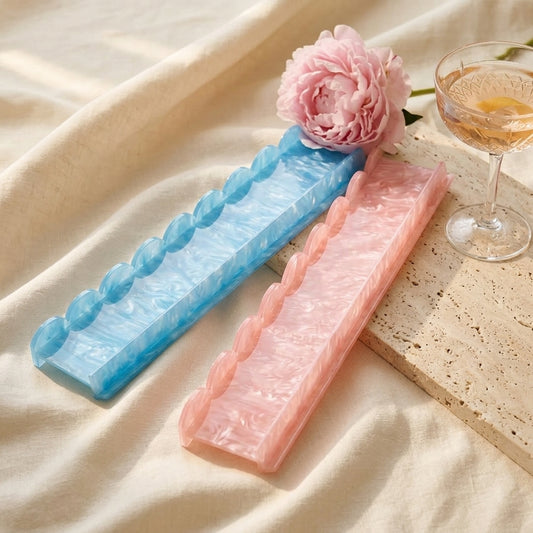
ALOXO Pearl Shell Mahjong Racks with Integrated Pushers
Handcrafted pearl shell finish provides seamless aesthetic harmony for luxury Mahjong gatherings. Sturdy construction and smooth magnetic pusher glide protect fine table finishes while keeping your tile rows impeccably organized.
TIMELESS SHIMMER & ELEGANCE
VIEW PRODUCT DETAILSTactile Precision and Dexterity Drills for Solo Training
The physical act of handling your tiles is a vital part of the overall game experience that is often overlooked. Developing smooth finger movements and muscle memory allows you to organize your rack efficiently and play with quiet confidence during live games. This section focuses on training your physical dexterity and understanding the material characteristics that make luxury tiles perform so beautifully.
Drop and Clack Acoustic Resonance Testing for Smooth Tactile Shuffling
The classic sound of tiles shuffling on a table is one of the most enjoyable aspects of the game. Our custom acrylic pieces are carefully weighted to produce a rich, solid acoustic response that sounds far more satisfying than cheap, hollow plastic sets. Shuffling these substantial tiles by hand is an excellent way to practice coordination and build strength in your fingers.
When you run a solo shuffling drill, focus on moving the tiles in circular patterns using both hands. Try to keep the pieces flat against the table mat to prevent them from flipping over or sliding off the edges. The heavy weight of each tile ensures they respond naturally to your hand movements, creating a smooth and rhythmic physical flow.
Abrasion and Scrub Resistance Testing for Hand Painted Tile Grooves
A high-end set must be able to withstand thousands of shuffles without showing signs of wear or losing its beautiful colors. Our tiles undergo rigorous testing to ensure the hand-painted, color-filled grooves remain bright and intact through years of intense play. This excellent durability allows you to practice your physical drills with complete peace of mind.
To test your hand coordination, practice building the walls as quickly as possible using only one hand. Slide pairs of tiles together and stack them neatly to build the two-level wall structure. This exercise is perfect for learning understanding nmjl consecutive runs because it trains your hands to handle multiple pieces efficiently under pressure.
Temperature and Humidity Tolerance in Diverse Practice Environments
Whether you prefer practicing on a warm summer porch or in a cozy climate-controlled sunroom, your tiles should remain completely stable. Our optical-grade cast acrylic is specifically formulated to resist warping, moisture, and temperature changes. This means the tiles will always glide smoothly against each other, regardless of where you choose to set up your practice table.
You can practice your dealing drills in any comfortable setting to make training a natural part of your daily routine. Try dealing out four hands in a breezy outdoor gazebo to see how the substantial weight keeps the tiles stable in light wind. This adaptability ensures you can enjoy a high-quality practice session whenever and wherever you want.
Our workshop durability trials confirm that ALOXO sets meet all official specifications outlined by national tournament standards. The tiles conform to the rigorous ASTM D790 standards for flexural strength, ensuring they can withstand accidental drops onto hard floors without cracking or chipping. This build quality guarantees your investment will remain a cherished family heirloom for decades.
Optimizing Speed Sorting and Suit Classification Mechanics
Being able to sort your tiles quickly by suit and number is a crucial skill that separates intermediate players from true experts. When you can organize your rack without thinking, you free up valuable mental energy to focus on strategy and opponent analysis. This section compares different tile designs and explains how to optimize your sorting speed during solo training.
Hand Engraved Acrylic Tiles versus Printed Bakelite and Plastic
The physical quality of your tiles has a direct impact on how fast and accurately you can sort them on your rack. Cheap printed plastic sets often have flat, slippery surfaces that make it difficult for your fingers to grip and separate individual pieces quickly. In contrast, our premium hand-engraved acrylic tiles offer a wonderful tactile feel that makes sorting a joy.
The deep, hand-finished grooves allow you to identify suits and numbers by touch alone, which is a fantastic skill to develop. Practice sorting a randomized hand with your eyes closed to train your fingertips to recognize the difference between Bams, Cracks, and Dots. This physical connection helps you organize your rack much faster during fast-moving club games.
| Performance Criteria | ALOXO Luxury Acrylic Solution | Mass-Market Plastic Solution |
|---|---|---|
| Tile Weight and Density | Substantial thirty-gram weighted design for ultimate stability | Lightweight twelve-gram hollow plastic that tips easily |
| Engraving Precision | Deep hand-engraved color-filled grooves that never fade | Flat surface printing that rubs off after moderate use |
| Tactile Feel | Smooth polished edges with rich dimensional texturing | Sharp unfinished plastic edges that irritate hands |
| Backing Aesthetic | Stunning multi-layered shimmering mother-of-pearl backing | Plain solid color backing prone to deep scratches |
| Acoustic Quality | Deep satisfying resonant clack during shuffling and play | High-pitched tinny sound that can disrupt households |
| Cleaning Resistance | Colorfast pigments resist standard oil and dirt buildup | Fades quickly when wiped down with damp cloths |
| Standard Compliance | One hundred percent official NMJL dimensions and layout | Inconsistent tile sizes that do not fit standard racks |
| Lifespan Value | Timeless heirloom quality designed to last for generations | Requires frequent replacement every few seasons |
Integrated Pearl Shell Pushers versus Standard Wood Racks
The type of racks you use can also have a major impact on how quickly and easily you can sort your tiles. Cheap wooden racks often have rough surfaces or sticky pushers that snag your pieces and slow down your play. Our handcrafted pearl shell racks feature a smooth finish that allows your tiles to glide effortlessly into position.
To practice your sorting speed, try a simple drill: draw fourteen random tiles and see how quickly you can arrange them by suit on your rack. Learn how to sort mahjong tiles on rack using a consistent method, such as putting Bams on the left, Cracks in the middle, and Dots on the right. This organized approach helps you read your hands faster and spot potential winning combinations on your card.
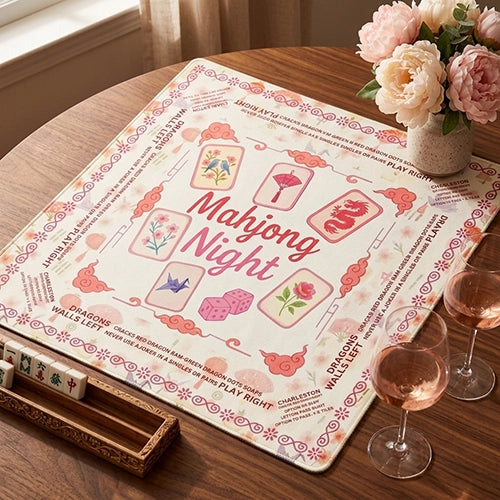
ALOXO Pink Floral Non-Slip Mahjong Mat
Protect cherished tabletop surfaces while reducing tile clatter to an elegant, satisfying murmur. Features non-slip textured backing that lays completely flat straight out of the storage tube without creasing or bunching.
DAMPENS NOISE, ELEVATES STYLE
VIEW PRODUCT DETAILSCreating a Zen Mind Practice Space with Luxury Accessories
A silent, comfortable practice environment is essential for maintaining focus and getting the most out of your solo training sessions. By pairing your premium tiles with a high-quality noise-dampening mat, you can create a beautiful, calming space that helps you relax and concentrate. This section explains how to design a peaceful practice table that supports both your game development and your mental wellness.
Material Origin and Nature of Premium Neoprene and Cast Acrylic
The secret to a quiet, elegant game table lies in the materials you choose for your setup. Our mats are crafted from premium three-millimeter thick neoprene, which provides excellent cushion and helps reduce the sharp clacking sound of tiles. This quiet surface allows you to practice at any time of day or night without disturbing other members of your household.
When you pair this soft mat with our heavy, polished cast acrylic tiles, you create a wonderfully balanced physical environment. The tiles slide smoothly across the fabric surface without sticking or catching, giving you complete control over your movements. This elegant material combination turns every practice session into a relaxing and highly satisfying ritual.
Anatomy Breakdown of a Silent Luxury Practice Space
Designing a dedicated practice space involves more than just setting up your racks on a table. To get the best results, you should assemble a complete system of high-quality accessories that work together seamlessly. This complete setup helps you maintain focus, protects your valuable pieces, and ensures you have a wonderful training experience every time.
Start by laying out your non-slip mat in the center of a spacious table to protect the wood surface from scratches. Set up your pearl shell racks with integrated pushers to keep your active rows organized and easy to read. Keep your national card placed neatly in front of you, and use your natural gemstone dice to practice realistic wall-breaking drills.
- Neoprene Base: Three-millimeter thickness provides outstanding sound reduction and cushioning.
- Polished Tiles: One hundred and sixty weighted acrylic pieces designed for smooth handling.
- Integrated Racks: Sturdy pearl shell racks keep your tiles perfectly aligned during play.
- Padded Case: A luxury vegan leather travel bag protects your complete set when not in use.
Operating Principle of Sound Dampening and Tactile Comfort
The soft, cushioned surface of our mats works by absorbing the physical impact and high-frequency sound waves created when shuffling tiles. This reduction in noise makes it much easier to concentrate on your strategy and read your card without distraction. It also helps prevent hand fatigue by providing a comfortable, resilient surface to rest your wrists on during long drills.
To get the most out of your quiet setup, practice taking slow, deep breaths as you shuffle and deal your tiles. Use this peaceful personal time to clear your mind, focus on the beautiful floral designs, and enjoy the physical sensations of the game. This mindful approach to training is a wonderful way to reduce stress, sharpen your focus, and improve your overall game performance.
Developing these habits at home will also help you stay calm and focused during high-pressure tournament matches. You will learn to manage difficult hands with confidence and make smart, calculated choices under pressure. Practicing alone with a beautiful, high-quality set is the perfect way to build your skills and enjoy a truly luxurious hobby.
Frequently Asked Questions about How to Practice Mahjong Alone (FAQs)
- How do I start a Charleston simulation when practicing alone? - Set up four physical racks representing East, Right, Across, and Left players. Deal fourteen tiles to East and thirteen to the others, then perform the standard left, across, and right passes for all positions while using your card to evaluate the best strategic path for each hand.
- What is the best way to improve my card reading speed during solo drills? - Use timed drills by setting a physical timer for one minute and drawing thirteen random tiles. Try to identify at least three viable winning combinations on your card before the buzzer sounds, which helps train your brain to recognize patterns quickly under pressure.
- How can I protect my fine wood table when practicing my shuffling drills? - Always use a premium three-millimeter thick neoprene mat to cushion the impact of your weighted acrylic tiles. This non-slip surface prevents scratches on your table, keeps the tiles from sliding off, and reduces the loud clacking noise to a quiet murmur.
- Can I practice calling discards and playing out full hands by myself? - Yes, once you finish the Charleston phase, you can play a mock game by discarding from East and drawing for each position in turn. This is an excellent way to practice defensive strategies and learn how to calculate winning odds during different phases of play.
- How should I clean and care for my luxury mother-of-pearl tiles after practice? - Gently wipe the faces and shimmering backs of your tiles with a dry microfiber cloth after every session to remove finger oils. Avoid using harsh chemical cleaners, alcohol, or warm water, and always store your complete set in a padded vegan leather case.
Elevate Your Tabletop Elegance with ALOXO Luxury Mahjong Collections
Discover Heirloom Quality and Refined Styling for Your Next Game Night
Mastering your skills through quiet solo drills is a wonderful way to build confidence and enjoy the elegant complexity of American Mahjong. By pairing your dedication with our beautifully crafted, weighted acrylic sets and silent table mats, you can create the ultimate practice space at home. Explore our exclusive collections today to find the perfect heirloom set that matches your style and passion for the game.
Explore the Complete ALOXO Luxury Tabletop Collection
*Disclaimer: All craftsmanship insights and gameplay recommendations in this article are based on the hands-on experience of the ALOXO design team and feedback from seasoned American Mahjong players. Always store luxury acrylic pieces in padded cases and avoid chemical cleaning agents. Contact us anytime for personalized set care and consultation.