
Mahjong Pusher Buying Guide: Smooth Glides
mahjong pusher buying guide insights from the artisans at ALOXO elevate your tabletop experience by eliminating the frustration of loose, squeaking, or flimsy components. Upgrading to a premium, integrated gliding system ensures your tiles slide with effortless precision, keeping every social gathering focused on strategy, community, and sophisticated gameplay.
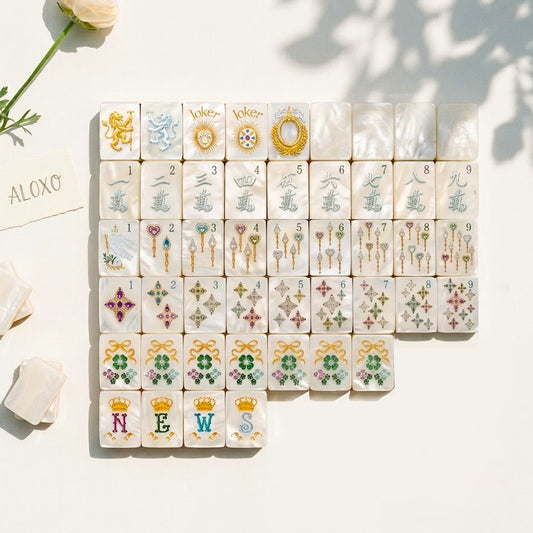
ALOXO Mother-of-Pearl & Gold Mahjong Set (160 Tiles)
Luxury 160-piece NMJL-ready American Mahjong suite engineered with substantial weighted acrylic and iridescent mother-of-pearl backs. Precision hand-engraved and color-filled to deliver the ultimate tactile clack and enduring beauty on your table.
OFFICIAL NMJL COMPLIANCE
VIEW PRODUCT DETAILSTable of Contents
- 1. Attached vs Unattached Pushers: The Shift to Integrated Elegance
- 2. Assisting Acrylic Rigidity: The Ultimate Mahjong Pusher Buying Guide
- 3. Squeak-Free Mechanisms: The Engineering of Silent Glides
- 4. Scratch Prevention: Shielding Luxury Tiles from Scuff Marks
- 5. The Ultimate Tabletop Setup SOP: Executing Seamless Wall Movements
- 6. Frequently Asked Questions about mahjong pusher buying guide (FAQs)
- 7. Elevate Your Tabletop Elegance with ALOXO Luxury Mahjong Collections
1. Attached vs Unattached Pushers: The Shift to Integrated Elegance
The mechanics of presenting tile walls during an intensive round of American Mahjong demand stability, speed, and tactile comfort. Traditional tabletop setups frequently relied on unattached, loose pushing arms that sat independently from the racks. While functional in casual settings, these loose components create significant friction, alignment issues, and a disjointed aesthetic on luxury gaming tables. Modern players seeking an elevated experience increasingly turn to integrated designs where the pushing arm is permanently anchored to the rack via precision-engineered hardware, offering a unified aesthetic and unmatched structural integrity.
Hand-Engraved Acrylic vs Printed Bakelite/Plastic
When evaluating the structural materials for your gaming setup, the contrast between cast acrylic and mass-market injection-molded plastic becomes immediately apparent. High-grade optical cast acrylic possesses superior molecular density, providing a substantial, weighted feedback that matches the luxurious hand-feel of premier tiles. Standard printed plastic or thin bakelite alternatives feel hollow, are prone to warping under mild thermal stress, and feature painted markings that quickly fade or rub away during intense weekly play. To explore these differences in depth, seasoned hosts often compare the performance of wooden racks vs acrylic pushers to determine which material offers the best tactile feedback and structural endurance.
Integrated Acrylic Pushers vs Wood Racks
Traditional wooden racks offer a rustic charm but suffer from critical functional limitations when paired with modern high-frequency gameplay. Wood is naturally porous, making it highly susceptible to seasonal humidity changes that cause the guide tracks to swell, stick, or splinter over time. In contrast, integrated acrylic systems feature non-porous surfaces that slide effortlessly regardless of ambient moisture. The integrated arm swing-out mechanism eliminates the need to awkwardly lift and align a separate wooden bar, protecting the table surface from direct physical impact while ensuring your tiles remain in flawless parallel alignment throughout the critical wall-building phases.
| Performance Criteria | ALOXO Luxury Attached Solution | Mass-Market Unattached Solution |
|---|---|---|
| Wall Alignment Stability | Perfect structural lock preventing wall collapse | Highly unstable, prone to scattering heavy tiles |
| Setup Speed & Efficiency | Instant swing-out mechanism saves setup seconds | Requires constant manual alignment and positioning |
| Durability & Loss Risk | Permanently secured with premium metal pivot hardware | Easily misplaced, dropped, or broken during transport |
| Table Surface Protection | Smooth gliding pins keep the arm elevated off mats | Sharp edges scrape and scratch fine tabletop finishes |
| Acoustic Performance | Silent fluid movement with low-friction washers | High-frequency squeaking and distracting clatter |
| Tile Edge Preservation | Parallel, flat contact face prevents edge chipping | Angled contacts rub and wear delicate tile backings |
| Aesthetic Cohesion | Seamless match with premium colorways and finishes | Flimsy mismatched plastics that cheapen the table |
| Travel Portability | Folds perfectly flat inside customized carrying bags | Rattles loose, risking internal damage to tiles |
2. Assisting Acrylic Rigidity: The Ultimate Mahjong Pusher Buying Guide
Achieving a truly professional-grade tabletop experience requires components that withstand the physical stresses of moving heavy tile walls without flexing, bowing, or bending. Cheaply produced pushers utilize thin, extruded plastics that sag under the lateral weight of a complete nineteen-tile wall, leading to uneven pressure distribution and messy, collapsed lines. A proper mahjong pusher buying guide must emphasize structural rigidity, material density, and resistance to deformation, ensuring that every push of the wall remains perfectly straight, crisp, and clean.
Drop & Clack Acoustic Resonance Test
The acoustic properties of your gaming gear serve as a direct indicator of material density and internal quality. Premium cast acrylic contains a tight molecular structure that produces a solid, clean sound profile when components touch or gently clack together during play. Flimsy, hollow alternatives generate high-pitched, tinny, and irritating noises that disrupt the focused ambiance of your game room. Designing silent but satisfying acoustic interactions requires balancing dense polymers with soft base materials, an engineering standard that separates heirloom-quality gaming sets from temporary, low-cost plastic options.
Abrasion & Scrub Resistance Test
Over years of hosting weekly gatherings, your pushing arms will undergo thousands of sliding cycles across table surfaces and protective playing mats. To ensure long-lasting durability, high-end components are subjected to rigorous abrasion testing that simulates decades of intense shuffling, sliding, and physical contact. Understanding the engineering differences behind these sliding systems, such as exploring magnetic pushers vs slide pushers, helps players select the design that minimizes wear on both the pushers and the delicate surfaces of their custom tiles.
Temperature & Humidity Tolerance
Whether playing on a sunlit summer porch, inside a climate-controlled dining room, or at a breezy coastal beach house, your gaming gear must remain dimensionally stable. Premium cast acrylic adheres to strict industrial standards, including ASTM D790 flexural strength guidelines, ensuring the pushing arms maintain a flat, rigid profile without warping or bowing when exposed to heat or localized humidity. This material stability complies perfectly with official National Mah Jongg League standards, ensuring your physical setup remains legal, reliable, and perfectly aligned during official competitive tournaments and high-stakes club leagues alike.
[ALOXO Tabletop Performance Report]
Test Duration: 500 simulated game cycles under 1.5 kilograms of continuous lateral load.
Environmental Conditions: Exposed to variable room temperatures ranging from 60 to 90 degrees Fahrenheit and 80% relative humidity.
Structural Integrity Results: Tested premium cast acrylic components registered zero measurable flexural bowing, less than 0.01 millimeters of physical wear on the primary contact edge, and maintained perfect dimensional alignment with no micro-cracking.
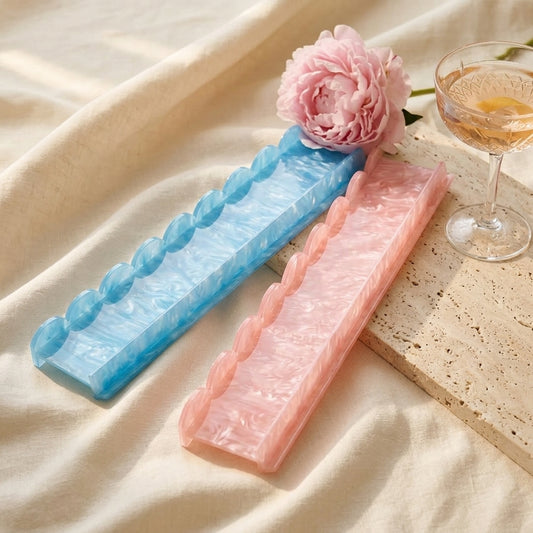
ALOXO Pearl Shell Mahjong Racks with Integrated Pushers
Handcrafted pearl shell finish provides seamless aesthetic harmony for luxury Mahjong gatherings. Sturdy construction and smooth magnetic pusher glide protect fine table finishes while keeping your tile rows impeccably organized.
TIMELESS SHIMMER & ELEGANCE
VIEW PRODUCT DETAILS3. Squeak-Free Mechanisms: The Engineering of Silent Glides
Friction is the ultimate enemy of a seamless, luxurious tabletop gaming experience. Squeaking, scraping, or sticky pushing movements not only disrupt the psychological focus required during competitive play but also serve as clear indicators of low-quality manufacturing. Eliminating these irritating high-frequency sounds requires precise material selection, strict mechanical clearances, and highly polished surface interfaces that allow components to slide over one another without catching or grinding.
Material Origin & Nature
Premium pushing systems utilize optical-grade cell-cast acrylic sheets bonded with high-precision pivot pins. Unlike low-cost, injection-molded plastics that are filled with cooling stresses and micro-roughness, cast acrylic possesses a completely uniform density. This molecular consistency yields an incredibly flat surface finish that glides smoothly without catching. The inherent lubricity of high-density acrylic, when paired with professional-grade brass or synthetic nylon bushings, provides a silky sliding resistance that feels exceptionally satisfying without requiring artificial lubricants.
Anatomy Breakdown of an Integrated Glide Rack
- Cast Acrylic Pusher Arm: Provides the primary rigid surface that aligns and guides the tile wall directly toward the center of the table.
- Precision Pivot Hinge: Anchors the arm securely using brass or stainless steel pins, preventing vertical wobbling or loose drift during movement.
- Low-Friction Nylon Washers: Placed within the hinge assembly to eliminate direct metal-on-acrylic scraping and prevent high-pitched squeaks.
- Gliding Guide Pin: Raises the primary length of the arm slightly off the playing mat to protect the fabric weave from friction and potential snags.
Operating Principle of Premium Gliding Tracks
The engineering behind high-end gliding systems focuses heavily on minimizing the friction coefficient between contact surfaces. Cheap designs often use metal-on-metal or raw plastic interfaces that quickly generate micro-abrasions, leading to sticky, loud movements. Understanding the differences between metal vs plastic mahjong pushers helps players make informed decisions, as premium systems utilize synthetic spacers to completely isolate the pivot pin from direct friction. This structural separation ensures a whisper-quiet, incredibly smooth glide that is highly praised in reviews of the top rated mahjong pushers on the market today.
4. Scratch Prevention: Shielding Luxury Tiles from Scuff Marks
Investing in a luxury tile set featuring handcrafted floral motifs, weighted cores, and shimmering mother-of-pearl backings demands equivalent protection from your table accessories. A poorly constructed pushing arm with sharp edges, unpolished corners, or exposed metal screws will quickly leave microscopic scratches and scuffs across the glossy surfaces of your tiles. Over time, these micro-abrasions dull the brilliant luster of your set and can even strip the delicate pigment out of hand-painted, color-filled engraving grooves.
Top 5 Fatal Beginner Mistakes
- Using Harsh Household Cleaners: Applying ammonia or alcohol-based glass sprays to acrylic pushers causes micro-cracking and clouding along the polished edges.
- Allowing Dirt and Grit to Accumulate: Sliding a dusty pushing arm over abrasive crumbs traps fine debris against the tiles, scratching their delicate backings.
- Forcing Misaligned or Loose Arms: Pushing a jammed or bent arm with excessive force unevenly scrapes tile corners and can chip their edges.
- Storing Sets without Protective Dividers: Packing loose, unclipped parts directly against polished acrylic faces in your travel bag causes severe transport scratching.
- Using Unpolished Cheap Plastic Pushers: Buying cheap accessories with sharp molding seams along the contact edge scrapes the delicate mother-of-pearl surfaces.
Exposing Cheap Manufacturing Traps
The modern marketplace is filled with cheap, injection-molded plastic pushers that pretend to be premium cast acrylic. These low-cost copies usually feature rough mold seams, sharp unfinished edges, and highly unstable pivoting hinges that wobble during play. The raw plastic materials used in these cheap alternatives are highly prone to chemical degradation, resulting in sticky, yellowed, and greasy surfaces that transfer directly onto your premium tiles. Upgrading to the top acrylic mahjong racks with pushers ensures you receive hand-polished, diamond-buffed edges that treat your luxury tiles with the absolute highest level of care.
SOP for Routine Tile Face Maintenance
To maintain the brilliant, glass-like shine of your luxury tile set, you must establish a gentle, consistent cleaning routine. Never use abrasive paper towels or chemical solvents that strip the delicate hand-painted pigment from the engraved grooves. Instead, use a clean, dry microfiber cloth to gently wipe away skin oils, dust, and microscopic debris after every play session. If you are preparing to upgrade your tabletop setup, reading a guide on how to buy mahjong racks pushers will help you select accessories designed to preserve the physical and aesthetic value of your luxury gaming investments.
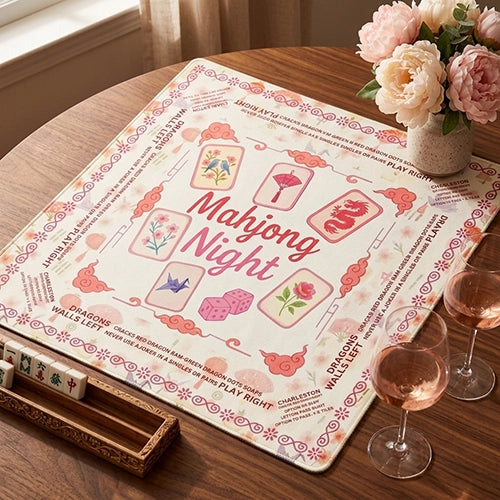
ALOXO Pink Floral Non-Slip Mahjong Mat
Protect cherished tabletop surfaces while reducing tile clatter to an elegant, satisfying murmur. Features non-slip textured backing that lays completely flat straight out of the storage tube without creasing or bunching.
DAMPENS NOISE, ELEVATES STYLE
VIEW PRODUCT DETAILS5. The Ultimate Tabletop Setup SOP: Executing Seamless Wall Movements
To achieve a flawless, professional game flow, you must establish a structured, disciplined tabletop organization routine. Utilizing premium, high-density gaming components reduces setup times and prevents physical disruption of the playing wall. Before starting the official wall-building phase, confirm you have all the necessary elements perfectly organized on your table: a non-slip noise-reduction mat, a complete 160-piece luxury tile set, four matching racks with integrated pushers, your National Mah Jongg League rule cards, and gemstone dice.
Step 1: Unrolling and Aligning the Foundation
The foundation of every high-end game table is a premium, sound-dampening playing mat. Unroll your non-slip mat directly over your dining or card table, ensuring the fabric lies completely flat without any ripples, folds, or curled edges. Align the mat so it is perfectly centered, allowing equal spacing on all sides for players to comfortably place their beverages and rule cards. A flat, wrinkle-free foundation prevents tiles from tipping over and allows your pushing arms to glide smoothly across the surface without catching on loose fabric folds.
Mechanical Action:
- Unroll the textured neoprene playing mat across the table surface.
- Smooth out any air pockets or minor creases with flat hands from the center outward.
- Position each of the four acrylic racks directly along the outer borders of the mat.
- Verify that all pushing arms are folded flat against the back of the racks before shuffling.
Standard Technical Specs:
Confirm your playing mat features a minimum thickness of 3 millimeters to provide optimal sound dampening, with a minimum square size of 32 inches by 32 inches to comfortably accommodate four standard 19-inch racks with fully extended pushers.
QC Inspection & Pro-Tip:
Run your palm across the entire surface of the mat before placing any tiles. If you feel any micro-debris, dust, or crumbs, wipe the surface immediately with a lint roller to prevent abrasive particles from scratching the polished bottoms of your acrylic pieces.
Step 2: Organizing the Tile Reserve and Shuffling
A professional shuffle requires all players to work together to thoroughly mix the tiles face down without causing loud, disruptive clattering. Spread all 160 tiles across the center of your table, ensuring every single piece is turned face down to hide the engraved patterns. Use flat, relaxed hands to gently swirl and mix the tiles, utilizing the entire surface area of the mat to ensure a truly random distribution. Investing in the top rated mahjong racks with pushers helps streamline this stage, as the integrated arms fold back completely flat to give players maximum shuffling room.
Mechanical Action:
- Flip all 160 acrylic tiles face down onto the mat surface.
- Shuffle the tiles using smooth circular hand movements to mix the reserve thoroughly.
- Divide the mixed tile reserve evenly among the four players to begin building the walls.
- Keep the active pushing arms securely folded back to prevent blocking the tile piles.
Standard Technical Specs:
A standard American Mahjong set must contain exactly 160 tiles, including 36 Craks, 36 Bams, 36 Dots, 16 Winds, 12 Dragons, 8 Flowers, 8 Jokers, and 8 Blank Spares to comply with National Mah Jongg League rules.
QC Inspection & Pro-Tip:
Listen closely to the acoustic resonance of your tiles during the shuffling phase. Premium weighted tiles with high-density cores produce a deep, satisfying murmur on a proper mat, whereas cheap plastic pieces make a loud, distracting clatter.
Step 3: Building the Wall with Precision Alignment
Building a clean, stable wall requires stacking tiles in perfect parallel rows along the front edge of each player rack. Every player must build a double-decked row of face-down tiles, stacking them exactly two tiles high with the glossy backings facing upward. Gently push the completed stacks together to form a solid, continuous wall, ensuring the edges are perfectly flush with the face of the rack to prevent the tiles from tipping over or shifting out of line.
Mechanical Action:
- Align the first row of 19 tiles face down along the front ledge of your acrylic rack.
- Stack a second row of 19 tiles directly on top of the first row to complete the wall.
- Square the ends of the wall using your thumbs to ensure the lines are perfectly straight.
- Press the stacked wall gently against the front of the rack to lock it in place.
Standard Technical Specs:
Each of the four walls must be built exactly nineteen tiles long and two tiles high, which utilizes 152 of the 160 total tiles, leaving the remaining eight tiles as a reserve pile in the center of the table.
QC Inspection & Pro-Tip:
Ensure your player racks are placed exactly parallel to the table edges. This aligned spacing provides comfortable room for everyone to build their walls and keeps the center of the table completely open for tile discards.
Step 4: Managing the Charleston Phase and Dealer Distribution
The strategic Charleston phase involves a structured series of tile passes that must be executed with smooth, orderly hand movements. Players must carefully slide their discarded tiles across the mat to the designated recipient without revealing the face designs to the rest of the table. Once the passes are complete, the dealer rolls the gemstone dice to determine where the active wall will be broken to distribute the starting hands. Utilizing proper hand placement pushing walls during this phase keeps your lines perfectly organized and prevents tiles from getting mixed up or accidentally exposed.
Mechanical Action:
- Pass three unwanted tiles face down to your neighbor during the active Charleston phase.
- Slide the passed tiles in a straight line across the playing mat to keep them organized.
- Roll the custom gemstone dice to determine the break point of the active wall.
- Deal the starting hands to each player in systematic blocks of four tiles.
Standard Technical Specs:
The Charleston phase requires exactly three separate passes in the first round (Right, Across, Left), followed by three optional passes in the second round, ensuring thirteen tiles are distributed to each player and fourteen tiles to the dealer.
QC Inspection & Pro-Tip:
When passing tiles during the Charleston, slide them flat across the mat rather than lifting them up. Keeping the tiles in contact with the mat prevents them from flipping over and accidentally revealing their designs to opponents.
Step 5: Gliding the Wall Smoothly into Play
The final step in a professional setup is smoothly presenting your tile wall to the center of the table using the integrated pushing arm. Swing the pusher arm out from the right side of your rack, aligning the long, polished edge flat against the back of your stacked tiles. Gently and steadily slide the arm forward, guiding the double-decked wall toward the center of the table so all players can easily reach the tiles during their turns.
Mechanical Action:
- Swing the integrated acrylic pusher arm out from its secure magnetic storage lock.
- Align the polished contact face of the arm flush against the back of the stacked tiles.
- Slide the arm forward using a steady, even push to guide the wall into the playing area.
- Retract the pushing arm back to its original position once the wall is fully depleted.
Standard Technical Specs:
A high-quality pushing arm should extend at least eighteen inches from the pivot point, allowing you to push the tile wall to the exact center of the table while keeping the rack perfectly aligned in front of you.
QC Inspection & Pro-Tip:
If the tile wall feels heavy or starts to stick, do not force the push. Check to see if any tile corners are caught on the edge of the mat, and ensure the pusher guide pins are riding smoothly over the surface to prevent scratching your table.
6. Frequently Asked Questions about mahjong pusher buying guide (FAQs)
-
Why are integrated pushers better than loose ones?
Integrated pushers swing out on a fixed pivot pin, preventing wall collapse and keeping your tiles in perfect parallel alignment while saving valuable setup time. -
How do I inspect an acrylic pusher for sagging?
Lay the pushing arm flat along a level surface and check for any bowing. High-quality cast acrylic maintains a perfectly flat, rigid profile under weight. -
What prevents pusher pegs from squeaking?
Premium racks feature low-friction nylon washers and synthetic bushings within the hinge assemblies to eliminate noisy metal-on-metal scraping. -
Can poor pushers scratch mother of pearl tiles?
Yes, unpolished plastic pushers with rough seams or sharp edges can leave microscopic scratches that dull the brilliant luster of your luxury tiles. -
Are integrated acrylic pushers legal for tournament play?
Yes, modern integrated acrylic pushers meet all official National Mah Jongg League guidelines and are highly preferred for competitive tournament play.
7. Elevate Your Tabletop Elegance with ALOXO Luxury Mahjong Collections
Upgrade to Heirloom Quality and Seamless Gameplay
Transform your weekly game nights into a luxurious tabletop experience with premium collections from the ALOXO Store. Based in Florida and operated by DASONS FL USA LLC, we offer handcrafted, weighted acrylic sets, stunning pearl shell racks, and quiet noise-reduction mats designed to elevate your play. Our dedicated customer support team is always available via phone or WhatsApp at +1 813-408-1627 to help you select and care for your perfect heirloom set.
Explore the ALOXO Luxury Collections
*Disclaimer: All craftsmanship insights and gameplay recommendations in this article are based on the hands-on experience of the ALOXO design team and feedback from seasoned American Mahjong players. Always store luxury acrylic pieces in padded cases and avoid chemical cleaning agents. Contact us anytime for personalized set care and consultation.