
Mahjong Timer Rules in Tournaments: Fast Play
mahjong timer rules in tournaments dictate how competitive tables maintain rapid play when using lightweight or poorly engraved tiles that slow down identification. Players must navigate strict timing standards using high-performance equipment from brands like ALOXO to prevent costly gameplay delays. By learning official tournament regulations, players protect their tournament standing while enjoying the satisfying tactile feedback of premium weighted acrylic.
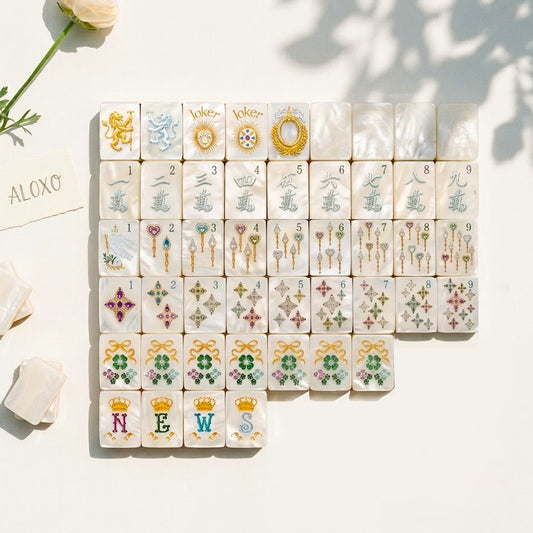
ALOXO Mother-of-Pearl & Gold Mahjong Set (160 Tiles)
Luxury 160-piece NMJL-ready American Mahjong suite engineered with substantial weighted acrylic and iridescent mother-of-pearl backs. Precision hand-engraved and color-filled to deliver the ultimate tactile clack and enduring beauty on your table.
OFFICIAL NMJL COMPLIANCE
VIEW PRODUCT DETAILSTable of Contents
- 1. Deciphering Mahjong Timer Rules in Tournaments: Standard Round Durations
- 2. Unfinished Game Scoring Protocols When the Buzzer Sounds
- 3. Critical Mistakes in Managing Mahjong Timer Rules in Tournaments
- 4. Step-by-Step Training SOP for Maintaining Fast Turns Under Ten Seconds
- 5. Mechanical Comparison: Acrylic Pushers versus Traditional Wooden Racks
- 6. Frequently Asked Questions about Mahjong Timer Rules
- 7. Elevate Your Tabletop Elegance with ALOXO Luxury Mahjong Collections
1. Deciphering Mahjong Timer Rules in Tournaments: Standard Round Durations
Competitive American Mahjong tournaments rely on standardized pacing parameters to ensure that all registered participants play an equal number of hands. Under official National Mah Jongg League standards, competitive rounds are strictly bounded by timed windows, requiring tables to finish a designated block of four games within designated parameters. Understanding these parameters prevents frantic play and maintains the refined focus expected at elite gaming tables.
The Anatomy of the Tournament Round Time Limits
The baseline standard for a single tournament round is a strict window of fifty to fifty-five minutes. Within this single round, each table of four players is required to complete exactly four games, meaning each individual game must average approximately twelve to thirteen minutes of active play. This duration encompasses shuffling, tile building, dealing, the pass phases, and actual tile discards. Maintaining this pacing is vital for keeping the entire tournament room aligned with the master schedule.
To survive these tight windows, tournament directors utilize a loud automated timer buzzer procedure to mark key intervals. A warning bell typically echoes at the forty-five-minute mark, letting players know they have ten minutes remaining to finalize their current game and potentially play their final round. This timed structure reduces the likelihood of running out of clock before scoring points, making pacing yourself in tournaments a primary skill for competitive success.
Enforcing Mahjong Timer Rules in Tournaments for Charleston Rounds
The initial passing phase represents one of the most frequent zones where time is needlessly lost. When the official buzzer sounds during Charleston operations, it signals to players that they must expedite their selection of tiles. If the round clock has already started and players are lingering over their passes, the table director may step in to enforce a faster passing cadence.
Under strict tournament flight division rules nmjl guidelines, the first Charleston must be completed in under two minutes. This rapid sequence requires immediate familiarity with the current year's rule card and instant recognition of your tile symbols. High-contrast, hand-painted acrylic tiles facilitate this mental mapping, allowing players to make three-tile selections without secondary glances that stall the passing circle.
The Operational Principle of Standard Clock Management Mahjong
Success in high-tier events depends heavily on systematic clock management mahjong strategies adopted by all four players at the table. This systemic pacing relies on physical and mental habits that trim seconds off every interaction. Rather than rushing decisions, players optimize mechanical transitions, such as building walls instantly and using reliable, weighted tools that do not slip or tumble during play.
When players operate with an automated pacing mindset, they actively minimize table chatter and maintain a clean, organized play space. By utilizing precise tools, players naturally keep the game moving without needing to check the overhead master timer. This effortless workflow preserves precious mental energy, keeping players sharp for critical late-game decisions when timed pressure peaks.
2. Unfinished Game Scoring Protocols When the Buzzer Sounds
One of the most complex aspects of competitive tournament play is handling unfinished game scoring when the master clock expires. When the round timer buzzer sounds, any game currently in progress must immediately freeze to undergo strict scoring evaluation. Knowing how tournament directors calculate points for incomplete hands protects your score sheet and helps you make smarter choices as the clock runs down.
Scoring Unfinished Games Under Mahjong Timer Rules in Tournaments
When the buzzer rings, the current hand is declared dead, and specific scoring penalties are applied based on the number of tiles remaining in the wall. If fewer than twenty-four tiles remain, the hand is scored as a draw, and no player receives points. However, if the game is stopped prior to this threshold, players are evaluated based on their declared exposures and their hand's viability.
Under the official tournament scoring table nmjl, players with declared dead hands at the time of the buzzer receive a score of zero. Players with active, viable hands receive ten points, provided they have not committed any defensive infractions. This baseline scoring system rewards efficient, clean play while punishing defensive stalling or sluggish tile management.
Competitive Use Cases for Timed Round Scoring
Different competitive situations require players to adjust their strategy to align with the tournament clock. The table below outlines how players adapt their tactics based on their remaining round time:
| Tournament Scenario | ALOXO Luxury Solution | Standard Retail Alternative |
|---|---|---|
| Weekly Social Rounds | 160-piece weighted acrylic sets with high-contrast floral engravings that speed up tile recognition. | Lightweight plastic tiles with thin, printed numbers that quickly fade and smudge. |
| Poolside & Outdoor Play | UV-resistant mother-of-pearl backs with anti-scratch coating to prevent wind-slide or moisture damage. | Paper-backed or cheap hollow composite tiles that discolor and warp in sunlight. |
| Intergenerational Gifts | Heirloom-grade custom floral art and gold accents designed to endure for decades of family play. | Flimsy cardboard box packaging with modern generic plastic components. |
| Competitive Club Tourneys | Complete professional sets with matching pearl shell racks, noise-reduction mats, and gemstone dice. | Mixed accessories with uneven wooden racks and loud, unprotected tabletop clacking. |
| Travel Table Setup | Vegan leather carrying bags with dedicated compartments for cards, tiles, and racks. | Loose fabric sleeves with single metal zippers that easily tear or spill pieces. |
| Dampening Tile Noise | 3mm thick neoprene mats with non-slip backing to absorb heavy shuffling vibration. | Thin felt cloths that bunch up and slide across the table surface. |
| Pusher Operations | Precision acrylic magnetic pushers that glide effortlessly along the rack without catching. | Wooden peg pushers that warp, splinter, or stick midway through wall building. |
| Dice Rolling Safety | Hand-finished natural gemstone dice with rounded corners to prevent tile chipping. | Sharp, lightweight plastic dice that bounce erratically off the table. |
Managing Timed Pressure and Strategic Scoring Adjustments
As the clock winds down toward the final buzzer, players face intense psychological pressure that can lead to costly defensive errors. A common mistake is holding complex, high-value hands that require multiple blind draws, rather than shifting to a simpler defensive shape that guarantees at least a draw. This strategic pivot requires close attention to both the visible tile pool and the active round timer.
By utilizing highly legible, beautifully weighted tiles, players can assess their table options in seconds. Instead of wasting time squinting at small, poorly defined symbols, players can scan their opponents exposures and adapt their hand accordingly. This mental clarity is essential for handling timed pressure, helping players secure safe, consistent points even when facing tight deadlines.

ALOXO Pearl Shell Mahjong Racks with Integrated Pushers
Handcrafted pearl shell finish provides seamless aesthetic harmony for luxury Mahjong gatherings. Sturdy construction and smooth magnetic pusher glide protect fine table finishes while keeping your tile rows impeccably organized.
TIMELESS SHIMMER & ELEGANCE
VIEW PRODUCT DETAILS3. Critical Mistakes in Managing Mahjong Timer Rules in Tournaments
Slow play is one of the most common causes of frustration and lost points in competitive Mahjong events. To address this, tournament directors enforce strict slow play penalties and warnings to keep matches moving on schedule. Understanding these common pacing mistakes, along with the penalties they carry, helps players maintain focus and avoid critical rule violations.
The Warning Process and Points Deductions for Game Delays
When a player consistently stalls the table, tournament directors follow a structured, multi-step penalty process. It begins with an informal warning from the table monitor, noting that the player's discard speed is dropping below acceptable standards. If the behavior continues, the monitor issues a formal warning, which is recorded directly on the table score sheet.
Continued stalling after a formal warning results in points deductions, typically starting at minus ten points per infraction. In severe cases or during final rounds, players may face disqualification from the match, with their score for that game reduced to zero. These strict penalties keep the tournament running smoothly, ensuring that cooperative play standards are maintained across all tables.
The Hidden Traps of Cheap, Mass-Market Game Sets
Many pacing infractions stem from using poor-quality equipment rather than poor decision-making. Cheap mass-market sets often feature lightweight plastic tiles that slide, tip over, and are difficult to align quickly. These thin plastic designs make wall-building slow and frustrating, wasting valuable round time on physical maintenance.
Furthermore, budget tiles often rely on printed decals that rub off or fade, making them difficult to read under tournament lighting. This forces players to spend extra time squinting at their tiles, which slows their decision-making and leads to pacing warnings. Investing in high-quality, deeply engraved acrylic sets eliminates these physical hurdles, keeping your focus where it belongs: on the game.
Deep Engraving Maintenance and Luster Preservation
To keep your luxury tiles in tournament-ready condition, proper care and maintenance are essential. Over time, skin oils and dust can build up in the engraved grooves, reducing contrast and legibility. Cleaning your tiles regularly preserves their appearance and keeps them easy to read during fast-paced tournament rounds.
We recommend wiping your tiles with a dry microfiber cloth after every tournament session to remove oil and debris. Avoid using harsh chemical cleaners, alcohol, or solvents, as these can damage the hand-painted pigments and compromise the acrylic's finish. Storing your set in a padded vegan leather case protects the delicate mother-of-pearl backing, ensuring your tiles look and perform beautifully for years to come.
4. Step-by-Step Training SOP for Maintaining Fast Turns Under Ten Seconds
Achieving a rapid, natural flow of play is the hallmark of an elite Mahjong player. Keeping your decision-making window under ten seconds per turn ensures your table finishes all four games well within the fifty-minute limit. This step-by-step training SOP is designed to build the physical and mental habits needed to excel under tournament conditions.
Required Tabletop Elements and Tournament Essentials
Before starting your pacing practice, ensure your table is properly equipped. You will need a complete fast play tips for mahjong players layout, including a 160-piece weighted NMJL tile set, four sturdy racks with integrated acrylic pushers, a non-slip noise-reduction mat, and your NMJL rule card. This professional setup replicates actual tournament conditions, allowing you to practice with the exact tools you will use during competitive play.
Step 1: Instantly Aligning Your Table Architecture
Begin by unrolling your non-slip noise-reduction mat over your table surface, ensuring it sits flat without any folds. Place your four pearl shell racks exactly twenty-eight inches apart, parallel to the table edges. This creates an organized, spacious play area that allows for smooth hand movements and clear tile lines.
Next, arrange your weighted acrylic tiles face-down in the center of the table. The non-slip mat dampens the sound of shuffling while protecting your table from scratches. Organizing your play space before starting ensures that no time is wasted adjusting equipment once the round timer begins.
Step 2: Organizing and Structuring Your Active Hand
Once the deal is complete, arrange your tiles on your rack according to suit and value. Group your jokers, winds, and flowers on one side to keep your tactical options clear. This organized layout prevents confusion during the fast-paced Charleston phase, where quick decisions are essential.
As you arrange your tiles, review your NMJL rule card to identify your strongest potential hands. Organizing your tiles by suit helps you spot matching combinations quickly, reducing the time needed to evaluate your hand. With practice, you will learn to arrange your tiles in seconds, leaving more time to focus on your opponents play.
Step 3: Mastering Mahjong Timer Rules in Tournaments and Strategic Pacing
To stay within the ten-second turn limit, practice making your decisions during other players turns. Watch the discard pile closely and decide which tiles you need before your turn begins. Anticipating your next move keeps the game flowing smoothly and prevents unnecessary delays.
If you draw a tile that does not fit your hand, discard it immediately. Avoid lingering over low-value tiles or holding up play to reconsider your strategy. Making fast, decisive moves keeps your table on track to complete all four games within the round time limit.
Step 4: Managing Calls and the Window of Time
When calling a discarded tile, you must act within the window of time to call tile nmjl standard, which is typically three to five seconds. If another player draws from the wall before you make your call, your opportunity is lost. Making quick, confident calls is key to maintaining momentum and securing the tiles you need.
To practice, simulate calls during your training sessions by placing a timer next to your rack. Call out your combinations clearly as soon as the target tile is discarded. This repetitive practice builds the confidence and speed needed to make clean, accurate calls during high-pressure tournament matches.
Step 5: Enforcing Table Etiquette and Keeping Play Silent
A quiet, focused table is essential for maintaining a fast, competitive pace. Avoid unnecessary table talk, as it distracts players and slows down decision-making. Adhering to silent table etiquette in tournament play keeps everyone focused on the board and prevents pacing warnings.
To prevent distractions, players should use clear hand gestures to signal their moves. This silent communication minimizes confusion and ensures that every player can follow the game easily. By maintaining a quiet, professional atmosphere, you help your table stay focused and finish on time.
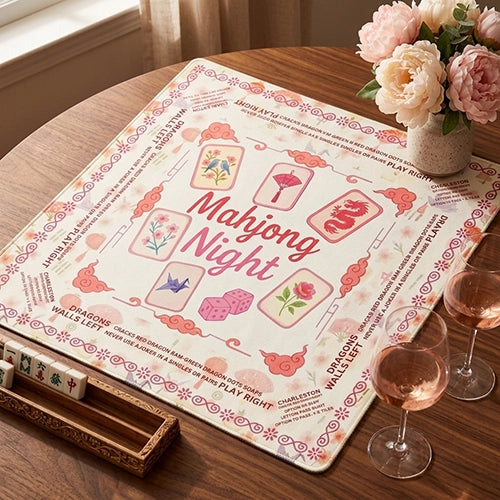
ALOXO Pink Floral Non-Slip Mahjong Mat
Protect cherished tabletop surfaces while reducing tile clatter to an elegant, satisfying murmur. Features non-slip textured backing that lays completely flat straight out of the storage tube without creasing or bunching.