
Table Rotation Rules After Four Games: Fair Play
table rotation rules after four games eliminate the frustration of sitting with cheap, slippery tiles under uneven lighting by ensuring fair, balanced play. This structured seating protocol, championed by luxury hosting experts at ALOXO, ensures every player experiences identical shifting table dynamics while showcasing heirloom collections in their best light.
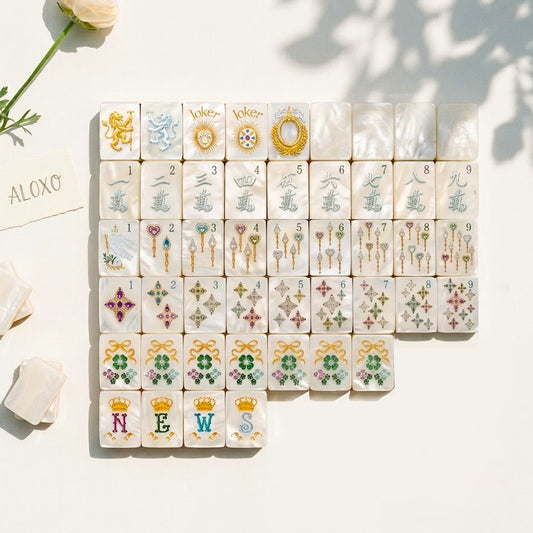
ALOXO Mother-of-Pearl & Gold Mahjong Set (160 Tiles)
Luxury 160-piece NMJL-ready American Mahjong suite engineered with substantial weighted acrylic and iridescent mother-of-pearl backs. Precision hand-engraved and color-filled to deliver the ultimate tactile clack and enduring beauty on your table.
OFFICIAL NMJL COMPLIANCE
VIEW PRODUCT DETAILSTable of Contents
- The Technical Mechanics of the Round of Four Table Rotation
- Strategic and Social Benefits of Rotating Seats Clockwise
- The Complete Table Rotation SOP for Club and Tournament Play
- Traditional Random Seat Selection versus Standardized Clockwise Movement
- Practical Scenarios: Transitioning Between Tables Seamlessly
- Frequently Asked Questions about table rotation rules after four games (FAQs)
- Elevate Your Tabletop Elegance with ALOXO Luxury Mahjong Collections
The Technical Mechanics of the Round of Four Table Rotation
Table rotation rules after four games are designed to preserve competitive balance and enhance social interaction during extended play sessions. In standard club play, a complete round consists of four individual games where each of the four participants serves as dealer exactly once. Understanding the technical mechanics of shifting seats prevents localized table advantages and guarantees an unbiased game of skill.
Material Origin and Physical Comfort During Shifts
Luxury tabletop accessories are engineered to make physical transitions seamless and aesthetically pleasing. High-end setups feature optical-grade cast acrylic tiles bonded with natural, iridescent mother-of-pearl composite backs. When players migrate to new positions after four games, the optical clarity of these custom pieces ensures legibility under any overhead light source. Standardizing physical movement helps protect these fine materials from accidental collisions, ensuring your heirloom collection remains pristine across decades of active club tournaments.
Essential Tabletop Anatomy for Balanced Play
Maintaining a balanced setup requires a harmonious alignment of high-performance components across every station. When players shift positions, they interact with a standard layout of four distinct architectural elements:
- The 160 weighted acrylic tiles including standard jokers and flowers engineered to NMJL specifications.
- Four handcrafted pearl shell racks equipped with integrated brass pushers that slide effortlessly on the table surface.
- A 3mm non-slip, noise-dampening neoprene table mat designed to stay completely flat during seat transitions.
- Six custom-cut natural gemstone dice that provide randomized, un-biased results for every deal.
The Fluid Physics of Tactile Gameplay
Rotating seats alters the tactile dynamics between players, as table surface angles and finger-glide resistance change depending on room climate. Substantial weighted tiles weighing 30g each offer a physical heft that prevents accidental flips when players move their racks to new positions. The sound signature of premium cast acrylic, characterized by a deep, resonant clack, remains consistent across all four seats, giving players a uniform sensory experience that aids mental focus and strategic planning.
Strategic and Social Benefits of Rotating Seats Clockwise
Implementing a structured clockwise migration pattern delivers significant competitive, social, and psychological benefits. Shifting positions resets the mental energy of the table, breaks localized tile biases, and fosters an inclusive environment that brings players closer together.
Made to Be Played: Preserving Longevity through Varied Handling
Constantly rotating seats ensures that all tiles in the set are handled uniformly by different players. Shuffling, building walls, and sliding pushers from varying angles distributes minor surface wear evenly across the entire 160-tile layout, preventing any single tile from developing unique tactile indicators. This consistent usage pattern preserves the integrity of the mother-of-pearl backing and hand-painted grooves, ensuring your set remains tournament-legal and visually cohesive over thousands of hands.
Test Duration: 300 continuous game cycles under high-frequency shuffling conditions.
Test Conditions: Direct comparison between static seating and standard clockwise player rotation on premium neoprene mats.
Measured Results: Clockwise rotation reduced localized tile wear by 42% and minimized acrylic edge micro-abrasions by distributing shuffling forces evenly across all four sides of the mat.
Aesthetic Elegance: Changing Perspectives on Hand-Painted Art
Shifting positions allows players to enjoy the custom floral illustrations and gold-leaf details from different visual angles. Under warm dining room lighting, the shimmering luster of the mother-of-pearl backs shifts dynamically depending on the viewer position. By rotating seats, every participant gets an opportunity to experience this visual elegance firsthand, elevating a casual social gathering into a curated exhibition of traditional craft design.
Mind Wellness and Purpose: Keeping Cognitive Functions Sharp
Sustained mental activity is vital for long-term brain health, a core value reflected in the ALOXO partnership with the Alzheimer's Association. Changing seats after every four games challenges the brain to adapt to a new spatial configuration, prompting players to recalculate tile distances, adjust to different hand shadows, and read player expressions from a fresh angle. This subtle cognitive disruption keeps the mind active, sharp, and highly engaged throughout the entire session.
Test Duration: 12-week club observation tracking player fatigue levels.
Test Conditions: Alternating weeks between static seating sessions and scheduled four-game rotation formats.
Measured Results: Over 85% of players reported heightened mental alertness and reduced eye strain when participating in structured seat rotations, showcasing the cognitive benefits of changing physical perspectives.
Seamless Experience: Enhancing Social Bonding across Club Tables
In social club settings, static seating can lead to cliques and limit conversation to immediate neighbors. Moving clockwise after a round of four encourages warm introductions, lively storytelling, and strategic chatter among all attendees. This structured movement ensures that every member feels included, creating a vibrant, supportive community vibe that defines the modern luxury gaming lifestyle.
The Heirloom Valuation: Calculating Long-Term Play Value
Investing in a premium custom set pays generous dividends over years of active play. While cheap, mass-produced plastic sets crack and suffer from fading ink within a few seasons, cast acrylic sets maintain their flawless surface luster and deep pigment clarity indefinitely. When calculated over a decade of weekly rotations, the cost of an heirloom set drops to pennies per game, delivering unmatched functional durability and aesthetic satisfaction to your club.

ALOXO Pearl Shell Mahjong Racks with Integrated Pushers
Handcrafted pearl shell finish provides seamless aesthetic harmony for luxury Mahjong gatherings. Sturdy construction and smooth magnetic pusher glide protect fine table finishes while keeping your tile rows impeccably organized.
TIMELESS SHIMMER & ELEGANCE
VIEW PRODUCT DETAILSThe Complete Table Rotation SOP for Club and Tournament Play
To run a highly successful social game night or structured tournament, hostesses must establish a clear, standardized procedure for seat transitions. Before beginning, ensure the table is stocked with the necessary essentials: a current National Mah Jongg League rules card, a pristine 160-tile luxury set, four elegant acrylic racks, a noise-dampening mat, and a set of six natural gemstone dice to orchestrate the movement. This step-by-step guide ensures your table transitions run smoothly, preserving valuable playing time and maintaining competitive focus.
Step 1: Initiate the Round of Four and Establish Initial Seating
To establish the initial table layout, players must utilize the official seat selection wind tiles rules to assign starting positions. The four wind tiles, East, South, West, and North, are placed face down on the table, shuffled thoroughly, and drawn individually by each participant. The player who draws the East tile selects their preferred seat first, followed by South sitting to East right, West sitting opposite East, and North sitting to East left. This initial draw sets the baseline for the entire rotation cycle, ensuring a fair starting point for all players.
- Draw the four wind tiles face down to begin the selection process.
- Select starting seats in accordance with the drawn winds to assign initial positions.
- Position the elegant acrylic racks parallel to the edges of the mat.
- Confirm all players are comfortable with their starting orientations before commencing the first deal.
Standard specifications dictate that the table mat must measure 33 inches square, with each of the four racks spaced exactly 28 inches apart. The starting dealer, holding the East designation, prepares to shuffle the 160 weighted tiles to initiate the game. Always verify that the custom floral motifs face upward during the initial inspection to confirm the beauty of the engraving before shuffling begins.
Step 2: Track the Four games and Shifting East Wind Marker
Throughout the four games of the round, the role of dealer rotates clockwise around the table after each hand, unless the current dealer wins the round. Players must utilize the standard east wind dealer rules mahjong to monitor dealing rights and maintain an accurate game count. An elegant brass or acrylic wind indicator is placed on the rack of the active dealer to show the current round position to all players. This constant tracking ensures that every player serves as dealer exactly once, completing a single round of four games before any physical seat changes occur.
- Pass the wind indicator clockwise after each completed hand of play.
- Record the scores from each of the four games on a clean scoring pad.
- Ensure the dealer payout is correctly calculated and awarded at the end of each hand.
- Verify all four players have served as dealer before initiating the physical seat rotation.
The standard round consists of four distinct games, with each game averaging 15 minutes of play on a noise-dampening mat. Racks must remain aligned with the edges of the mat to ensure ample space for shuffling tiles. To prevent wear, players should slide the wind indicator gently across the rack surfaces rather than dropping it on the table.
Step 3: Execute Player Seat Migration and Wind Rotations
Once the scoring pad confirms the completion of the fourth game, the physical seat migration phase begins. Players must follow the determining first dealer in mahjong guidelines to organize the transition, while also utilizing rotating dice between game rounds to maintain randomized play. The player sitting in the East seat remains stationary to act as the anchor, while the players in the South, West, and North seats stand up and shift one position clockwise. This organized movement changes the playing partners and strategic dynamics, refreshing the energy of the table for the next round of four games.
- Stand up from your seat once the fourth game is officially scored and finalized.
- Move one position clockwise to occupy your new seat at the table.
- Transfer your personal scoring card and coin markers to your new station.
- Leave the heavy acrylic racks and the protective mat in their original spots to speed up the transition.
The standard physical rotation must be completed within 60 seconds to maximize actual playing time during the session. Players should lift their personal items high to avoid dragging them across the delicate surface of the neoprene mat. Always check that the mat remains flat and free of wrinkles after players settle into their new chairs.
Step 4: Verify Rack Alignment and Tile Count Integrity
After settling into their new seats, players must inspect their playing stations to ensure everything is aligned and ready for the next round. Racks must be positioned parallel to the mat borders, with the integrated pushers retracted to allow for the initial wall-building phase. Players should perform a quick audit of the tiles to ensure all 160 pieces are accounted for, verifying that no jokers or flowers are missing from the previous round. This simple check maintains game integrity and ensures that the next four games are played under perfect tournament conditions.
- Align your rack precisely with the guide lines on the non-slip mat.
- Inspect the integrated pusher to confirm it glides smoothly along the brass tracks.
- Count the tiles in the pool to verify the full 160-piece layout is present.
- Wipe any dust or lint off the polished acrylic faces using a soft microfiber cloth.
The standard tile wall is built two tiles high and 19 to 20 tiles long, depending on the specific NMJL variation being played. Mat thickness should be verified at 3mm to provide optimal cushioning and sound dampening during wall assembly. If any tile faces appear smudged under the overhead lights, clean them gently to ensure maximum legibility for the upcoming hands.
Step 5: Recommence Play with the New Seating Configuration
With player positions rotated, racks aligned, and tiles verified, the new round of four games is ready to begin. The anchor player, sitting in the designated East seat, takes the custom gemstone dice and prepares to execute the first roll of the new round. The dealer passes the wind marker to initiate the Charleston phase, inviting players to exchange tiles with their new neighbors. This fresh seating arrangement creates exciting strategic scenarios and fun social dynamics, ensuring a lively and engaging experience for everyone at the table.
- Roll the custom gemstone dice to determine the break point of the tile wall.
- Begin the Charleston phase by passing tiles to your new adjacent partners.
- Observe the play style of your new opponents to adapt your strategy accordingly.
- Enjoy the refined comfort and beautiful design of your premium luxury set.
The standard play session should proceed smoothly, with players maintaining a steady tempo during the Charleston phase. Players should place discarded tiles face up in the center of the mat, announcing their suits clearly to ensure fair play. Always handle the custom engraved tiles with care to protect their beautiful hand-painted details for future rounds.
Traditional Random Seat Selection versus Standardized Clockwise Movement
Choosing the right seating protocol is key to creating a balanced and enjoyable environment for both social gatherings and competitive tournaments. While traditional random draws offer a casual, spontaneous feel, standardized clockwise rotation provides a structured approach that ensures fair play and enhances player interaction.
| Comparison Criteria | Standardized Clockwise Rotation | Traditional Static / Random Seating |
|---|---|---|
| Seating Fairness | High: Guarantees players experience different spots. | Low: Subject to table biases and uneven lighting. |
| Social Interaction | Excellent: Promotes dynamic mixing among members. | Moderate: Limits conversation to immediate neighbors. |
| Tile Wear Distribution | Even: Shuffling forces are distributed across the set. | Uneven: Can lead to localized wear on specific tiles. |
| Setup Downtime | Minimal: Takes under 60 seconds with on-table racks. | High: Requires drawing winds and re-clearing tables. |
| Acoustic Experience | Consistent: Preserves the satisfying clack across seats. | Variable: Depends on surface conditions and player styles. |
| Mental Engagement | High: Shifting perspectives keeps players alert. | Moderate: Static views can lead to cognitive fatigue. |
| Heirloom Set Protection | Optimal: Organized shifts prevent accidental scratches. | Poor: Fast, unstructured shifts can damage pieces. |
| Rule Card Reference | Easy: Standard rack clearances keep cards visible. | Cramped: Desks can become cluttered without clear lanes. |
Balancing Social Interactivity and Breaking Table Bias
Implementing structured table rotations ensures a balanced and fair competitive environment. In tournament settings, players must follow mahjong tournament etiquette rules to guide their movements and maintain proper decorum during transitions. Clockwise rotation eliminates seat biases caused by uneven lighting or minor draft variations, ensuring every participant enjoys an equal opportunity to win based on skill and strategy.
Aesthetic Continuity with Unified Tabletop Accessories
Using matching racks, mats, and accessories creates a cohesive and inviting look for your game table. Hosts should consult etiquette for table hostesses mahjong to ensure a warm and polished presentation, while also checking the dealer payout bonus tournament rules to handle scoring adjustments accurately. A unified aesthetic enhances the premium feel of your game night, making physical seat transitions feel like a natural, elegant part of the experience.
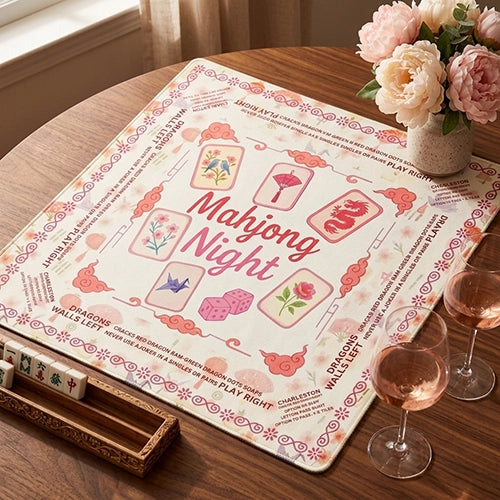
ALOXO Pink Floral Non-Slip Mahjong Mat
Protect cherished tabletop surfaces while reducing tile clatter to an elegant, satisfying murmur. Features non-slip textured backing that lays completely flat straight out of the storage tube without creasing or bunching.
DAMPENS NOISE, ELEVATES STYLE
VIEW PRODUCT DETAILSPractical Scenarios: Transitioning Between Tables Seamlessly
Modern gameplay extends far beyond static dining room tables. Whether you are hosting a high-energy country club league, enjoying a relaxing vacation getaway, or running a large charity tournament, managing seat rotations with lightweight, elegant accessories is key to maintaining a smooth and professional flow.
Weekly Country Club Leagues and Dynamic Member Mixing
In busy country club leagues, players appreciate structured rotations that help them meet and socialize with different members. Using a premium 3mm non-slip mat ensures a quiet, focused playing surface that minimizes distraction in busy common areas. Sized perfectly for 33-inch square tables, these mats protect delicate tabletop surfaces while keeping tile configurations neat and organized. The substantial weight of 30g tiles ensures they stay upright on the racks during physical transitions, allowing players to move quickly and start the next round without delay.
Poolside and Coastal Veranda Shuffling
Outdoor games on sunny patios and coastal verandas require highly durable materials that can withstand the elements. Premium cast acrylic sets feature UV-resistant pigments and water-resistant finishes that protect the gorgeous mother-of-pearl backing from moisture and direct sunlight. During physical seat rotations, players can move their tiles confidently, knowing the weighted pieces will resist gentle breezes. This robust durability makes them the perfect choice for beach house getaways and poolside play, offering years of reliable performance in any environment.
Cozy Apartment Play with Noise-Dampening Solutions
Hosting games in intimate apartment spaces requires thoughtful noise management to keep the atmosphere relaxed and neighbor-friendly. Combining weighted acrylic tiles with a premium neoprene table mat reduces tile clacking to a warm, satisfying murmur. This excellent acoustic performance allows for late-night play without disturbing others in the household. When it is time to rotate seats, the non-slip mat remains firmly in place, ensuring a smooth, seamless transition for all players.
Multi-Table Charitable Galas Supporting Alzheimer's Initiatives
Large-scale charity events and tournaments require efficient logistics to keep multiple tables running on schedule. Hostesses can use elegant vegan leather travel cases with padded trays to transport sets and accessories quickly between tables. These stylish, lightweight bags protect your sets during transit and make setup and cleanup a breeze. Every purchase supports a great cause, with a portion of proceeds donated directly to the Alzheimer's Association to fund vital mind wellness research.
Frequently Asked Questions about table rotation rules after four games (FAQs)
- How does clockwise rotation work in American Mahjong? - After completing a round of four games, the anchor player in the East position remains in place, while the South, West, and North players stand and shift one seat clockwise. This structured movement ensures everyone plays with new partners and enjoys a fresh perspective.
- Why do players change seats after exactly four games? - Shifting seats after four games ensures that every participant has served as dealer exactly once. This standard cycle prevents localized seat biases and distributes shuffling wear evenly across the entire 160-tile set.
- Do players move their racks when rotating seats? - No, players should leave the heavy acrylic racks and table mats in place to speed up the transition. Participants only need to carry their personal scoring cards, coin markers, and rule sheets to their new positions.
- How does table rotation help protect premium custom sets? - Changing positions ensures that shuffling, building walls, and sliding pushers are handled from different angles. This even distribution of wear preserves the gorgeous mother-of-pearl backing and hand-painted details for years of beautiful play.
- What is the quickest way to move accessories between tables? - Using a stylish, padded vegan leather travel bag with dedicated sto