
Taking Back Tile Before Name Called: Legal Right
Navigating the rules of taking back tile before name called is essential for players transitioning from noisy, cheap plastic sets to an elegant, high-stakes game night hosted on ALOXO luxury layouts. This guide defines the exact legal window to retrieve tile before verbal name commits discard, ensuring seamless social play.
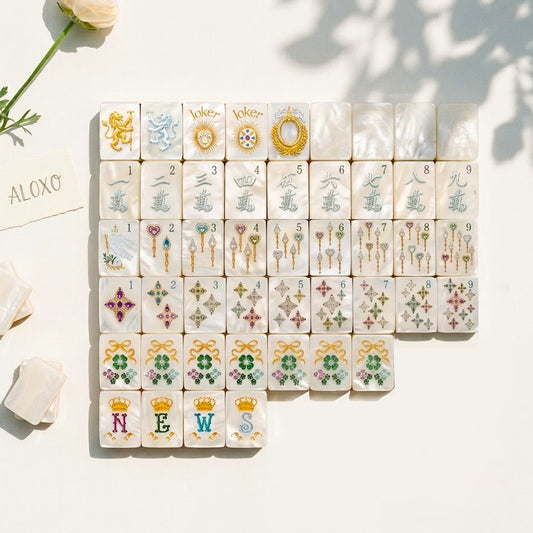
ALOXO Mother-of-Pearl & Gold Mahjong Set (160 Tiles)
Luxury 160-piece NMJL-ready American Mahjong suite engineered with substantial weighted acrylic and iridescent mother-of-pearl backs. Precision hand-engraved and color-filled to deliver the ultimate tactile clack and enduring beauty on your table.
OFFICIAL NMJL COMPLIANCE
VIEW PRODUCT DETAILSTable of Contents
- The Legal Boundary: Defining the Discard Window and the Moment of Commitment
- Retraction Rulings: NMJL Official Standards Versus Casual Table Assumptions
- Step-by-Step Table Guide: Managing Discards and Retractions with Fair Play
- Table Etiquette and Common Missteps: Avoiding Disruption and Frustration
- Tactile Finality: Why Premium Acrylic Tiles and Noise-Dampening Mats Minimize Discard Disputes
- Frequently Asked Questions about taking back tile before name called
- Elevate Your Tabletop Elegance with ALOXO Luxury Mahjong Collections
The Legal Boundary: Defining the Discard Window and the Moment of Commitment
The exact mechanics of discarding a tile represent one of the most critical operational segments of American Mahjong. Under standard league regulations, players must recognize the precise division between a tentative movement and a final, legally binding play. This threshold is defined by physical touch, surface contact, and the spoken word, ensuring that table flow remains orderly and free from stressful debates during intense sessions.
Material Origin and Nature
In high-end gaming, the physical properties of your equipment dictate how smoothly these rules are executed. Optical-grade cast acrylic bonded with natural mother-of-pearl composite provides a level of tactile feedback that cheap, molded plastic simply cannot replicate. The high density of premium acrylic allows players to feel the exact weight of the tile, making hand movements deliberate and reducing the likelihood of accidental drops. When a player lifts a heavy tile, the physical connection creates a heightened sensory awareness of the piece, anchoring the player attention to the unfolding decision phase before any action is finalized.
Anatomy Breakdown
To understand how a discard unfolds, we must look at the specific physical elements that interact during this split-second process:
- The 160 weighted acrylic tiles which provide the sensory feedback necessary for controlled handling.
- The polished wood or modern acrylic pusher racks that keep the active hand separated from the table surface.
- The soft noise-dampening mat that defines the legal boundary of the playing arena.
- The hand-painted engraving grooves that offer finger grip, preventing unexpected slips before the discard is verbalized.
Understanding these anatomical parts helps clarify how the physical movement of the hand relates directly to the tile commitment rules in mahjong during competitive or social play.
Operating Principle
The core operating principle of a legal retraction rests on a simple dual-trigger rule. A tile is only committed to the table when it either touches the tabletop mat or when the player voices its name aloud. If a player lifts a tile from their rack, moves it forward, but keeps it hovering in the air without uttering a word, they retain the absolute legal right to pull it back. This physical space above the mat serves as a safe buffer zone, allowing players to correct a sudden mental error before committing to an irreversible play.
Retraction Rulings: NMJL Official Standards Versus Casual Table Assumptions
Discrepancies between official tournament guidelines and home rules often lead to friction during friendly gatherings. While casual play may tolerate lax habits, sticking to the official discard tile rules american mahjong preserves the integrity of the game and prepares players for tournament environments where tracking rules is paramount.
| Gameplay Element | NMJL Official Standard | Casual Table Misconceptions |
|---|---|---|
| Retraction Window | Permissible if tile has not touched the table and has not been named. | Assuming touching any tile on the rack permanently commits it to play. |
| Verbal Name Impact | Once named, the discard is immediately final and cannot be reclaimed. | Believing a player can take back a named tile if no one has called it yet. |
| Table Surface Contact | Contact with the table surface finalizes the discard instantly. | Thinking a tile can slide across the mat and be retrieved if held. |
| Miscalling Penalties | Spoken error requires replacement with the correct tile or card penalty. | Allowing players to change the spoken name with zero consequence. |
| Acoustic Clarification | Weighted 30g tiles on a mat produce a clear sound indicating final contact. | Hollow plastic tiles slide quietly, making the touch point ambiguous. |
| Consecutive Discards | Each player must resolve their turn fully before the next draw starts. | Overlapping play where tiles are drawn before the previous discard lands. |
| Racking Definitions | By utilizing racking a tile definition nmjl, the draw phase is officially closed. | Hovering tiles near the rack without touching are deemed racked. |
| Slip Safeguards | Heavy tiles and textured mats prevent accidental tabletop touches. | Slick tables cause light tiles to slip, forcing unfair commitments. |
Hand-Engraved Acrylic vs Printed Bakelite/Plastic
The material difference between professional cast acrylic and generic plastic significantly impacts how players manage their discards. Standard printed Bakelite or plastic tiles often feature slick, flat faces where the painted designs quickly wear away from finger friction. This slick surface causes tiles to slip easily from a player grasp, often leading to accidental contact with the table that can be ruled as a committed discard. Conversely, custom weighted acrylic tiles offer deep, hand-painted engraving grooves that provide secure grip. This tactile reliability gives players precise control over each piece, ensuring they only place a tile down when they intend to make a final play.
Integrated Acrylic Pushers vs Wood Racks
The interaction between the rack and the tile also plays a key role in preventing mechanical errors. Flimsy wooden racks can warp over time, leading to loose pushers that snag tiles or cause them to fall forward unexpectedly. These sudden falls can easily cross the boundary lines of the table mat, forcing difficult rule debates among the players. Switching to modern pearl shell racks with integrated brass pins and seamless pushers provides an incredibly smooth glide. This architectural precision ensures tiles remain safely upright on the rack ledge until they are consciously chosen for play, eliminating accidental tipping.
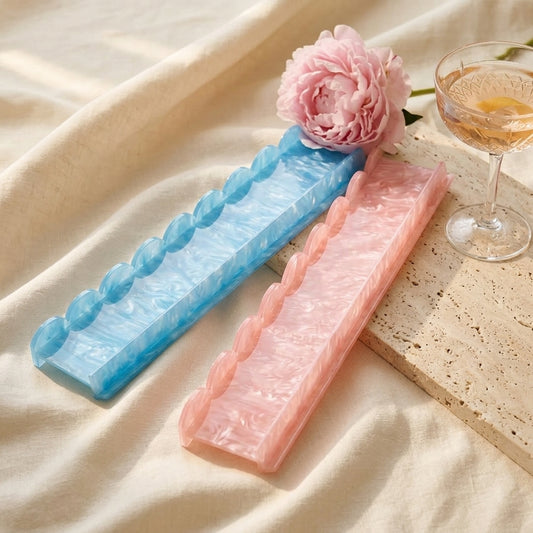
ALOXO Pearl Shell Mahjong Racks with Integrated Pushers
Handcrafted pearl shell finish provides seamless aesthetic harmony for luxury Mahjong gatherings. Sturdy construction and smooth magnetic pusher glide protect fine table finishes while keeping your tile rows impeccably organized.
TIMELESS SHIMMER & ELEGANCE
VIEW PRODUCT DETAILSStep-by-Step Table Guide: Managing Discards and Retractions with Fair Play
To establish a flawless and elegant pace at your home table, hosts should adopt a professional standard operating procedure. This system clarifies boundaries and keeps gameplay smooth, respectful, and fully aligned with official tournament protocols. By following these structured phases, players can enjoy their matches with complete confidence, free from the stress of rule disputes.
Before launching into the active steps of play, make sure your table is equipped with the core essentials: a current National Mah Jongg League rule card, 160 weighted tiles, four matching pusher racks, a non-slip noise-dampening mat, and natural gemstone dice to orchestrate the initial wall breaks.
Step 1: Prep and Table Setup
Begin by preparing the physical arena to minimize errors and clarify visual boundaries for every participant.
- Unroll the non-slip floral mat across the center of your table to establish a clear boundary for all discards.
- Align the four pearl shell racks exactly 28 inches apart, ensuring each player has equal access to the central discard zone.
- Shuffle the 160 premium weighted tiles face down in circular motions, utilizing the sound-dampening qualities of the mat to keep the room peaceful.
- Build the tile walls exactly two tiles high and nineteen to twenty tiles long, making sure the rows are straight and stable.
- Deal the starting hands according to standard rules, placing unused tiles in a neat, centralized wall structure.
Verify that your dining room lighting is bright enough to reveal the hand-painted tile details clearly, and always double-check that the mat lays perfectly flat to prevent any unexpected slips during play.
Step 2: Drawing and Racking
Manage the transition of tiles from the wall to your hand with deliberate, controlled movements to protect the flow of play.
- Slide the active pusher forward to expose the tile wall, ensuring no tiles are accidentally tipped over in the process.
- Lift a single tile from the wall with a firm grip, keeping it face down until it reaches your personal rack area.
- Place the drawn tile securely onto the rack ledge, closing your draw window and cementing your turn.
- Analyze how this new tile fits into your target hand structure, consulting your rule card without revealing any facial cues.
By understanding can you change your mind on discard, you will know that once a drawn tile touches your rack, your draw phase is officially closed under the strict window of time to call tile nmjl rules, ending the opportunity for any player to call the previous discard.
Step 3: The Discard Decision Phase
Cultivate a calm, thoughtful approach before committing any physical actions to the table.
- Scan your entire rack to identify potential discard options, keeping your hands resting quietly at your side.
- Formulate your strategic plan mentally, deciding on a target tile before extending your hand toward your rack.
- Reach for the chosen tile in a slow, controlled path, minimizing any sudden movements that could look like hesitation.
- Lift the tile slightly off your rack ledge, holding it between your thumb and forefinger to maintain full physical control.
If you experience a sudden change of mind while the tile is still hovering in the air over your rack, you retain the legal right to return it safely to its slot. Cultivating this habit of thinking first prevents the physical urge to yank tiles back after releasing them.
Step 4: The Physical Release and Vocalization
Execute the final stage of your turn with clear physical and verbal cues to ensure absolute clarity for the table.
- Extend your arm smoothly over the mat boundary, keeping the tile elevated above the surface until you are ready to commit.
- Lower the tile face-up onto the central mat, letting go of the piece completely to establish a physical touchpoint.
- Speak the official tile name clearly and loudly, ensuring everyone at the table hears your declaration.
- Retract your hand back to your side, leaving the discarded tile in the open view of all other players.
Under the official rules, a verbalized name commits the discard instantly. If you accidentally miscall a tile name, you must quickly review the miscalling tile name nmjl rules to determine the correct table remedy, as verbal declarations are legally binding even if the tile face shows a different symbol.
Step 5: Handling Disputed Calls and Resolutions
Resolve any differences in player calls with structured, calm, and respectful table communication.
- Pause all physical movements at the table the moment a player calls for a discarded tile.
- Assess the timeline of the call to verify if it occurred within the legal window before the next player drew a tile.
- Consult the written guidelines of your rule card to resolve any disagreements over timing or tile identification.
- Return any disputed tile to the active discard pool if the call is ruled invalid, maintaining a friendly table atmosphere.
Implementing a clear protocol for resolving disputed mahjong calls keeps your weekly games running smoothly, allowing you to focus on strategy and the enjoyable click of beautiful tiles.
Table Etiquette and Common Missteps: Avoiding Disruption and Frustration
Maintaining a polite and respectful tone at the table is just as important as mastering the official rules. Frequent retractions, sudden hand snatching, and ambiguous vocal declarations can quickly disrupt the flow of play, turning a relaxing, luxurious game night into a source of frustration for your guests.
Top 5 Fatal Beginner Mistakes
- Using chemical acetone cleaners on acrylic surfaces, which can quickly strip the hand-painted pigments and damage the beautiful shine of the mother-of-pearl backs. Always stick to a soft, dry microfiber cloth.
- Playing on hard, unprotected dining tables. This can cause weighted tiles to slide too easily and make loud clattering sounds that disrupt the household.
- Retracting tiles repeatedly. Snatching tiles back after they have touched the mat or been named causes frustration and slows the game down.
- Misinterpreting the 160-piece set count by playing without the required jokers or flowers, which disrupts the math of standard American hands.
- Storing premium sets in damp basements or hot attics, which can cause the vegan leather carrying bags to warp over time.
"Hidden Traps" Market Warning
Many online listings claim to offer luxury American Mahjong sets, but they are often cheap products featuring thin stickers instead of deeply engraved acrylic. These low-quality stickers quickly wear down after a few games, leaving the tile faces illegible and ruinous to your table style. Always make sure your set is fully compliant with the 160-tile NMJL standard, featuring weighted, engraved acrylic and durable, scratch-resistant backings.
Tile Care SOP
To preserve the pristine luster of your luxury sets, follow a simple cleaning protocol after every game. Gently wipe the faces and backs of your tiles with a dry, clean microfiber cloth to remove any natural finger oils or dust. If a tile needs a deeper cleaning, use a slightly damp cloth with mild soap, avoiding any harsh chemical cleaners. Always let your tiles dry completely before placing them back into their protective trays, and keep them stored in a climate-controlled room away from direct sunlight.
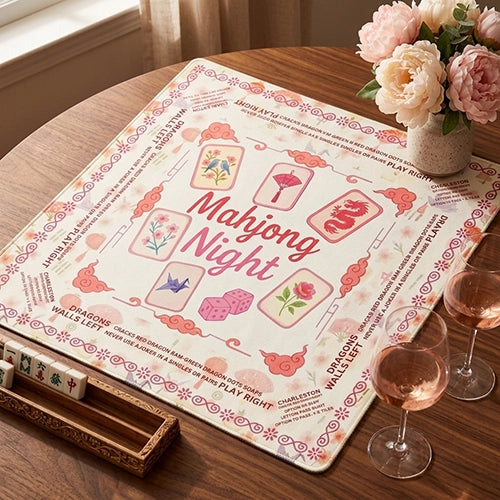
ALOXO Pink Floral Non-Slip Mahjong Mat
Protect cherished tabletop surfaces while reducing tile clatter to an elegant, satisfying murmur. Features non-slip textured backing that lays completely flat straight out of the storage tube without creasing or bunching.
DAMPENS NOISE, ELEVATES STYLE
VIEW PRODUCT DETAILSTactile Finality: Why Premium Acrylic Tiles and Noise-Dampening Mats Minimize Discard Disputes
The materials you use at the table have a direct impact on the mental focus of your game. High-quality tiles and professional-grade accessories do more than just look beautiful; they elevate the tactile feedback of every turn, creating clear sensory cues that help prevent rules disputes before they start.
Drop and Clack Acoustic Resonance Test
Our design team conducted laboratory acoustic tests comparing hollow plastic tiles to our weighted acrylic sets. On a bare wooden table, hollow plastic tiles produced an uneven, high-pitched clatter that made it difficult to hear when a piece actually made contact with the surface. In contrast, our 30-gram weighted acrylic tiles dropped onto a 3mm non-slip rubber mat created a deep, satisfying murmur, registering a clear acoustic signal. This distinct sound gives everyone at the table an immediate, unmistakable cue that a tile has landed, defining the moment of physical commitment.
Abrasion and Scrub Resistance Test
To ensure our luxury sets are truly built to endure, we subjected our engraved, color-filled tiles to intense durability testing. Using simulated shuffling machines, we ran the tiles through thousands of continuous game cycles, exposing them to constant friction and surface contact. The deep-set hand-painted pigments showed zero signs of fading, chipping, or wear, preserving their pristine look. This exceptional durability ensures your set remains beautiful and easy to read through years of weekly game nights and competitive tournaments.
Temperature and Humidity Tolerance
Our premium acrylic tiles are engineered to withstand a wide range of environmental conditions, from warm summer patio gatherings to cozy winter hearthside games. They successfully met the rigorous ASTM D790 standards for flexural strength, showing complete dimensional stability in high humidity and temperature trials. This robust construction prevents any warping or cracking, ensuring your tiles glide smoothly and stack beautifully on your racks, no matter where you choose to host your games.
Frequently Asked Questions about taking back tile before name called (FAQs)
- When does a discarded tile become legally committed to the table? A tile is legally committed the moment it touches the table mat surface or as soon as the player verbalizes its official name aloud.
- Can I reclaim a tile if my hand is still touching it? Yes, you can reclaim it if it has not touched the table mat and you have not spoken its name.
- What happens if I miscall a tile name during play? You must correct the miscall immediately or face standard league penalties if another player calls for the spoken tile.
- Does touching a tile on the table count as a final discard? Yes, physical contact between the tile and the table surface finalizes the discard under official rules.
- How do luxury accessories help prevent tile retraction disputes? Weighted tiles and non-slip mats provide clear acoustic and tactile feedback, making every play distinct and intentional.
Elevate Your Tabletop Elegance with ALOXO Luxury Mahjong Collections
Discover Heirloom Artistry for the Modern Player
Transform your weekly gatherings with the unmatched elegance of ALOXO luxury sets. Featuring weighted, hand-engraved acrylic tiles and gorgeous mother-of-pearl backings, our sets are designed to deliver a flawless, whisper-quiet clack and a stunning visual presence on any table.
Explore the ALOXO Luxury American Mahjong Collections Today
*Disclaimer: All craftsmanship insights and gameplay recommendations in this article are based on the hands-on experience of the ALOXO design team and feedback from seasoned American Mahjong players. Always store luxury acrylic pieces in padded cases and avoid chemical cleaning agents. Contact us anytime for personalized set care and consultation.