
What to Do When Tile Is Missing Mid Game: Fix
what to do when tile is missing mid game is a critical question for hosts plagued by cheap, fragile tiles that easily slip off the table. Investing in a premium, weighted heirloom set from ALOXO prevents game night disruptions while ensuring complete compliance and elegant performance.
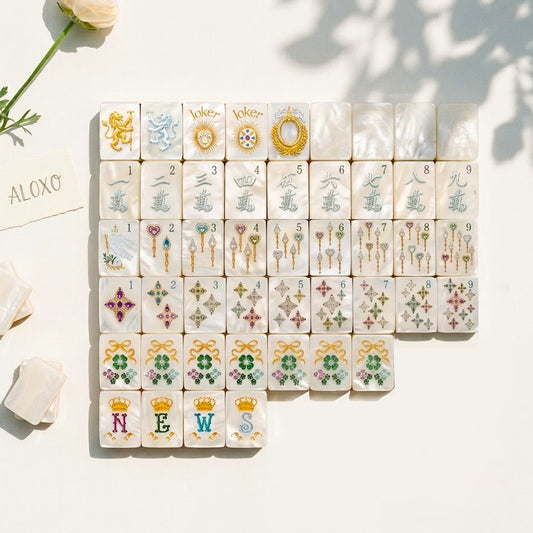
ALOXO Mother-of-Pearl & Gold Mahjong Set (160 Tiles)
Luxury 160-piece NMJL-ready American Mahjong suite engineered with substantial weighted acrylic and iridescent mother-of-pearl backs. Precision hand-engraved and color-filled to deliver the ultimate tactile clack and enduring beauty on your table.
OFFICIAL NMJL COMPLIANCE
VIEW PRODUCT DETAILSTable of Contents
- 1. Verifying 160 Tiles Count: The Technical Anatomy of a Complete NMJL-Ready Suite
- 2. Step-by-Step SOP: What to Do When Tile Is Missing Mid Game
- 3. Heirloom Acrylic vs Mass-Market Sets: Preventing Tile Count Discrepancy Fixes
- 4. Common Pitfalls When Handling Incomplete Games & Tournament Missing Tile Rulings
- 5. Lifespan Extension & Storage: Protecting Your Set in a Specialized Compartmentalized Bag
- 6. Frequently Asked Questions (FAQs)
Verifying 160 Tiles Count: The Technical Anatomy of a Complete NMJL-Ready Suite
Understanding the math behind your tabletop configuration is the first defense against mid-play disruptions. In American Mahjong, a complete set contains exactly 160 tiles to accommodate the dynamic gameplay sanctioned by the National Mah Jongg League. A discrepancy of even one single piece alters the mathematical probability of completing your hands and completely invalidates the integrity of the active wall.
Material Origin & Nature
The physical composition of your gaming pieces directly affects how easily they stay grouped and structured on the table. Standard premium sets utilize high-density optical-grade cast acrylic bonded seamlessly to a shimmering natural mother-of-pearl backing. This composite material ensures that each tile has a low center of gravity and excellent surface-to-surface friction. Cheap injection-molded plastic tiles lack this weight distribution, which frequently causes them to bounce, slide, or slip off the table edge unnoticed during vigorous shuffling.
Anatomy Breakdown
A masterfully crafted suite must contain specific, balanced components to support traditional setups. To perform a successful audit of your inventory before or after play, verify the following exact component breakdown:
- Exactly 36 suit tiles for the Craks suit, clearly engraved with standard Chinese characters and numerical indices.
- Exactly 36 suit tiles for the Bams suit, displaying traditional bamboo designs alongside vibrant hand-painted pigments.
- Exactly 36 suit tiles for the Dots suit, showcasing perfectly concentric circles that are easily readable across the table.
- Exactly 16 Wind tiles, comprising four each of East, South, West, and North configurations.
- Exactly 12 Dragon tiles, which include four Red Dragons, four Green Dragons, and four White Dragons, also referred to as soaps.
- Exactly 8 Flower tiles, adorned with custom floral motifs that harmonize beautifully with the aesthetics of the set.
- Exactly 8 Joker tiles, serving as wildcards which are crucial for the complex alignments on the card.
- Exactly 8 blank or spare tiles, provided as immediate replacements to keep your luxury game functional at all times.
Operating Principle
The mechanics of a perfect game night rely on physical consistency, tactical resonance, and sound management. Weighted tiles designed to weigh at least 30 grams per piece create an acoustic profile that dampens harsh clatter into a satisfying, low-frequency clack. When pushed along a velvet or neoprene surface, these heavy tiles track straight, making it incredibly easy to detect if a tile slips away. The high-precision square edges also allow players to stack double-tier walls that remain completely stable throughout the Charleston phase.
Step-by-Step SOP: What to Do When Tile Is Missing Mid Game
When a player notices a discrepancy in their hand or in the active wall during play, panic must not take over the table. Establishing a clear, professional Standard Operating Procedure ensures that the issue is diagnosed and resolved without causing arguments or ruining the afternoon. Before beginning this troubleshooting routine, ensure you have the core game elements on hand, including your National Mah Jongg League card, 160 tiles, four racks with pushers, a noise-dampening mat, and coin counters.
Step 1: Pause Play and Declare a State of Interruption
The moment a tile count discrepancy is suspected, the active player must immediately call for a pause. Do not throw cards, shuffle hands, or discard any pieces, as preserving the exact state of the board is vital for diagnosing when the loss occurred.
- Instruct all four players to freeze their current hands on their respective racks without mixing active tiles with discarded ones.
- Place all pushers in their locked position to prevent any accidental disruption of the wall.
- Count the physical pieces currently sitting on each rack to verify if a player is holding too many or too few tiles.
- Count the remaining wall sections to calculate if the total count matches the expected progression of the hand.
The physical wall must maintain a strict height of exactly two tiles high throughout the dealing phase. Any deviation from this double-tier structure indicates a sorting error or an physical displacement that occurred during the initial setup.
Tabletop Tip: Always verify that the hand size matches the card requirements before declaring a play dead. This prevents false alarms and keeps the flow of the game smooth.
Step 2: Execute a Systematic Multi-Zone Search Pattern
If the initial count confirms that a physical tile is missing from the active pool, players must conduct a coordinated sweep of the immediate playing environment. Tiles do not vanish into thin air, and they are usually discovered resting just outside the line of sight.
- Inspect the deep folds and hemmed borders of your table mat where thin pieces can easily hide.
- Search the narrow gaps between your racks and the table surface, as well as the interior slots of the pushers.
- Conduct a thorough check of the floor area directly beneath the table, paying special attention to thick carpets or chair legs.
- Examine the storage bags, accessory trays, and cardholders nearby where a piece might have been set down during setup.
When searching the floor, use a flashlight held parallel to the ground to cast long shadows that reveal the location of a missing piece. Standard table heights of 28 inches can easily hide fallen pieces under shadows cast by chairs.
Tabletop Tip: Keep the floor clear of clutter like purses or coats during play to make locating fallen tiles instantaneous.
Step 3: Diagnose the Discrepancy Timeline
Determining exactly when the tile was lost is essential for deciding whether the current hand can be salvaged or if a complete restart is required under tournament guidelines.
- Establish if the tile was missing before the first deal by recounting the unused spares inside the travel bag.
- Declare the current hand void if the piece was lost before the Charleston phase began.
- Determine if a player made an error during a discard or exposure, leading to an incorrect tile count on their rack.
- Apply standard penalty rules if a player is found to have a dead hand due to an unresolvable tile count error.
The official tournament standard dictates that any game played with an incomplete set must be ruled void if the missing piece is not found within two rounds of play. This rule prevents players from pursuing hands that are mathematically impossible to complete.
Tabletop Tip: Instruct your dealer to perform a quick count of the walls before the Charleston phase to catch any errors early.
Step 4: Deploy the Blank Tile Emergency Protocol
When a tile is lost mid-game and cannot be found immediately, you do not have to cancel your gathering. Premium sets include dedicated blank pieces designed to serve as instant replacements.
- Retrieve one blank tile from your carrying case to replace the lost piece.
- Agree as a group on which specific character or suit the blank tile will represent for the rest of the session.
- Use a temporary non-permanent water-soluble marker to write the suit value on the face of the blank.
- Resume play with a complete 160-tile count, ensuring the math of your hand remains intact.
The standard thickness of these replacement pieces is exactly 12mm, matching the rest of the set. This ensures they slide smoothly along the racks and do not disrupt the feel of the tiles during shuffling.
Tabletop Tip: Never use permanent ink on premium acrylic tiles, as it can damage the polished finish of the piece.
Step 5: Conclude Play and Enact Protective Storage Procedures
Once the gaming session is over, the host must transition from emergency fixes to permanent preservation. Leaving pieces scattered on the table is the main cause of lost tiles.
- Collect all 160 pieces and arrange them face up on your table mat to verify the complete inventory.
- Place the tiles inside a compartmentalized travel case to prevent them from rubbing against each other.
- Clean the surface of the tiles using a dry microfiber cloth to remove finger oils before packing them away.
- Store your racks and pushers in their designated sleeves to avoid scratching the polished acrylic.
Keeping your set stored in a climate-controlled room with low humidity prevents the delicate mother-of-pearl backing from separating from the acrylic face. Proper storage ensures your set remains in pristine condition for years to come.
Tabletop Tip: Always double-check the zippers on your storage case before lifting it to prevent tiles from spilling out.
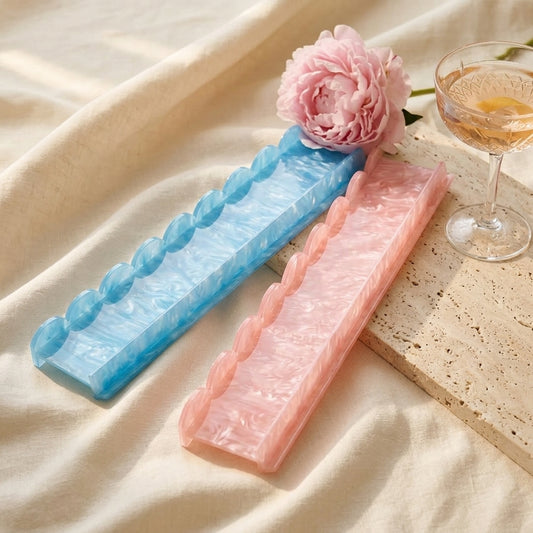
ALOXO Pearl Shell Mahjong Racks with Integrated Pushers
Handcrafted pearl shell finish provides seamless aesthetic harmony for luxury Mahjong gatherings. Sturdy construction and smooth magnetic pusher glide protect fine table finishes while keeping your tile rows impeccably organized.
TIMELESS SHIMMER & ELEGANCE
VIEW PRODUCT DETAILSHeirloom Acrylic vs Mass-Market Sets: Preventing Tile Count Discrepancy Fixes
The quality of the materials used in your Mahjong set directly impacts how well it holds up to regular play. Investing in a premium set made from high-grade materials reduces the risk of losing or damaging pieces, ensuring your games remain complete and enjoyable for years to come.
| Criteria | ALOXO Luxury Acrylic Solution | Mass-Market Plastic Solution |
|---|---|---|
| Tile Weight & Density | 32 grams per tile of solid cast acrylic | 16 grams per tile of hollow injection plastic |
| Backing Integration | Seamless mother-of-pearl composite | Glued-on printed paper or painted plastic |
| Engraving Precision | Deep CNC engraving with hand-filled paint | Shallow stamped print that fades quickly |
| Slippage Resistance | High-grip polished surface designed for mats | Slippery mold-release residue that slides easily |
| Wall Stability | Perfectly squared edges for stable stacking | Rounded, uneven edges prone to collapsing |
| Sound Quality | Deep, resonant clack that sounds premium | High-pitched, hollow click that can be noisy |
| Included Spares | 8 matching blank tiles for quick replacement | No blanks or mismatched generic spares |
| Storage Options | Padded vegan leather case with compartments | Flimsy cardboard or thin vinyl cases |
Hand-Engraved Acrylic vs Printed Bakelite/Plastic
The tactile feel of your Mahjong tiles is an essential part of the playing experience. Premium cast acrylic tiles offer a solid feel and a pleasing weight that makes them a joy to handle. Over time, cheap printed tiles can wear down, leading to faded designs and mismatched pieces that make it difficult to play. Hand-engraved, color-filled tiles resist wear and tear, keeping your set looking beautiful and ensuring that every piece is easily recognizable.
Using high-quality tiles also prevents issues where players might misidentify a faded tile, leading to errors in play or disputes over card combinations. Investing in a premium set ensures that your games remain fair and enjoyable for everyone at the table.
Integrated Acrylic Pushers vs Wood Racks
The racks you use to hold and organize your tiles also play a role in preventing lost pieces. Modern acrylic racks with integrated pushers offer a smooth, magnetic glide that makes it easy to move your tiles without them tipping over or slipping off the rack. Cheap wooden racks can warp or splinter over time, leading to uneven surfaces that make it difficult to keep your tiles secure.
Additionally, high-quality racks are designed to fit perfectly inside your travel case, preventing the tiles from shifting or getting damaged during transport. Keeping your racks and tiles organized is the best way to ensure that your set remains complete and ready for your next game night.
Common Pitfalls When Handling Incomplete Games & Tournament Missing Tile Rulings
Handling a missing tile situation incorrectly can lead to confusion and frustration for players. Understanding the common mistakes to avoid, as well as the official rules for tournament play, helps you handle these situations with confidence and ensure a fair game for everyone involved.
Top 5 Fatal Beginner Mistakes
- Continuing to play with an incomplete set, which makes it mathematically impossible to complete certain hands on the card.
- Using harsh chemical cleaners like acetone or alcohol on acrylic tiles, which can ruin the polished finish and dissolve the paint.
- Shuffling tiles on a hard, unprotected surface, which can lead to scratched backs and chipped edges over time.
- Failing to count your tiles before packing them away, making it difficult to know when a piece was actually lost.
- Storing your set in a damp or poorly ventilated area, which can cause the mother-of-pearl backing to warp or separate.
Hidden Traps Market Warning
When shopping for a new Mahjong set, be careful to avoid cheap sets marketed as premium products. Many budget-friendly sets use lightweight materials or printed designs that wear out quickly. Look for sets that are fully compliant with National Mah Jongg League guidelines, featuring 160 tiles and high-quality engraving. Investing in a genuine, heirloom-quality set ensures that you do not have to worry about replacing faded or damaged pieces after just a few sessions of play.
Tile Care SOP
To keep your premium acrylic tiles looking their best, follow a regular cleaning and maintenance routine. After each game night, wipe the surface of the tiles with a clean, dry microfiber cloth to remove dust and finger oils. If the tiles need a deeper clean, use a damp cloth with a mild soap, making sure to dry each piece thoroughly before storing them. Avoid using abrasive materials or harsh chemicals that can scratch the polished surface or damage the delicate hand-painted engraving.
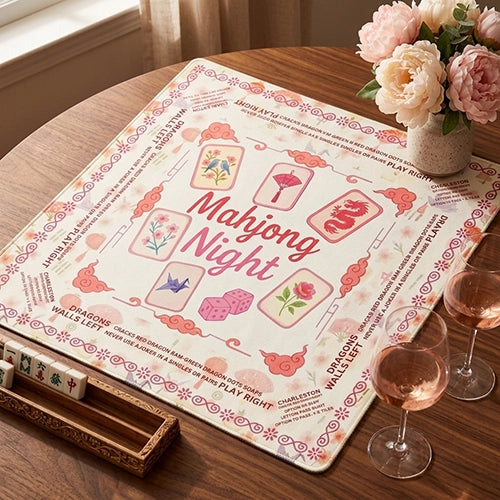
ALOXO Pink Floral Non-Slip Mahjong Mat
Protect cherished tabletop surfaces while reducing tile clatter to an elegant, satisfying murmur. Features non-slip textured backing that lays completely flat straight out of the storage tube without creasing or bunching.
DAMPENS NOISE, ELEVATES STYLE
VIEW PRODUCT DETAILSLifespan Extension & Storage: Protecting Your Set in a Specialized Compartmentalized Bag
Proper storage is key to extending the life of your luxury Mahjong set and preventing lost pieces. Keeping your set stored in a dedicated, high-quality carrying case protects the tiles from dust, moisture, and accidental damage while making it easy to transport your set to your next gathering.
Post-Game Cleaning Protocol
After your game night has wrapped up, spend a few minutes cleaning your tiles before packing them away. Wipe down the faces and backs of the pieces with a clean, dry microfiber cloth to remove finger oils and sweat. This prevents the buildup of residue that can make the tiles slippery or difficult to handle during your next game night. Ensure the tiles are completely dry before putting them into their storage trays.
Safe Polishing & Luster Care
To keep the mother-of-pearl backing on your luxury tiles looking vibrant and glossy, avoid exposing them to harsh cleaning products or direct sunlight for extended periods. If the tiles start to look dull, wipe them gently with a soft cloth dipped in a small amount of mineral oil, then buff them dry with a clean microfiber cloth. This helps restore the natural luster and shimmer of the backing without damaging the acrylic face.
Climate-Controlled Storage Checklist
To ensure your set remains in pristine condition, keep it stored in a cool, dry area when not in use. Follow this simple checklist to protect your set:
- Store your set in a climate-controlled room with low humidity to prevent warping.
- Keep the carrying case stored flat to prevent the tiles from shifting or rubbing together.
- Avoid storing your set in damp basements, hot attics, or garages.
- Keep your racks and pushers stored in their designated protective sleeves.
- Always double-check that all 160 tiles are accounted for before closing the case.
- Keep a small packet of silica gel inside the carrying case to absorb any excess moisture.
- Never stack heavy items on top of your Mahjong case to avoid crushing the interior trays.
Frequently Asked Questions about what to do when tile is missing mid game (FAQs)
- What is the first step when a tile is missing mid-game? Immediately pause play and instruct all players to keep their hands in place. Recount all active pieces on the racks and remaining walls to confirm if a physical piece is actually missing.
- Where are lost tiles most commonly found during a game? Check the deep folds of your table mat, under the racks, behind chair cushions, or on the floor directly beneath the play area. Use a flashlight to help spot fallen pieces.
- Can a game continue if a missing tile cannot be found? Under official tournament rules, if the missing piece is not