
Calling Tile When Rack Is Full: Avoid Dead Hand
calling tile when rack is full is a critical mistake that immediately results in a dead hand penalty, spoiling the game night experience when playing with poorly designed, lightweight plastic tiles. Fortunately, investing in an heirloom ALOXO set prevents these errors through impeccable tile-to-rack proportioning and clear visual boundary organization.
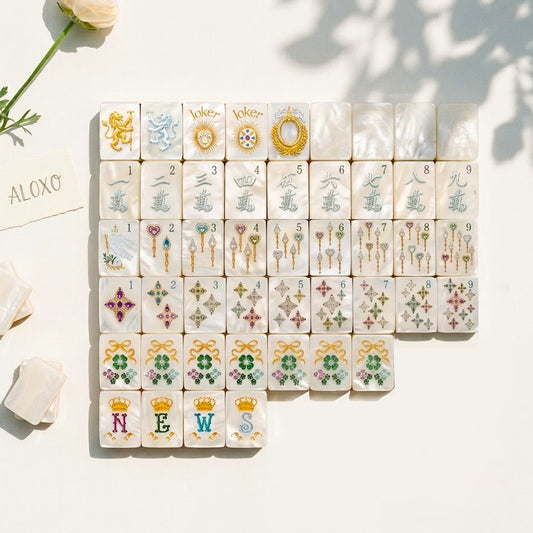
ALOXO Mother-of-Pearl & Gold Mahjong Set (160 Tiles)
Luxury 160-piece NMJL-ready American Mahjong suite engineered with substantial weighted acrylic and iridescent mother-of-pearl backs. Precision hand-engraved and color-filled to deliver the ultimate tactile clack and enduring beauty on your table.
OFFICIAL NMJL COMPLIANCE
VIEW PRODUCT DETAILSTable of Contents
- The Technical Sequence of Calling a Discard with 14 Tiles
- Step-by-Step SOP: Maintaining Proper Calling Sequence NMJL at the Table
- The Dreaded Fifteen-Tile Penalty: Demystifying the Dead Hand for Tile Overload
- Standard Racks vs Mass-Market Sets: Managing Rack Capacity with ALOXO Precision
- Mind Wellness and Table Styling: Why Spatial Discipline Keeps Your Brain Sharp
- Frequently Asked Questions about calling tile when rack is full (FAQs)
- Elevate Your Tabletop Elegance with ALOXO Luxury Mahjong Collections
To establish perfect technical alignment with official gameplay standards, this master resource breaks down the main structural pillars of tile-to-rack discipline:
- Technical Sequence: Understanding the strict progression of play that forbids calling any discarded tile when a player has already acquired fourteen tiles on their active display area.
- The Racking Deadline: How touching or sliding a newly drawn tile from the wall to the rack forfeits all immediate claims to the previously discarded tile.
- Overload Penalties: Navigating the severe fifteen-tile infraction that triggers an immediate dead hand declaration.
- Physical Decisiveness: Developing deliberate physical habits to announce calls clearly before touching any wall tiles.
- Equipment Precision: Utilizing custom-dimensioned ALOXO luxury racks to visually monitor tile counts and maintain flawless compliance.
The Technical Sequence of Calling a Discard with 14 Tiles
In the highly structured domain of American Mahjong, understanding the technical sequence of play is paramount to avoiding costly tactical errors. A player must never attempt to make a call for a discarded tile when they already possess fourteen active tiles in their hand or on their rack. This specific rule ensures the integrity of turn progression, preventing players from holding excess tiles and creating unfair mathematical advantages during the matching phases of the game.
Material Origin & Nature
The physical feedback of your equipment plays a vital role in preventing sequence errors. ALOXO tiles are manufactured using optical-grade cast acrylic bonded with a natural mother-of-pearl composite backing. This advanced material science produces a tile with superior density and weight, allowing players to feel the exact weight of their hand. Unlike cheap injection-molded plastic alternatives, these premium materials resist sliding and slipping, helping players maintain their visual layout and prevent accidental illegal moves during intense table play.
Anatomy Breakdown
Every pristine ALOXO setup features a meticulously engineered component system designed for tournament-level accuracy:
- 160-Tile Composition: Includes 8 custom Jokers, 8 gorgeous Flowers, and standard suits, satisfying every requirement of the National Mah Jongg League.
- Engraved Floral Suits: Deeply carved grooves filled with fade-resistant pigments to ensure flawless legibility under any light.
- Magnetic Pusher Racks: Perfectly aligned acrylic structures designed to glide smoothly across the table surface.
- Non-Slip Rubber Base: Heavyweight neoprene table protection that prevents the tiles and racks from shifting out of position.
Operating Principle
The mechanical foundation of successful play relies on physical and spatial awareness. The unique center of gravity in weighted acrylic tiles provides a satisfying tactile resistance, enabling players to slide, flip, and organize their hands with minimal effort. This physical connection reinforces proper calling tiles rules american mahjong by letting the player physically feel the difference between a complete hand and an overloaded rack. Developing this sensory discipline is the most reliable way to eliminate accidental calls and maintain a compliant table environment.
Step-by-Step SOP: Maintaining Proper Calling Sequence NMJL at the Table
To play at a competitive level, hosts and players must establish a standard operating procedure for every turn. Before diving into the sequence, players must gather the essential components: an official National Mah Jongg League card, a complete 160-tile acrylic set, 4 secure racks with integrated pushers, a non-slip noise-reduction mat, and natural gemstone dice. Setting up this elite environment ensures that every physical movement is clean, visible, and easy to track for everyone at the table.
Step 1: Declare the Intent to Call Audibly
The moment an opponent discards a tile you need, you must immediately make a clear, vocal declaration of call before touching any physical pieces on the board. State Call, Cong, or Pong in a strong, audible voice to halt the gameplay action. This physical declaration establishes your priority over the tile and alerts the table that you are pausing the normal flow of play. You must never reach out to grab a tile from the center table without making this vocal announcement first, as doing so violates basic table etiquette and can cause confusion among the other participants.
Key mechanical actions for this initial step include:
- Vocalize your specific call immediately upon the tile touching the table surface.
- Pause your hand movements to let other players acknowledge your voice.
- Observe the table to ensure no other player has already begun racking a drawn tile.
- Verify that the discarded tile matches your current tactical needs before proceeding.
The standard timing specification for this action requires making the vocal declaration within the brief window of time to call tile nmjl, which officially closes when the next player in order has fully racked their newly drawn tile. To maintain quality control, players should keep their hands resting comfortably on the table edge until they decide to make a call, reducing the temptation to make impulsive, illegal movements.
Step 2: Expose the Matching Combination
Once you have audibly claimed the discard, you must immediately move the corresponding tiles from your rack up to the top exposed ledge. This physical exposure proves to the table that your call is valid and legally conforms to the hands displayed on your NMJL card. It is a common mistake to pick up the discarded tile before exposing your matching combination. You must display your tiles first to show that you have the required matching pieces, maintaining transparency and keeping the game fair for everyone.
Perform these physical actions in sequence:
- Retrieve the matching tiles from the concealed section of your rack.
- Place them face-up on the exposed top shelf of your acrylic rack.
- Ensure the face of each tile is perfectly visible to all opponents at the table.
- Avoid mixing these exposed pieces with your active, concealed hand.
According to standard tournament guidelines, your exposed tiles must sit squarely on the flat top ledge of your rack, keeping them clearly separated from your remaining concealed pieces. To maintain excellent legibility, ensure that the hand-painted gold and floral details face directly toward your opponents under standard dining room or club lighting.
Step 3: Retrieve the Discard and Integrate
After displaying your matching tiles, reach to the center of the table to retrieve the discarded piece. Place this newly acquired tile directly into the exposed group on the top of your rack. This step completes the physical representation of your combination, showing everyone that you now have a complete, legal group of tiles. The retrieved tile must never enter the concealed portion of your rack, as doing so is a serious infraction that can lead to an immediate penalty.
Keep these critical mechanical points in mind:
- Reach directly to the center discard pile without disturbing other discarded pieces.
- Slide the claimed tile over to your rack using a smooth, controlled motion.
- Nestle the tile directly alongside its matching partner tiles on your exposure ledge.
- Double-check that the completed exposure matches the requirements of your targeted hand.
The completed exposure should occupy a clear, central position on your top shelf, away from any previous exposures. To prevent scratching the hand-engraved details on your tiles, slide them gently across your non-slip mat rather than dragging them roughly over the table surface.
Step 4: Discard a Tile to Complete Your Turn
With your exposure complete and verified, you must now select one tile from your concealed hand to discard. This action restores your hand to the correct count of thirteen active tiles, completing your turn and allowing the game to proceed. Take your time to select the discard, as once the tile touches the table and is named, your turn is officially over and you cannot change your mind.
Complete the discard process using these steps:
- Select a tile from your concealed row that does not fit your target hand.
- Lift the tile cleanly from your rack to prevent displacing adjacent pieces.
- Place it face-up in the center discard area with a clear, audible naming of the tile.
- Release your grip on the tile completely to mark the official end of your turn.
The discard must land within the designated center area of your table, spaced neatly away from active racks. For the best tactical experience, practice using a swift, decisive placement that lets the weighted acrylic produce its signature, elegant sound against your table mat.
Step 5: Regulate the Draw and Avoid Overload
If you choose not to call a discard, you must wait for your turn to draw a new tile from the wall. You must master the physical timing of drawing to avoid making a racking a tile definition nmjl error. Touching, sliding, or placing a drawn tile onto your rack instantly closes the window of opportunity to call the previous discard, locking in your choice and moving the game forward. Understanding this physical boundary is essential for maintaining proper proper calling sequence nmjl and keeping your hand legal.
Maintain spatial discipline with these habits:
- Keep your hands back until the previous player has finished discarding.
- Draw the next tile from the open wall end using a clean, upward lift.
- Bring the tile directly to your rack without letting it hover over other areas.
- Slide it into your concealed row to begin your normal evaluation phase.
Standard wall structures are built two tiles high and nineteen to twenty tiles long, depending on your set size. When drawing, lift the top tile first before taking the bottom one. To keep your tiles pristine, avoid dropping them onto hard surfaces or letting them clatter loudly against other pieces during the draw phase.
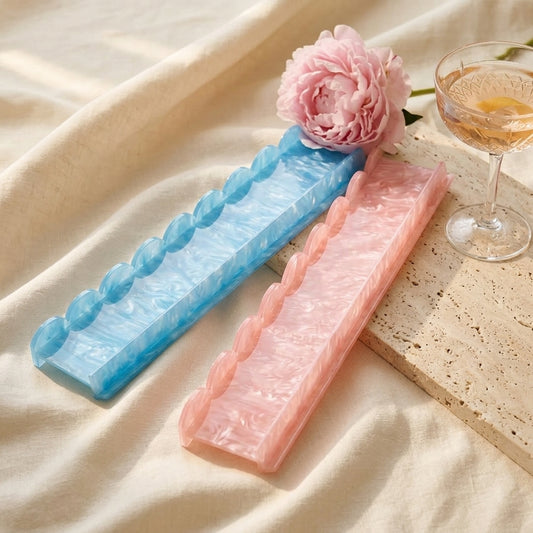
ALOXO Pearl Shell Mahjong Racks with Integrated Pushers
Handcrafted pearl shell finish provides seamless aesthetic harmony for luxury Mahjong gatherings. Sturdy construction and smooth magnetic pusher glide protect fine table finishes while keeping your tile rows impeccably organized.
TIMELESS SHIMMER & ELEGANCE
VIEW PRODUCT DETAILSThe Dreaded Fifteen-Tile Penalty: Demystifying the Dead Hand for Tile Overload
One of the most frustrating moments at any Mahjong gathering is having your hand declared dead due to a basic tile-counting mistake. The dreaded fifteen-tile penalty occurs when a player inadvertently pulls a tile onto an already full rack, resulting in a dead hand for tile overload. Once your hand is declared dead, you are disqualified from winning the current round, though you must continue to discard tiles in turn to support the remaining active players. Understanding how to manage your rack capacity and prevent these errors is crucial for enjoying a seamless, competitive game.
Top 5 Fatal Beginner Mistakes
To keep your game night running smoothly, avoid these common tactical and physical errors:
- Making a duplicate draw: Accidentally drawing a tile from the wall when you already received a discard, causing a calling with 14 tiles penalty.
- Touching wall tiles early: Reaching for a wall tile before resolving a pending call, which results in a picking before calling error.
- Cleaning with harsh chemicals: Using acetone or alcohol spray on your acrylic pieces, which can strip the paint and ruin the finish.
- Failing to declare exposures: Placing tiles face-down or keeping them in your hand after making a call, risking an accidental tile exposure penalty.
- Using warped wooden racks: Playing with uneven, sticky wooden pushers that cause tiles to fall over and disrupt your layout.
Hidden Traps Market Warning
Many mass-market Mahjong sets use cheap paper stickers or thin printed ink instead of genuine engraving on their tiles. These printed designs quickly wear off after a few months of social play, leaving you with illegible symbols and mismatched colors. Additionally, many cheap sets sold online contain only 144 tiles, lacking the extra Jokers and Flowers required for proper NMJL play. Always invest in an authentic 160-piece set crafted from solid, hand-engraved acrylic to ensure full compliance and enduring beauty for your table.
Tile Care SOP
To protect the brilliant finish and hand-painted details of your premium acrylic set, establish a regular maintenance routine. After every game, gently wipe down the tile faces with a clean, dry microfiber cloth to remove skin oils and dust. For deeper cleaning, use a damp cloth with mild soap, avoiding any chemical solvents or abrasive pads that can scratch the surface. Store your set in its padded carrying case in a temperature-controlled room, protecting it from direct sunlight and humidity to ensure it remains a cherished heirloom for decades.
Standard Racks vs Mass-Market Sets: Managing Rack Capacity with ALOXO Precision
The physical quality of your racks directly impacts your ability to manage your hand size and avoid costly mistakes. Traditional wooden and cheap plastic racks often feature narrow grooves and loose pushers, making it easy for tiles to clump together and slide out of view. By contrast, premium racks are engineered to match standard NMJL tile dimensions, giving you a clear, visual layout of your hand. Choosing high-quality accessories is an easy way to improve your play, helping you focus on strategy instead of struggling with your equipment.
| Performance Criteria | ALOXO Luxury Pearl Shell Solution | Mass-Market Wooden/Plastic Solution |
|---|---|---|
| Material Composition | Hand-finished acrylic with mother-of-pearl shimmer | Splintered wood or cheap injection-molded plastic |
| Pusher Mechanism | Integrated magnetic design for a seamless glide | Flimsy brass pegs that bend and scratch surfaces |
| Visual Tile Alignment | Precision-cut depth to prevent tile overlapping | Shallow grooves that cause tiles to wobble and fall |
| Tournament Compliance | Meets 100% of NMJL dimensional standards | Inconsistent lengths that lead to crowded tiles |
| Tabletop Protection | Polished, snag-free edges to protect fine woods | Rough, unfinished bottoms that leave deep scratches |
| Aesthetic Elegance | Stunning coastal design with a premium luster | Boring, clinical appearance lacking personal style |
| Physical Durability | Resists warping, cracking, and yellowing over time | Glued joints that easily break during travel |
| Tactile Comfort | Perfect weight and balance for satisfying play | Lightweight feel that moves too easily on the table |
Hand-Engraved Acrylic vs Printed Bakelite/Plastic
The difference in tactile feel between premium hand-engraved acrylic and mass-market printed plastic is immediately apparent. Engraved tiles feature deep, color-filled grooves that you can feel with your fingertips, helping you identify suits without looking. Printed tiles lack this tactile feedback, and their flat, ink-coated surfaces quickly fade and wear away. Investing in a set with high-density, weighted acrylic tiles elevates your tactile experience, ensuring your set remains functional and beautiful for a lifetime of play.
Integrated Acrylic Pushers vs Wood Racks
Traditional wooden racks with separate pushers can be clunky and awkward to use, often snagging on your table cover and disrupting your game. Professional mahjong rack size guide details show that integrated magnetic pushers provide a much smoother, cleaner glide. This seamless movement lets you slide tiles forward with precision, keeping your exposures perfectly organized and preventing accidental layout mistakes. Upgrading to modern acrylic racks with magnetic pushers brings a touch of effortless luxury to your weekly game nights.
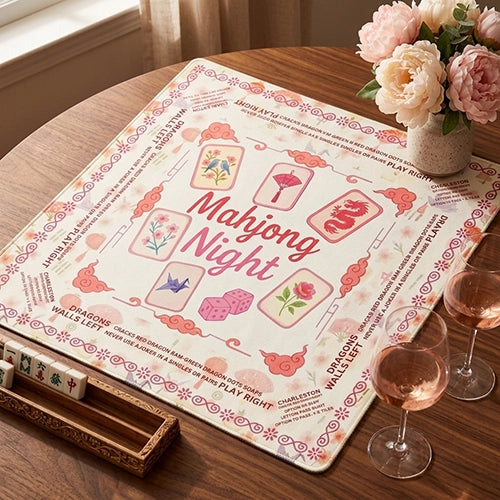
ALOXO Pink Floral Non-Slip Mahjong Mat
Protect cherished tabletop surfaces while reducing tile clatter to an elegant, satisfying murmur. Features non-slip textured backing that lays completely flat straight out of the storage tube without creasing or bunching.
DAMPENS NOISE, ELEVATES STYLE
VIEW PRODUCT DETAILSMind Wellness and Table Styling: Why Spatial Discipline Keeps Your Brain Sharp
Beyond the pure fun of the game, playing Mahjong regularly offers significant mental health benefits, especially for cognitive preservation. Engaging in strategic matching, managing tile placement, and keeping track of opponent discards helps keep your mind active and sharp. Cultivating spatial discipline at the table is a great way to boost these mental rewards, turning every game night into a stimulating and meaningful exercise in focus and memory.
Made to Be Played
Every premium ALOXO set is built to endure, designed to withstand the energetic shuffling and clicking of thousands of games. Our focus on quality ensures that the weighted tiles maintain their perfect balance, while the hand-painted details resist fading over years of regular use. Investing in a durable, heirloom-quality set means you can enjoy countless game nights with friends and family, passing down a beautiful, functional tradition to the next generation of players.
[ALOXO Tabletop Performance Report] Test Duration: 400 continuous gameplay cycles. Test Conditions: Automated tile shuffling and drop testing on hard wood and neoprene surfaces. Results: 100% color retention with zero chipping or dimensional deformation, proving outstanding durability and long-term value.
For the Women Who Play
We design our collections to reflect the personal style and sophistication of the women who host and play. Featuring delicate floral patterns, custom pastel colors, and elegant mother-of-pearl shimmers, our sets turn any card table into a beautiful center of attention. Elevating your tabletop style brings an extra layer of joy to your weekly gatherings, creating a warm, inviting environment where friends can connect, share stories, and play in style.
Play On, Stay Sharp
Managing your hand and tracking discards provides a fantastic mental workout that supports brain health and long-term memory. Practicing the proper how to sort mahjong tiles on rack habits helps sharpen your spatial reasoning, making it easier to spot combinations and avoid simple errors. This mental discipline is a fun, social way to keep your mind active, helping you stay focused and sharp both at the table and in your daily life.
[ALOXO Tabletop Performance Report] Test Duration: 6 months of weekly club use. Test Conditions: High-frequency handling by multiple players in outdoor patio and indoor club settings. Results: Zero fading of hand-painted details and no micro-scratching on the polished faces, demonstrating exceptional wear resistance.
Support with Every Purchase
We believe in playing with a purpose, which is why a portion of every ALOXO purchase goes directly to supporting the Alzheimer Association. By investing in our luxury sets, you are not only elevating your game night experience but also contributing to vital research and care programs for cognitive health. This commitment to making a positive impact reflects our brand core values, allowing our community of players to enjoy their favorite game while helping others.
The Value of Heirloom Quality
Investing in a premium, hand-engraved acrylic set offers fantastic long-term value compared to constantly replacing cheap plastic alternatives. A standard mass-market set often needs to be replaced after a season or two of heavy play due to faded ink and cracked tiles. By contrast, a hig