
Courtesy Pass in Charleston Mahjong: Full Rules
The courtesy pass in charleston mahjong represents the final tactical transaction of the game on your luxury ALOXO table. If you are struggling with cheap, lightweight sliding tiles that disrupt your gameplay focus, mastering this subtle optional passing step with heirloom weighted acrylic tiles instantly elevates your control.
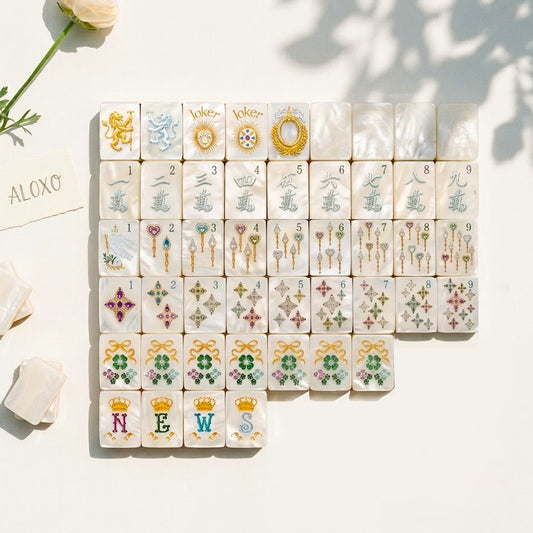
ALOXO Mother-of-Pearl & Gold Mahjong Set (160 Tiles)
Luxury 160-piece NMJL-ready American Mahjong suite engineered with substantial weighted acrylic and iridescent mother-of-pearl backs. Precision hand-engraved and color-filled to deliver the ultimate tactile clack and enduring beauty on your table.
OFFICIAL NMJL COMPLIANCE
VIEW PRODUCT DETAILSTable of Contents
- 1. Rules and Tile Limits: The Mechanics of a courtesy pass in charleston mahjong
- 2. Agreeing on Courtesy Tiles: Structured Table Communication
- 3. Tactical Guide: Executing the strategic courtesy pass Like a Pro
- 4. Etiquette of Refusal: How and When to Decline the courtesy pass in charleston mahjong
- 5. Silent Tabletop Acoustics: Enhancing the Charleston Glide
- 6. Frequently Asked Questions about courtesy pass in charleston mahjong (FAQs)
- 7. Elevate Your Tabletop Elegance with ALOXO Luxury Mahjong Collections
1. Rules and Tile Limits: The Mechanics of a courtesy pass in charleston mahjong
The courtesy pass in charleston mahjong functions as the final, highly regulated exchange of tiles before official active gameplay begins. This optional transaction occurs exclusively between players seated directly opposite one another at the table, allowing a final alignment of hand structures under National Mah Jongg League standards. Understanding the precise rules governing the zero to three tile limitation is essential for maintaining tournament integrity and preventing penalties.
The Structural Limits of the courtesy pass in charleston mahjong
The foundation of this transaction relies entirely on premium, non-porous material science. ALOXO tiles are machined from optical-grade cast acrylic and bonded seamlessly with a natural mother-of-pearl composite backing. This multi-layered structure prevents tile bending or warpage, ensuring that when players slide up to three tiles across the table, the integrity of each hidden face remains completely secure. Unlike cheap injection-molded plastic that scratches easily and leaves identifying marks, our scratch-resistant acrylic protects the secrecy of your hand during critical tile trades.
Anatomy of the 160-Tile Luxury Exchange Setup
A standard luxury American Mahjong configuration requires several vital structural components to execute the final tile trade smoothly. The table must be equipped with the following elements to prevent game delays and coordinate active tile tracking:
- A complete 160-tile composite set including 8 custom floral Jokers, hand-painted and color-filled to exact NMJL specifications.
- Four heavy-duty acrylic racks adorned with integrated brass pushers and mother-of-pearl detailing for swift tile alignment.
- A non-slip, noise-dampening neoprene table mat designed to facilitate effortless face-down tile gliding without scratching.
- An official National Mah Jongg League rule card positioned securely in the designated rack viewing groove.
Physical Mechanics and Balance of Tile Shuffling
The physical physics of a premium tile set directly influence how smoothly tiles slide across the tabletop during the final exchange. Weighted acrylic tiles weighing exactly 31 grams apiece provide a low center of gravity, preventing tiles from tipping over or flipping face-up when pushed. The polished, hand-finished edges of the tiles generate a low-friction surface when making contact with a professional table mat, allowing players to execute the trade with minimal hand pressure while generating the iconic, satisfying deep clack sound of luxury gaming history.
2. Agreeing on Courtesy Tiles: Structured Table Communication
Clear communication is the hallmark of sophisticated gameplay, particularly during the signaling ready for charleston pass phase. The courtesy pass is not a blind obligation; it is a mutual agreement negotiated in real-time between the two opposing players. Establishing a transparent agreement regarding the exact number of tiles to be passed prevents gameplay disputes, keeps the table pace lively, and ensures complete adherence to formal club standards.
The Protocol of Mutual Consent
To initiate the trade, the player requesting the exchange must verbally propose a number from zero to three. The opposing player can either accept this quantity or counter with a lower number, down to zero. The rules dictate that the player who desires the fewest tiles always controls the exchange limit. For example, if you request three tiles but your opponent only wishes to exchange one tile, the trade is legally limited to exactly one tile. This rule ensures that no player is forced to discard valuable tiles from a developing hand, protecting tactical integrity across the board.
To assist in planning your next upgrade or selecting the perfect heirloom set for your local club, review the comprehensive comparison table below detailing our premium gaming collections and professional accessories:
| Set Name / Accessory | Tile Dimensions & Weight | Material & Backing Style | Price Quote / Ideal Play Scenario |
|---|---|---|---|
| Mother-of-Pearl & Gold Luxury Set | 30mm x 23mm x 13mm | 31 grams | Cast Acrylic, Gold Shimmer Backing | $385.00 | Formal Tournament & Gift Showcase |
| Pink Floral Glossy Set | 30mm x 23mm x 13mm | 31 grams | Polished Resin, Custom Floral Art | $365.00 | Weekly Social Club Gatherings |
| Pearl Cat Mahjong Set | 30mm x 23mm x 13mm | 31 grams | Cast Acrylic, Cat Shell Shimmer Back | $365.00 | Whimsical Luxury Home Play |
| Sorbet Hot Pink Luxury Set | 30mm x 23mm x 13mm | 31 grams | High-Density Acrylic, Neon Backing | $365.00 | Modern Evening Parlor Games |
| Pearl Shell Mahjong Racks | Standard Tournament Size | Polished Pearl Shell, Solid Brass Pushers | $125.00 | Premium Upgrades for Existing Sets |
| Floral Travel Bag Set | Custom Padded Compartments | Vegan Leather, Weather-Resistant Canvas | $145.00 | Mobile Tournament & Beach Play |
| Pink Floral Table Mat | 32 inches x 32 inches | 3mm thick | Non-slip Neoprene, Silk-Touch Face | $49.00 | Noise Dampening & Table Protection |
| Natural Gemstone Dice | 16mm Standard Six-Sided | Amethyst, Rose Quartz, Onyx Options | $39.00 | High-End Lucky Rolling Accents |
| Clear Window Carry Case | Slim-Profile Carry Design | Padded Vinyl, Heavy-Duty Zipper | $65.00 | Casual Daily Transportation Protection |
| Custom Monogrammed Mat | 32 inches x 32 inches | 3mm thick | Natural Rubber, Dye-Sublimated Border | $69.00 | Tailored Personalization & Gifts |
Core Quality and Certification Checklist
When investing in a luxury mahjong set, verifying material density and technical measurements ensures long-term value. Authentic ALOXO sets are manufactured with a uniform 30mm height, allowing them to stack perfectly in standard luxury tournament travel cases. The inclusion of exactly 160 tiles allows for full playability across all National Mah Jongg League styles without requiring secondary extension packs. Our designs feature hand-painted floral motifs that remain vibrant and clear, even after years of intense club shuffling and sliding.
Determining Your Tabletop Investment Value
While mass-market plastic mahjong sets require replacement every few seasons due to faded paint, chipped edges, or brittle storage trays, the ALOXO luxury acrylic system is built to last for generations. Estimating the cost of ownership over a standard ten-year span demonstrates that our premium sets cost mere pennies per game, while providing an unmatched sensory and aesthetic experience for every host and player.
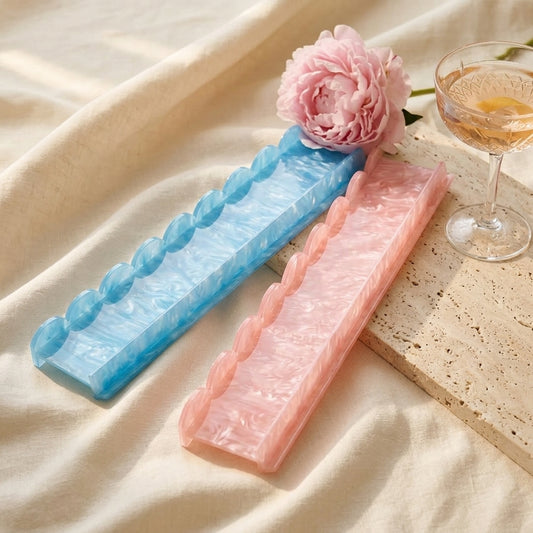
ALOXO Pearl Shell Mahjong Racks with Integrated Pushers
Handcrafted pearl shell finish provides seamless aesthetic harmony for luxury Mahjong gatherings. Sturdy construction and smooth magnetic pusher glide protect fine table finishes while keeping your tile rows impeccably organized.
TIMELESS SHIMMER & ELEGANCE
VIEW PRODUCT DETAILS3. Tactical Guide: Executing the strategic courtesy pass Like a Pro
Executing the charleston passing strategy mahjong sequences correctly requires absolute procedural precision and tactical awareness. To prepare your table for this standard tactical transition, ensure you have arranged your active play area with a complete 160-tile luxury set, four aligned racks with smooth brass pushers, a professional non-slip neoprene table mat, and an active NMJL rule card. This ensures that every movement across the table is clean, audible, and respectful of tournament rules.
Step 1: Aligning the Racks and Initiating the Charleston Phase
Begin by placing your acrylic racks exactly 28 inches apart on the surface of your non-slip table mat. Ensure that every player has built their tile wall, measuring exactly two tiles high and nineteen tiles long. Verify that your National Mah Jongg League card is positioned upright in your viewing groove for rapid card scanning. This initial alignment ensures that when you push your walls forward, the tiles maintain perfect spacing and avoid colliding with adjacent racks.
- Align the physical corners of each acrylic rack with the printed borders of your table mat to establish clean boundaries.
- Slide your brass pushers back slowly to allow complete visibility of your active tiles.
- Verify that exactly 160 tiles are accounted for on the table before commencing the initial wall deal.
- Confirm that all player hands contain the correct initial tile count before proceeding to the first pass.
*Standard Specifications:* Each tile wall must measure exactly 19 tiles long for a standard four-player game, totaling 76 tiles in the initial walls. The table mat must be completely flat to prevent tile tilting.
*QC & Tips:* Inspect the clarity of the tile engravings under your lighting. If any dust has settled in the hand-painted grooves, wipe them clean with a dry microfiber cloth before play begins.
Step 2: Conducting the First Left-Right-Across Cycle
The first Charleston phase is a mandatory sequence of three distinct tile trades that moves in a strict directional pattern. You will begin by passing exactly three tiles from your player hand to the player on your left. This is followed immediately by passing three tiles to the player seated directly across from you, and completed by passing three tiles to the player on your right. This systematic flow redistributes tiles across the table, testing the viability of your hand path.
- Select three unwanted tiles from your tile rack and place them face-down on the table mat.
- Push the selected tiles smoothly toward the player on your left, ensuring they do not flip over.
- Receive the incoming three tiles from your right and place them into your active player hand.
- Repeat this structured rotation for the across and right passing phases, maintaining a steady table rhythm.
*Standard Specifications:* You must always pass exactly three tiles during each step of this first phase. Under standard passing tiles left right across rules, you are legally prohibited from passing fewer than three tiles in this opening round.
*QC & Tips:* When sliding your tiles face-down, keep your palm flat over the backs to protect the gold or mother-of-pearl shimmer from catching glare and distracting players.
Step 3: Evaluating Tiles for the Second Charleston Phase
Once the first phase concludes, the table must collectively decide whether to proceed with the strategic passing in second charleston. This phase is optional and requires a unanimous vote. If even one player at the table votes to stop, the second Charleston is canceled immediately, and players must proceed directly to the final courtesy pass. This critical decision-point requires you to analyze your tile suits, count your remaining tiles, and assess whether further trading will benefit your target card hand.
- Scan your player hand to identify matching numerical runs, paired dragons, or wind sequences.
- Count your remaining discard tiles to determine if you have enough safe passes to sustain three more rounds.
- Cast your verbal vote clearly, indicating if you wish to continue or invoke the stopping the charleston vote rules.
- Verify that all four players agree before initiating the first right pass of the second phase.
*Standard Specifications:* The voting process must be completed within 15 seconds to prevent stalling. If a player remains silent, their vote defaults to continuing the Charleston.
*QC & Tips:* Avoid touching your card or displaying visible frustration during this step, as seasoned opponents will read your body language to deduce your hand strength.
Step 4: Managing the blind pass vs courtesy pass Transitions
The final right pass of the second Charleston allows for an advanced tactical maneuver known as the blind pass. If you do not possess three unwanted tiles to pass to your right, you are legally permitted to steal up to three tiles from the incoming pass from your left and slide them directly to your right without looking at them. This tactical maneuver prevents you from giving away potentially useful tiles from your hand while keeping the game moving smoothly.
- Determine the exact number of tiles you wish to pass blindly, ranging from zero to three tiles.
- Intercept the incoming tiles from your left on the surface of your neoprene table mat.
- Transfer the chosen number of face-down tiles directly to your right pass pile without turning them over.
- Combine the stolen tiles with any tiles from your own tile rack to complete a three-tile pass.
*Standard Specifications:* To understand this advanced maneuver, consult the blind pass rules in charleston. You are strictly forbidden from looking at any tiles that you choose to pass blindly.
*QC & Tips:* Slide blind tiles in one fluid, continuous motion. This prevents opponents from guessing which tiles came from your hand and which were stolen.
Step 5: Executing the final courtesy pass in charleston mahjong
The culmination of the passing rounds is the formal courtesy pass in charleston mahjong. This optional step allows you and the player opposite you to trade between zero and three tiles face-down. This is a crucial strategic window to shed your final unwanted tiles or secure a missing tile to complete your hand. Once this trade is finalized, the tile arrays are locked, the dealer casts the gemstone dice, and active play officially commences.
- Establish a clear verbal agreement with the opposing player regarding the number of tiles to be traded.
- Count your tiles carefully to ensure you maintain exactly thirteen tiles in your player hand (or fourteen if you are the dealer).
- Place your agreed tiles face-down on the table mat and push them toward the opposite side of the table.
- Retrieve your new tiles, place them on your acrylic rack, and organize your final layout for the opening discard.
*Standard Specifications:* The maximum number of tiles permitted in this exchange is three, and the minimum is zero. Both players must agree on the final number before any tiles leave the racks.
*QC & Tips:* Always use a professional table mat to ensure tiles glide smoothly during this long-distance pass, protecting the delicate polished backs from friction damage.
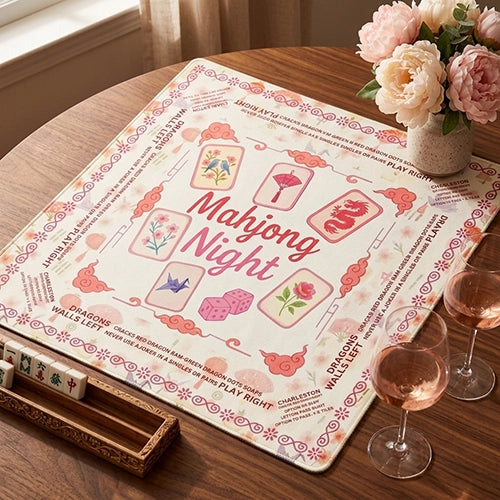
ALOXO Pink Floral Non-Slip Mahjong Mat
Protect cherished tabletop surfaces while reducing tile clatter to an elegant, satisfying murmur. Features non-slip textured backing that lays completely flat straight out of the storage tube without creasing or bunching.
DAMPENS NOISE, ELEVATES STYLE
VIEW PRODUCT DETAILS4. Etiquette of Refusal: How and When to Decline the courtesy pass in charleston mahjong
Declining the courtesy pass in charleston mahjong is a completely legal, strategic option that must be handled with care and politeness. When your hand is already well-organized and close to calling Mahjong, passing even a single tile could disrupt your synergy or inadvertently feed your opponent. Handling this refusal gracefully maintains a pleasant atmosphere and ensures that competitive matches remain friendly and enjoyable.
Top Five Mistakes During the courtesy pass in charleston mahjong
To keep your game nights running smoothly and protect your premium tiles, avoid these common mistakes:
- Passing tiles face-up: To avoid giving away your strategy, consult the passing tiles face down etiquette. Always slide tiles face-down to prevent opponents from seeing the engraved designs.
- Washing acrylic with alcohol: Never clean acrylic tiles with harsh chemical solvents like acetone or rubbing alcohol, as these will crack the material and dissolve the hand-painted gold detailing.
- Overcrowding your rack: Avoid forcing extra tiles onto your rack pushers, which can bend the brass pins or scratch the polished edges of neighboring tiles.
- Mishandling Jokers: Keep in mind that passing Joker tiles during any Charleston phase is strictly illegal and will result in an immediate hand penalty.
- Playing on bare wood: Shuffling heavy acrylic tiles directly on glass or polished wood tables can scratch both the furniture and your tiles, while also making a distracting noise.
The Hidden Traps of Cheap Mahjong Sets
Many cheap sets available online use flat sticker decals or thin printed ink instead of genuine deep engraving. Over a few months of active play, these printed graphics will wear off, l