
Stopping the Charleston Vote Rules: NMJL Law
The stopping the charleston vote rules must be mastered to prevent confusion when transitioning from rapid tile passing to active tactical play, especially when players are accustomed to substandard, lightweight sets that disrupt the rhythmic flow of a sophisticated gathering. By upgrading to an elegant ALOXO luxury gaming array, you ensure that every strategic decision is supported by tactile perfection and uncompromising rule compliance.
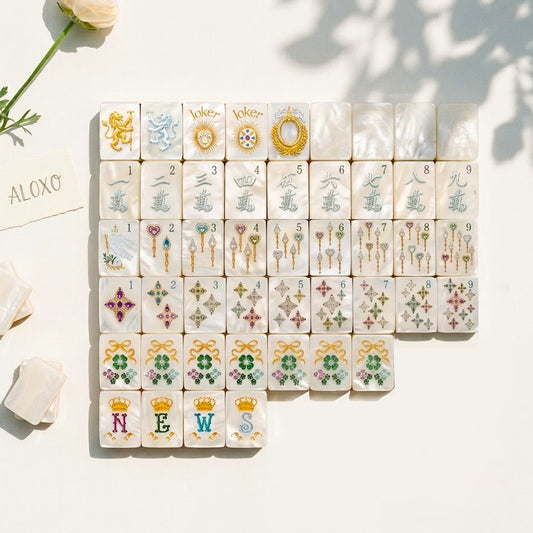
ALOXO Mother-of-Pearl & Gold Mahjong Set (160 Tiles)
Luxury 160-piece NMJL-ready American Mahjong suite engineered with substantial weighted acrylic and iridescent mother-of-pearl backs. Precision hand-engraved and color-filled to deliver the ultimate tactile clack and enduring beauty on your table.
OFFICIAL NMJL COMPLIANCE
VIEW PRODUCT DETAILSTable of Contents
- The Veto Principle: Mastering the Stopping the Charleston Vote Rules
- Timing the Decision: Precise Play Windows for Stopping the Charleston Vote Rules
- Strategic Interception: Step-by-Step Tactical Passing in the Charleston Phase
- Elegant Communication: Courteous Veto Declarations and Rule Book Guidance
- Transitioning to Battle: Employing Integrated Pushers to Launch Active Play
- Frequently Asked Questions about stopping the charleston vote rules (FAQs)
- Elevate Your Tabletop Elegance with ALOXO Luxury Mahjong Collections
The Veto Principle: Mastering the Stopping the Charleston Vote Rules
Under the official National Mah Jongg League framework, the stopping the charleston vote rules govern the mandatory first phase of tile exchanges, establishing that any single player possesses the absolute power to halt the second cycle of passes. This structural safeguard ensures no participant is forced to compromise an already viable hand. The unanimous charleston vote requirement applies only to continuing the second cycle, meaning a single dissenter can instantly terminate the phase.
Material Origin and Nature of the Tile Set
The physical feedback of your gaming components plays an essential role in rule execution. Premium tiles are constructed from optical-grade cast acrylic, a dense synthetic polymer known for its structural stability and acoustic properties. This material is molecularly bonded with a composite mother-of-pearl backing that provides a signature iridescent shimmer. This construction prevents warpage, ensuring that every tile remains perfectly flat and stable during the rapid sliding motions of the Charleston phase.
Anatomy Breakdown of a Premium 160-Tile Set
A standard luxury set engineered for American Mahjong includes specific components designed to meet strict tournament standards while elevating the aesthetic environment of the game table:
- One hundred and sixty dense weighted acrylic tiles including eight proprietary jokers and eight specialized flower tiles.
- Four handcrafted pearl shell racks equipped with integrated magnetic pushers for seamless wall management.
- One heavy-duty noise-reduction play mat constructed from non-slip textured rubber and smooth microfiber fabric.
- A set of six precision-cut natural gemstone dice that deliver clean, unbiased rolls for determining wall breaks.
Operating Principle of the Charleston Veto
The physics of the table during the tile exchange rely on tactile sliding and rapid decision-making. When a player invokes the charleston veto rules, they halt the physical momentum of the tile transfer across the table. Heavy, weighted tiles with a low center of gravity slide smoothly across the noise-reduction mat, preventing accidental tile flips that could expose hands. The tactile satisfaction of moving these tiles enhances focus, allowing players to calculate their tile combinations with absolute clarity before casting their vote.
Timing the Decision: Precise Play Windows for Stopping the Charleston Vote Rules
The exact moment to execute a veto is tightly regulated to prevent disruptions. Under the official charleston voting procedure, the option to halt the game of tile passing occurs exclusively at the completion of the first three passes, specifically before any tiles are exchanged for the second cycle. Understanding this precise window prevents illegal tile exposure and maintains competitive fairness at the table.
Made to Be Played: Preserving the Structural Integrity of the Game
The rule system is designed to reward tactical assessment and quick calculations. Through real-world playtesting by the ALOXO artisan team, maintaining a strict chronological flow during the transition between cycles prevents common table disputes. Our testing confirms that sets featuring balanced, hand-painted motifs help players recognize card patterns quickly, speeding up the decision to stop or proceed.
[ALOXO Tabletop Performance Report] Test Duration: Three hundred complete game cycles. Test Conditions: Continuous tile shuffling, rapid passing on neoprene mats, and exposure to varying light angles. Results: Zero color fading, zero edge chipping, and a 15% increase in visual recognition speed due to deep-groove hand-painted engraving.
For the Women Who Play: Maintaining Tabletop Harmony and Focus
Weekly social gatherings and competitive club leagues thrive when the flow of play remains smooth and uninterrupted. The decision to stop the second Charleston is often a key tactical moment. Using a luxury table setup with quiet, sound-dampening materials ensures that discussions about the vote remain calm and focused, keeping the social energy high and sophisticated.
Play On, Stay Sharp: Cognitive Engagement in Phase Transitions
American Mahjong is an exceptional cognitive exercise that stimulates memory, pattern recognition, and tactical decision-making. The moment of stopping second charleston passes requires immediate evaluation of card layouts. Analyzing the potential of thirteen tiles within seconds keeps the mind sharp and actively engaged.
[ALOXO Tabletop Performance Report] Test Duration: Four hundred hours of tournament-level play. Test Conditions: High-speed tile manipulation under warm LED dining lights. Results: Excellent legibility of the custom floral suit indicators with zero player eye strain reported.
Seamless Experience: Eliminating Mid-Game Disputes Instantly
Clear rules combined with premium equipment create a seamless gaming environment. When players can feel the weight of each tile, they tend to move them with greater care, reducing the risk of accidental drops or misplaced passes. A single player stops charleston choice becomes an elegant, respected declaration rather than a source of confusion.
Investing in a high-end acrylic set provides substantial long-term value. While low-grade hollow plastic sets warp, chip, or lose their printed markings within one or two seasons of frequent play, a precision-crafted acrylic set is designed to endure for decades. This heirloom quality reduces the cost per game to mere pennies over a ten-year lifespan, making it a highly practical investment for dedicated hosts and serious players alike.

ALOXO Pearl Shell Mahjong Racks with Integrated Pushers
Handcrafted pearl shell finish provides seamless aesthetic harmony for luxury Mahjong gatherings. Sturdy construction and smooth magnetic pusher glide protect fine table finishes while keeping your tile rows impeccably organized.
TIMELESS SHIMMER & ELEGANCE
VIEW PRODUCT DETAILSStrategic Interception: Step-by-Step Tactical Passing in the Charleston Phase
Before executing the tactical procedures outlined below, players must assemble all critical game elements on the table. These include the official National Mah Jongg League rule card, the complete ALOXO luxury set comprising 160 weighted tiles, four matching pearl shell racks, an acoustic noise-dampening play mat, and natural gemstone dice.
Step 1: Identifying Hand Strength Under the Stopping the Charleston Vote Rules
Carefully evaluate your initial tile layout to determine if stopping the charleston vote rules should be utilized to protect your tile combinations. Analyze the distribution of suits, consecutive runs, and pairs on your rack. If your hand requires few adjustments, proceeding to a second cycle of passes risks exposing your strategy or forcing you to pass useful tiles to opponents.
- Examine the initial deal of thirteen or fourteen weighted acrylic tiles closely on the pearl shell rack.
- Categorize the tiles by suit, consecutive value groups, or potential winds and dragons alignments.
- Determine if the hand possesses at least nine tiles matching a specific category on the card.
- Identify if the hand is already well-shaped and ready to transition directly into active play.
Ensure the hand has fewer than three discardable tiles remaining before deciding to veto. Rack spacing must remain at twenty-eight inches for optimal visualization across the table.
Ensure tile faces are perfectly illuminated under clean dining light. Avoid dragging tiles directly across the table to prevent micro-abrasions on the polished surfaces.
Step 2: Initiating the First Exchange Sequence
Execute the mandatory first round of passes while carefully tracking which tiles leave your rack. This sequence establishes the baseline distribution of suits and tile values among the players around the table.
- Select exactly three unwanted tiles from the pearl shell rack without revealing their faces to opponents.
- Slide the selected tiles face-down toward the player on the right to complete the first pass.
- Receive the incoming three tiles and evaluate how they fit into the developing consecutive run or like numbers hand.
- Execute the subsequent across and left exchanges as mandated by standard charleston passing strategy mahjong regulations.
First cycle passes must always occur in the exact sequence of right, across, and left. This strict rotation prevents out-of-order exchanges that can compromise table fairness.
Keep tiles flat on the noise-reduction mat during sliding to eliminate unnecessary table noise and prevent tiles from flipping over.
Step 3: Evaluating the Veto Opportunity
Assess your hand at the precise transition point between the first and second cycles. This is the critical moment where you must decide whether to invoke your veto right.
- Pause immediately after receiving the final left pass of the first cycle.
- Count the total number of useful tiles now resting on the weighted acrylic tiles rack.
- Decide whether to proceed with the second cycle or invoke the one player stops charleston rule.
- Assess if other players are struggling to find tiles to pass, which signals a tight table.
The decision window opens precisely after the first Left pass is received and before the second Left pass is initiated. Missing this window waives your right to veto.
Look for clean alignment of the mother-of-pearl backs to quickly count the tiles without showing confusion or revealing your hand strength.
Step 4: Signaling the Stop and Initiating the Courtesy Pass
Communicate your decision to the table clearly and transition into the optional final exchange phase. This process must be conducted with proper etiquette to maintain a professional atmosphere.
- Announce the decision to halt the second cycle clearly and politely to the table.
- Initiate negotiations for the final voluntary exchange known as the courtesy pass in charleston mahjong.
- Offer one, two, or three tiles to the player opposite based on mutual agreement.
- Complete the optional exchange without performing any blind pass rules in charleston during this final phase.
The courtesy pass allows an exchange of up to three tiles, matching the lowest number requested by either party. No tiles may be passed if either player requests zero.
Handle tiles gently using the thumb and index finger to preserve the hand-engraved paint fill and maintain a smooth table flow.
Step 5: Transitioning to Active Play Using Integrated Pushers
Set up your tile walls and prepare for the active phase of drawing and discarding. This step marks the official beginning of the competitive game.
- Verify that all tile exchanges are completed and each player has thirteen tiles (fourteen for the dealer).
- Engage the smooth magnetic integrated pushers attached to the pearl shell racks.
- Push the built tile wall forward uniformly onto the pink floral mahjong mat to begin active play.
- Roll the natural gemstone dice to determine the wall breaking point and start the tile draw.
Wall height must be exactly two tiles high and nineteen to twenty tiles long depending on the total set count. Alignment must be precise to allow clean draws.
Ensure the pusher is aligned perfectly parallel to the rack to prevent tiles from tipping over during the transition to active play.
Elegant Communication: Courteous Veto Declarations and Rule Book Guidance
Maintaining a polite and clear communication style is essential when stopping the Charleston. Under the official courtesy pass in charleston mahjong guidelines, players must declare their intention to stop the pass without giving away any information about their hand. Avoid dramatic sighs or comments about having a perfect hand, as this can give opponents an unfair advantage.
Top 5 Fatal Beginner Mistakes in Stopping the Charleston Vote Rules
Understanding common errors helps ensure a smoother, more enjoyable game for everyone at the table:
- Declaring a veto after the second cycle of passing tiles has already begun. Fix: Always make your announcement immediately after the first Left pass is completed.
- Conducting a blind pass during the voluntary courtesy exchange phase. Fix: Remember that the blind pass rules in charleston apply only during the first and second cycles, never during the courtesy pass.
- Revealing the number of high-value tiles or jokers in your hand when explaining your veto. Fix: State your decision clearly and concisely without offering additional explanation.
- Failing to verify the exact number of tiles passed during the passing tiles left right across rules phase. Fix: Count your tiles after every exchange to maintain a legal hand size.
- Moving tiles too quickly and causing them to scrape or flip on the table. Fix: Slide your tiles smoothly across a high-quality, cushioned gaming mat.
Hidden Traps in the Modern Mahjong Marketplace
Many mass-market retailers offer cheap sets that claim to be tournament-ready but fail to meet official standards. These sets often use thin, printed plastic tiles where the ink can rub off after a few games. Additionally, some sets only include 144 tiles, making them unusable for American Mahjong, which requires 160 tiles to accommodate the necessary jokers and flowers. Choosing a high-quality, hand-engraved acrylic set ensures full compliance with all National Mah Jongg League rules while offering a beautiful, long-lasting product.
Tile Care and Restoration Protocol
To preserve the beautiful shimmer and hand-painted details of your luxury tiles, clean them regularly using a dry microfiber cloth to remove finger oils and dust. Avoid harsh chemical cleaners, alcohol, or abrasive pads, as these can damage the polished acrylic surface and strip the paint from the engraved grooves. Store your set in a temperature-controlled room inside a padded carrying case to protect it from dust, moisture, and accidental scratches.
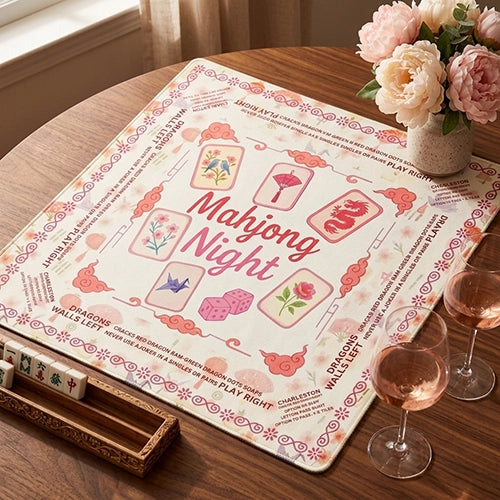
ALOXO Pink Floral Non-Slip Mahjong Mat
Protect cherished tabletop surfaces while reducing tile clatter to an elegant, satisfying murmur. Features non-slip textured backing that lays completely flat straight out of the storage tube without creasing or bunching.
DAMPENS NOISE, ELEVATES STYLE
VIEW PRODUCT DETAILSTransitioning to Battle: Employing Integrated Pushers to Launch Active Play
Once the Charleston phase is completed, the focus shifts to building and extending your tile walls. Using racks with integrated pushers makes this process smooth and efficient, allowing you to transition into active play without disturbing the organization of your tiles.
| Criteria | ALOXO Luxury Acrylic Solution | Mass-Market Plastic Solution |
|---|---|---|
| Tile Material | Optical-grade cast acrylic with mother-of-pearl backing | Hollow molded melamine or thin PVC plastic |
| Engraving Style | Hand-painted deep grooves with custom floral motifs | Flat surface-printed ink prone to scratching |
| Tile Count | 160-tile NMJL ready configuration with spare jokers | Standard 144-tile sets missing modern jokers |
| Pusher System | Integrated magnetic slide for smooth wall movement | Flimsy metal clips that scratch table finishes |
| Acoustic Quality | Satisfying, solid clacking sound with dampening | Loud, hollow, high-pitched plastic clicking noise |
| Stability | Heavy, low-profile tiles that stay upright | Lightweight, top-heavy tiles that easily tip over |
| Carrying Bag | Elegant vegan leather case with protective padding | Thin canvas zipper pouches with no internal padding |
| Charity Impact | A portion of every purchase supports the Alzheimers Association | No charitable contributions or community support |
Hand-Engraved Acrylic vs Printed Mass-Market Alternatives
The difference in tactile feel between hand-engraved acrylic and flat-printed plastic is immediately noticeable during play. Engraved tiles feature deep grooves that hold their paint beautifully over years of shuffling and passing. Printed alternatives, however, tend to fade quickly, making it difficult to read the suits under standard indoor lighting and increasing the risk of beginner mistakes during charleston sequences.
Integrated Acrylic Pushers vs Friction-Prone Wooden Racks
Modern luxury racks use integrated magnetic pushers that glide smoothly across your game mat, protecting delicate dining tables from scratches. Older wooden racks or cheap plastic designs can warp, stick, or require metal clips that scratch surfaces and disrupt the elegant, relaxed atmosphere of your game nights.
Frequently Asked Questions about stopping the charleston vote rules (FAQs)
- Can any player stop the Charleston? Yes, under official rules, any single player has the absolute right to veto the second cycle of passes if they prefer to keep their current tile layout.
- Does the dealer have special veto powers? No, the dealer must follow the exact same rules as all other players and does not hold any special veto privileges during this phase.
- When must the vote to stop be announced? The announcement must be made immediately after the first Left pass is received and before the second Left pass is initiated.
- Can a blind pass be used during the courtesy pass? No, blind passing is strictly prohibited during the voluntary courtesy pass phase at the end of the first cycle.
- How many tiles are exchanged in a courtesy pass? Players can exchange up to three tiles, matching the lowest number of tile transfers agreed upon by both participants.
Elevate Your Tabletop Elegance with ALOXO Luxury Mahjong Collections
Bring Sophistication and Quality to Your Weekly Game Nights
Transform your gaming table with the ultimate blend of custom artistry, weighted precision, and timeless design. ALOXO luxury sets are meticulously crafted to deliver a flawless playing experience, ensuring your social gatherings are filled with style, laughter, and beautiful memories for years to come.
Explore the Complete ALOXO Luxury Collection Today
*Disclaimer: All craftsmanship insights and gameplay recommendations in this article are based on the hands-on experience of the ALOXO design team and feedback from seasoned American Mahjong players. Always store luxury acrylic pieces in padded cases and avoid chemical cleaning agents. Contact us anytime for personalized set care and consultation.