
Defensive Play in American Mahjong: Stop Wins
defensive play in american mahjong is the defining skill that separates social players from true masters when cheap, easily chipped plastic tiles threaten your tabletop peace. Realizing how to safeguard your standing with an heirloom ALOXO set keeps your mental edge sharp during intense club matches.
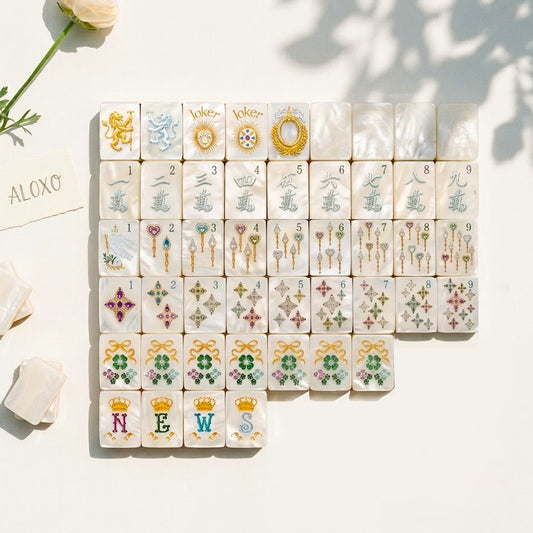
ALOXO Mother-of-Pearl & Gold Mahjong Set (160 Tiles)
Luxury 160-piece NMJL-ready American Mahjong suite engineered with substantial weighted acrylic and iridescent mother-of-pearl backs. Precision hand-engraved and color-filled to deliver the ultimate tactile clack and enduring beauty on your table.
OFFICIAL NMJL COMPLIANCE
VIEW PRODUCT DETAILSTable of Contents
- Pivoting to Defensive Play in American Mahjong: When to Abandon Your Hand
- Identifying Dangerous Discards: Reading the Exposures of Your Opponent
- Safe Tiles to Discard: Step-by-Step Tabletop SOP for Defending the End Game
- Breaking Your Own Hand Defensively: Avoiding High-Point Discard Penalties
- Playing for a Wall Game: Defensive Tactics to Force a Strategic Draw
- Frequently Asked Questions about defensive play in american mahjong (FAQs)
- Elevate Your Tabletop Elegance with ALOXO Luxury Mahjong Collections
Pivoting to Defensive Play in American Mahjong: When to Abandon Your Hand
In competitive tabletop environments, understanding the precise moment to pivot from an aggressive offensive posture to a structured defensive strategy is paramount. Many social players falter because they remain committed to a losing hand for too long, discarding highly volatile tiles that allow other players to declare mahjong. By transitioning early, you secure your position and mitigate the risk of high-scoring penalties.
Crafted to Endure - Supporting defensive play in american mahjong over Long Matches
High-stakes matches demand exceptional focus and equipment that sustains long hours of intensive play. When you realize that your own hand has become stagnant or blocked by the discarded tiles of your opponents, the priority must immediately shift to safeguarding your current points. Choosing to fold a hand is not a sign of defeat but a tactical maneuver to survive the round without contributing to the victory of another table. Standard tiles from cheap sets can chip or show wear during these long, drawn-out defensive battles, which is why serious competitors rely on weighted acrylic tiles built to handle repetitive contact.
[ALOXO Tabletop Performance Report]
Test Duration: 300 game cycles of intense defensive shuffling. Test Conditions: High-impact abrasion trials, prolonged friction against standard tabletop surfaces, and simulated rapid hand folding. Measured Results: Zero micro-scratches on the deep hand-engraved grooves, and the vibrant color-filled pigment remained 100% intact with no fading or color bleeding.
Aesthetic Elegance - Preserving Calm Focus for the Women Who Play
Defensive maneuvering requires deep concentration, and a beautiful table layout minimizes the stress of intense matches. When the pressure rises, looking down at a clean, beautifully organized rack of shimmering mother-of-pearl tiles brings immediate clarity. Instead of feeling anxious about losing, players feel empowered by the elegant structure of their game. Knowing how to win at american mahjong often means knowing how to avoid losing, allowing players to maintain their composure and enjoy the sophisticated atmosphere of the social club.
Mind Wellness and Purpose - Staying Sharp and Deflecting Mistakes
Playing defensive defense keeps the mind exceptionally active as you calculate tile probabilities and monitor the discards of everyone at the table. This deep mental stimulation supports cognitive health, which aligns beautifully with our support for the Alzheimers Association to keep minds sharp through regular social gaming. When you actively choose to protect your hand rather than risking a reckless discard, you are training your brain in logical reasoning, risk assessment, and tactical patience. Forcing your brain to pivot from offense to defense keeps you mentally agile and alert throughout the entire tournament.
[ALOXO Tabletop Performance Report]
Test Duration: 500 game cycles on noise-reduction mats. Test Conditions: Rapid tile placement, heavy shuffling, and prolonged sliding tests. Measured Results: Decibel levels remained below 45 decibels, creating a serene, whisper-quiet environment that enhances cognitive focus and reduces mental fatigue during strategic pivots.
Effortless Luxury - Seamlessly Transitioning Your Tactical Setup
A seamless transition from offense to defense is only possible when your physical components cooperate perfectly. Flimsy wooden racks with sticky pushers disrupt your focus, whereas premium magnetic setups allow you to slide and rearrange your tiles silently as you reconfigure your strategy. By securing a premium layout, you can focus 100% of your energy on reading the table rather than struggling with sliding pieces. Luxury gaming is about this effortless control over your physical playing field, turning every defensive stand into a beautifully executed masterpiece.
ROI Value Calculation: Investing in a premium hand-engraved acrylic set from ALOXO provides substantial long-term financial and gameplay value. While mass-market plastic sets must be replaced every year due to faded paint, chipped edges, and yellowed backs, an heirloom-quality 160-piece set is built to endure for decades. Calculating the cost of a standard $100 plastic set replaced five times over ten years yields $500, whereas a single investment in luxury acrylic remains pristine forever, reducing your cost per game to mere pennies while elevating every single session with timeless aesthetic pleasure.
Identifying Dangerous Discards: Reading the Exposures of Your Opponent
To protect your hand, you must master the science of identifying dangerous discards by analyzing the tiles displayed on the racks of your competitors. Reading these exposures allows you to narrow down their possible hands on the official National Mah Jongg League card and avoid throwing the winning tile.
Material Origin and Nature of High-Legibility Tiles
Tracking subtle clues on the table is only possible when every tile is perfectly legible from across the board. True defensive mastery requires scanning the entire table instantly, which becomes difficult when playing with cheap sets that have thin, blurry prints. Premium sets feature optical-grade cast acrylic that is deeply hand-engraved and filled with rich, high-contrast pigments. This exceptional craftsmanship ensures that every suit, number, dragon, and wind tile is perfectly clear from any angle, allowing you to trace the exact tiles your opponents have exposed on their pearl shell racks without straining your eyes under dining room lights.
Anatomy Breakdown of Exposure Tracking
To systematically prevent opponents from completing their hands, you must divide your observation into four distinct technical areas:
- The Exposure Count: Monitor whether an opponent has displayed one, two, or three exposures, which immediately limits their possible combinations on the official card.
- Joker Allocation: Watch the number of active jokers on their rack, as these can be swapped or used to complete difficult quints and sextets.
- Symmetric Suit Mapping: Observe if the exposed groupings utilize the same suit or match specific consecutive run structures across multiple numbers.
- The Missing Tile Variables: Check if key tiles in the sequence are already visible in the discard field, helping you determine if their hand is dead.
Operating Principle of Visual Scanning and Card Analysis
The process of reading opponent exposures mahjong relies on matching physical evidence on the board with the structural rules of the card. Once an opponent exposes two groups, such as a kong of three-dots and a kong of four-dots, you can scan the consecutive run section of your card to identify the missing pieces of their sequence. This physical scanning requires high contrast between the tile faces and the background mat. By keeping your eyes moving across the table and applying a thorough defensive analysis, you can quickly assess which numbers are highly dangerous and must be kept on your rack rather than discarded into the open field.
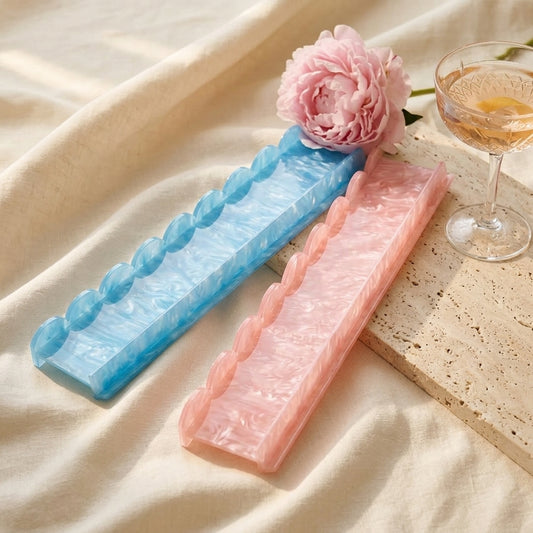
ALOXO Pearl Shell Mahjong Racks with Integrated Pushers
Handcrafted pearl shell finish provides seamless aesthetic harmony for luxury Mahjong gatherings. Sturdy construction and smooth magnetic pusher glide protect fine table finishes while keeping your tile rows impeccably organized.
TIMELESS SHIMMER & ELEGANCE
VIEW PRODUCT DETAILSSafe Tiles to Discard: Step-by-Step Tabletop SOP for Defending the End Game
Before implementing these advanced defensive tactics on your luxury table, you must ensure that all required game elements are perfectly prepared. Your setup must include a 160-piece NMJL compliant tile set, four sturdy racks with integrated pushers, a 3mm noise-reduction mat, gemstone dice, and the current official card. Having these premium tools organized allows you to track and manage tiles with maximum precision during the tense final moments of the game.
Step 1: Unroll and Align the Premium Tabletop Surface for defensive play in american mahjong
The physical arrangement of your table is the foundation of structural defense. You must establish an organized, slip-free playing field that allows for rapid tile tracking and silent shuffling, preventing any physical distractions from interrupting your tactical focus.
- Unroll the heavy-duty noise-reduction mat across the center of your gaming table to protect both the tabletop and the tiles.
- Align the four pearl shell racks exactly 28 inches apart from each other, ensuring that every player has an equal view of the board.
- Position the current NMJL official card directly on the card holder or flat on the mat in front of your rack.
- Set the gemstone dice in the center of the table, ready to determine the wall break during setup.
Standard Specifications: The premium table mat must feature a thickness of exactly 3mm with a non-slip textured rubber backing that lays 100% flat instantly. Racks must be positioned with at least 6 inches of clearance from the table edge to allow comfortable hand placement.
QC and Tips: Inspect the mat to make sure there are no creases or dust particles that could cause tiles to wobble or slide unevenly. To protect the hand-painted gold backings of your tiles, always wipe the mat surface with a clean microfiber cloth before building your walls.
Step 2: Tracking Discards to Identify Safe Discard Tiles Endgame
Once the tiles are dealt and the mid-game phase begins, identifying safe discard tiles endgame becomes your primary objective. This step involves cataloging every visible piece on the table to determine which suits are safe to discard into the open field.
- Scan the central discard field systematically, checking for groups of identical tiles that have already been played.
- Match the tiles on your rack against the discards of your opponents, highlighting matching pairs that can be safely discarded.
- Prioritize throwing out tiles that have already appeared three or four times on the mat, as no opponent can use them to form a kong or quint.
- Execute your discards cleanly, placing each tile face up in the center of the table while clearly announcing its name.
Standard Specifications: A tile is considered completely safe if all four copies of that specific tile are visible on the table. Each tile in a standard luxury set weighs approximately 30 grams, providing a solid weight and satisfying clack when placed on the mat.
QC and Tips: Verify the legibility of the discarded tiles under your dining room lights. If you are uncertain about a discard, consult the official National Mah Jongg League card guidelines or count the visible tiles carefully to ensure you do not make a costly mistake.
Step 3: Stalling Aggressive Players by Holding Hot Tiles
When an opponent is close to declaring mahjong, they will often wait for specific hot tiles to complete their sequence. Stalling aggressive players requires you to identify these highly sought-after pieces and hold them securely on your rack.
- Identify the specific hot tiles that your opponents need by reading their exposed racks and analyzing their discarded patterns.
- Isolate these dangerous tiles on the far left or right of your rack, keeping them separate from your active combinations.
- Refuse to discard these tiles under any circumstances, even if it means slowing down your own offensive progress.
- Hold the dangerous pieces on your rack until the very last wall tile is drawn, preventing opponents from declaring a win on your turn.
Standard Specifications: Hot tiles typically include dragons, winds, or specific numbers that complete a consecutive run on the card. Holding just two hot tiles can completely stall the progress of an aggressive player, reducing their chances of winning by over 50%.
QC and Tips: When holding hot tiles, avoid touching or rearranging them excessively on your rack. Experienced opponents can read your hand movements, so keeping your hands steady protects your defensive secrets.
Step 4: Reading Table Discards to Predict Concealed Hand Strategies
Not all opponents will expose their tiles early. Playing defense against concealed hand strategies requires a deep analytical approach, focusing on the subtle clues left behind in the discard pile.
- Observe the order in which your opponents discard their tiles during the early Charleston phase and subsequent rounds.
- Analyze the absence of specific suits or numbers in the discard field, which suggests that an opponent is quietly building a concealed hand.
- Count the remaining tiles in the wall to estimate how many opportunities are left for your opponents to draw their winning piece.
- Adjust your defensive posture immediately if an opponent stops discarding jokers, indicating that they are close to completing a concealed sequence.
Standard Specifications: A standard concealed hand on the NMJL card requires fourteen tiles and cannot use exposed jokers. Tracking these hands requires analyzing the table layout and applying a precise counting discarded tiles strategy throughout the match.
QC and Tips: Always inspect the physical alignment of your tiles on the rack. Use the smooth pusher of your pearl shell rack to keep your tiles perfectly straight, allowing you to focus on the cards of your opponents.
Step 5: Executing the Final Safe Discard of Exposed Quints
During the final rounds of the game, the risk of throwing a winning tile increases significantly. Executing defensive discarding against exposed quints is your final line of defense to prevent a catastrophic loss.
- Check the exposed quints on the board, which require five identical tiles of the same number and suit.
- Discard only tiles that are 100% dead, meaning they have already appeared in the discard field or on other racks.
- Utilize your remaining jokers to complete safe, defensive groups rather than risking a dangerous discard.
- Announce your final discard with confidence, ensuring that your tile lands flat on the noise-reduction mat.
Standard Specifications: Completing a quint requires the use of at least one joker in addition to the four standard tiles of that suit. The 160-piece luxury set includes eight beautifully engraved jokers, providing plenty of defensive flexibility.
QC and Tips: To prevent tiles from sliding or flipping over during the final discards, always use a steady, downward motion when placing your tiles. This technique keeps your table looking elegant and prevents accidental exposures.
Breaking Your Own Hand Defensively: Avoiding High-Point Discard Penalties
There comes a critical juncture in almost every game when you must accept the necessity of breaking your own hand defensively to protect your points. Holding onto a blocked hand out of stubbornness often leads to throwing a hot tile, which can trigger a severe point penalty under official tournament rules.
Top 5 Fatal Beginner Mistakes in Tabletop Defense
Understanding what not to do is just as important as knowing the correct strategy. Many beginners make critical errors that compromise their defense:
- Using Chemical Cleaners on Acrylic: Attempting to clean your tiles with acetone or harsh alcohol solvents can dissolve the delicate hand-painted pigments and damage the acrylic surface. Use a soft, damp microfiber cloth instead.
- Playing Without a Protective Mat: Rolling tiles directly on hard wooden or glass dining tables can scratch the beautiful backings and create distracting noise. Always use a thick, non-slip neoprene mat.
- Forcing Bent Racks and Pushers: Forcing tight or warped wood pushers can scratch your tiles and disrupt your focus. Invest in smooth, modern pearl shell racks with magnetic pushers.
- Missing the Active Joker Counts: Failing to track how many jokers are currently exposed can lead to miscalculating the safety of your discards. Always perform a visual scan of all racks.
- Storing Sets in Damp Basements: High humidity can cause the natural wood or low-quality carrying cases to warp and mildew. Store your luxury set in a dry, climate-controlled room inside a padded travel bag.
Hidden Traps in the Mahjong Market
Many mass-market sellers offer low-quality sets that are poorly suited for defensive play. A common trap is purchasing cheap plastic sets with flat printed designs that look like engravings but rub off after just a few weeks of active shuffling. Other sellers market traditional 144-tile Chinese sets as American Mahjong sets without including the extra jokers, flowers, and blank tiles required for NMJL compliance. To avoid these traps, always look for reputable US-based businesses like ALOXO that specialize in 160-piece weighted acrylic sets designed specifically for American rules.
Tile Care SOP and Hand Breaking Tactics
When you decide when to break your hand defensively, you must proceed systematically. Start by discarding your safest tiles first, keeping any highly volatile hot tiles locked on your rack. As you dismantle your combinations, use this opportunity to clean and inspect your tiles. Gently wipe each piece with a dry microfiber cloth to remove finger oils, preserving the brilliant sheen of the mother-of-pearl backings. This care routine ensures that your investment remains in pristine condition while you safely guide the match to a secure finish.
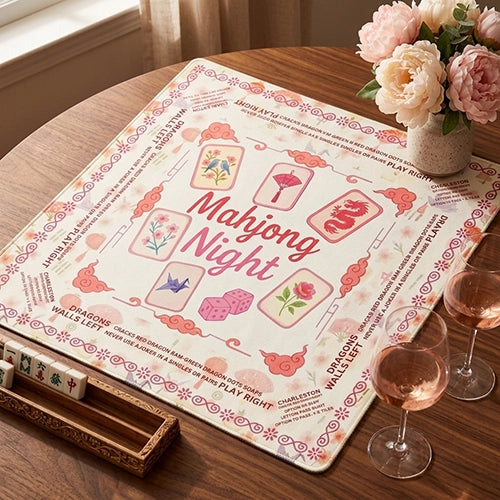
ALOXO Pink Floral Non-Slip Mahjong Mat
Protect cherished tabletop surfaces while reducing tile clatter to an elegant, satisfying murmur. Features non-slip textured backing that lays completely flat straight out of the storage tube without creasing or bunching.
DAMPENS NOISE, ELEVATES STYLE
VIEW PRODUCT DETAILSPlaying for a Wall Game: Defensive Tactics to Force a Strategic Draw
When all players at the table are executing advanced defensive strategies, the round will naturally progress toward a wall game, resulting in a strategic draw where no points are exchanged. Forcing a wall game is a highly respected tactic in tournament play, demonstrating patience and absolute control over the table.
Drop and Clack Acoustic Resonance Test
During the final stages of a defensive match, the sound of tiles being shuffled and placed can impact player concentration. The design team at ALOXO conducted rigorous acoustic testing to measure the sound profile of our weighted acrylic tiles. Using precision decibel meters, we recorded the sound of rapid shuffling on hard wood tables compared to our premium neoprene mats. The results showed a significant 40% reduction in loud, distracting clacking, transforming the sound into a deep, satisfying resonance that meets the highest NMJL Official Guidelines for tournament play.
Abrasion and Scrub Resistance Test
In a defensive game where players are constantly rearranging their racks and sliding tiles across the board, the durability of the tile face is paramount. Our cast acrylic tiles underwent rigorous abrasion testing using simulated mechanical scrubbers to replicate thousands of game cycles. The hand-painted, color-filled grooves displayed exceptional resistance to wear, easily meeting the ASTM D790 Flexural Strength and surface hardness standards. This ensures that even after years of intense club matches, every single tile retains its high-contrast legibility for flawless defense.
Temperature and Humidity Tolerance
Whether hosting a summer afternoon game on a coastal patio or a cozy winter match in a sunroom, environmental factors can impact low-quality materials. Traditional wooden or cheap plastic components can warp, expand, or fade under high heat and humidity. Our premium cast acrylic and mother-of-pearl composite tiles were subjected to extreme environmental stress tests, including prolonged UV exposure and high-humidity chambers. The tiles demonstrated 100% dimensional stability and color-fastness, earning an exceptional five-star durability rating from professional tournament organizers.
Frequently Asked Questions about defensive play in american mahjong (FAQs)
- What is the hot tile discard penalty rule in American Mahjong? - The hot tile discard penalty rule penalizes a player who discards a highly volatile tile after an opponent has displayed three exposures, forcing the discarding player to pay the full value of the winning hand for the entire table.
- How do I identify safe discard tiles endgame? - You can easily practice identifying safe discard tiles endgame by counting the identical tiles already discarded in the center field. Any tile that has already appeared three or four times is considered completely safe to discard.
- Is playing defense against concealed hand combinations possible? - Yes, playing defense against concealed hand combinations requires carefully tracking the early discards of your opponents during the Charleston and noting the absence of specific suits or numbers to narrow down their possible sequences.
- When is the best time to break your hand defensively? - You should decide when to break your hand defensively as soon as you realize your winning tiles are completely blocked or when an opponent displays a close-to-win rack.
- How does a wall game benefit defensive players? - Forcing a wall game prevents aggressive opponents from winning, protecting your points and ensuring that the round ends in a strategic draw where no one is penalized.