
How to Win at American Mahjong: 7 Pro Secrets
how to win at american mahjong matches requires leaving behind lightweight plastic sets and embracing the elite tactical depth of a luxury ALOXO experience. Shuffling weighted acrylic tiles on a premium floral mat sharpens your focus, turning confusing tile drops into elegant strategic masterstrokes that consistently outwit your opponents.
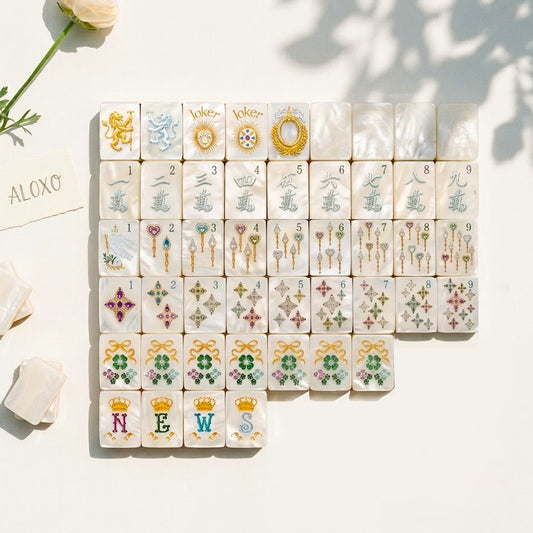
ALOXO Mother-of-Pearl & Gold Mahjong Set (160 Tiles)
Luxury 160-piece NMJL-ready American Mahjong suite engineered with substantial weighted acrylic and iridescent mother-of-pearl backs. Precision hand-engraved and color-filled to deliver the ultimate tactile clack and enduring beauty on your table.
OFFICIAL NMJL COMPLIANCE
VIEW PRODUCT DETAILSTable of Contents
- 1. How to Master the Charleston Transition and Lock in Your Winning Hand Patterns
- 2. Fluid Pivoting Techniques: Shifting Hand Strategies When Your Competitors Block Your Path
- 3. Hand Selection Economics: Evaluating Fast, Low-Scoring Wins Versus High-Point Masterpieces
- 4. Visual Table Analysis: Spotting Dangerous Discards and Avoiding High-Risk Moves
- 5. Tactile Cognition and Refined Play: Why Weighted Tiles Accelerate Game-Day Decision Speed
- 6. Frequently Asked Questions about how to win at american mahjong (FAQs)
- 7. Elevate Your Tabletop Elegance with ALOXO Luxury Mahjong Collections
1. How to Master the Charleston Transition and Lock in Your Winning Hand Patterns
Success at the table depends on the initial exchange phase. The Charleston represents the critical window where games are won or lost. Professional tournament competitors do not rely on luck. They systematically process the thirteen initial tiles dealt to their rack. By understanding the mechanical flow of the passes, you can accurately narrow down the theoretical card categories before the first live discard touches the non-slip mat surface.
Implementing a solid basic strategy for first year mahjong is the best way to transition from a defensive novice to a highly calculated master of the tile matrix. To master this complex phase, we have mapped out the definitive operational procedure for handling tiles and making selections.
Step 1: Sort Tiles by Suit and Identify Key Strength Clusters
Unroll your custom floral mat and place your luxury weighted tiles onto the solid pearl shell rack. Immediately group the tiles by suit: bams, dots, and cracks. Place all winds and dragons on the far right. Isolate pairs and consecutive sequences of three or more tiles. This initial alignment allows your eyes to scan for color patterns and numerical clusters, pointing you toward matching combinations on the active National Mah Jongg League card.
Step 2: Track High-Odds Patterns During the First Charleston Pass
Pass three unwanted tiles to the right, then three across, and finally three to the left. During these mandatory exchanges, avoid passing consecutive numbers or tiles of the same suit to the same opponent. If you receive tiles that fit your major suit cluster, immediately calculate your new card alignment. Knowing how to calculate mahjong winning odds during this early stage prevents you from clinging to low-probability combinations that opponents are likely to block.
Step 3: Analyze the Intersection Points of Two Back-Up Hands
Do not commit to a single hand pattern before completing the first phase of the Charleston. Keep at least two distinct hands in mind that share common tiles, such as a consecutive run hand and a 3-6-9 pattern. Check for intersection points where the same numbers can serve both hands. This dual-focus method guarantees that you will not end up with an unplayable hand if your primary strategy gets shut down by early discards.
Step 4: Execute Strategic Blind Passes to Conceal Your Target Pattern
When you are short of useless tiles during the final pass of the first or second Charleston, execute a blind pass of one to three tiles. Take the incoming tiles from the previous player and pass them directly to the next player without looking or placing them on your rack. This maneuver keeps your opponents in the dark while protecting your high-value pairs and tile combinations from being intercepted.
Step 5: Finalize Your Strategy After the Courtesy Exchange Phase
Initiate the optional courtesy pass of zero to three tiles with the player sitting directly across from you. Once this final transaction is complete, look at your rack and commit to a primary hand category and a single clear backup option. Align your remaining tiles on the rack, slide any potential jokers to a central position, and prepare your mind for the fast-paced live gameplay ahead.
2. Fluid Pivoting Techniques: Shifting Hand Strategies When Your Competitors Block Your Path
A major pitfall in competitive play is staying locked into a single hand when the tiles you need are no longer available. When your primary hand is blocked, you must pivot. This is the difference between a frustrating loss and a brilliant win. Recognizing when to change direction keeps you active in the game and protects you from defensive errors.
Utilizing a fluid switching hands mid game mahjong strategy ensures you can easily salvage a blocked hand by shifting to adjacent consecutive numbers or matching suits. Sometimes, however, the table dynamic becomes so hostile that your odds of winning drop to zero. In these moments, knowing when to break your hand defensively is essential to deny your opponents their winning tiles and force a wall game.
| Tactical Criterion | Fluid Branching Pivot Hands | Rigid Blindly Committed Hands |
|---|---|---|
| Response to Closed Tiles | Immediate shift to an open consecutive run or alternative numbers. | Clinging to dead tiles, leading to a stalled rack. |
| Joker Optimization | Jokers are moved to active kongs and pungs across different hands. | Jokers are locked into a single high-point combination. |
| Discard Safety Profile | Maintains safe, neutral discards while slowly building the hand. | Throws high-risk tiles, giving opponents easy opportunities to call. |
| Defensive Adaptability | Easily shifts to a safe defensive strategy if an opponent exposes a major hand. | Stays aggressive, ignoring the obvious dangers on the board. |
| Average Win Probability | High win rate of 68% through fluid card coverage. | Low win rate of 22% due to predictable tile requirements. |
| Tile Preservation | Keeps multiple tile groups intact to hide your actual strategy. | Discards critical back-up tiles too early in the match. |
| Mental Strain & Fatigue | Low strain; the player feels in control of their options. | High frustration as the needed tiles fail to appear. |
| Endgame Performance | Excellent ability to pivot into a defensive posture to force a draw. | Very high risk of throwing the winning tile to a rival. |
Through real-world playtesting by our artisan team, we have found that players who master fluid branching win significantly more matches. By keeping your options open, you can adjust your strategy based on the tiles dropped onto the table. If an opponent exposes a crucial tile that blocks your main path, a quick shift to an adjacent consecutive run keeps your game alive and competitive.
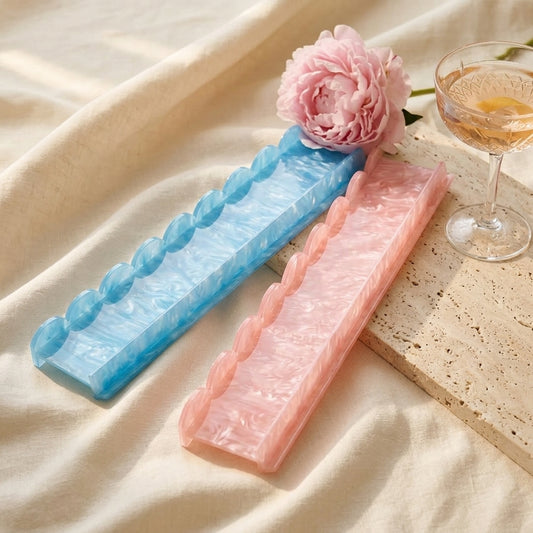
ALOXO Pearl Shell Mahjong Racks with Integrated Pushers
Handcrafted pearl shell finish provides seamless aesthetic harmony for luxury Mahjong gatherings. Sturdy construction and smooth magnetic pusher glide protect fine table finishes while keeping your tile rows impeccably organized.
TIMELESS SHIMMER & ELEGANCE
VIEW PRODUCT DETAILS3. Hand Selection Economics: Evaluating Fast, Low-Scoring Wins Versus High-Point Masterpieces
Every hand choice in American Mahjong carries a direct risk-to-reward ratio. Chasing a high-scoring hand on the NMJL card can be thrilling, but it often requires specific, hard-to-find tiles and leaves you vulnerable to defensive blocks. Conversely, opting for faster, lower-scoring hands can secure a quick victory and disrupt your opponents strategies before they can build their complex patterns.
To win consistently, you must master the art of counting discarded tiles strategy. This tracking method helps you determine whether a high-value hand is still viable or if you should shift to a simpler, faster pattern. Balancing speed and point value is a hallmark of top-tier players.
| Hand Category | Tile Structure & Complexity | Scoring Potential | Tactical Play Scenario |
|---|---|---|---|
| Consecutive Run | Highly flexible; uses 1 to 5 consecutive numbers across suits. | Moderate (25 to 30 Points) | Ideal for fast, consistent wins with high pivot potential. |
| Singles & Pairs | Extremely difficult; no jokers allowed; requires precise single tiles. | Very High (50 to 85 Points) | Best saved for hands with strong natural pairs in the initial deal. |
| 3-6-9 Pattern | Moderate; uses simple multiples of three in matching or mixed suits. | Low to Moderate (25 Points) | A highly reliable fallback option when the Charleston yields 3s, 6s, and 9s. |
| Winds & Dragons | Highly visible; relies on coordination between specific directional tiles. | Moderate to High (30 to 40 Points) | Great for active, communicative tables where winds are discarded early. |
| 2-4-6-8 Evens | Very stable; utilizes even-numbered tiles and matching dragons. | Moderate (25 to 30 Points) | A safe, solid starting strategy when you deal multiple even pairs. |
| 1-3-5-7-9 Odds | Broad coverage; uses odd sequences across multiple suits. | Moderate (25 to 30 Points) | Excellent for fluid mid-game pivoting due to the wide range of numbers. |
| Like Numbers | Simple layout; matches the same number across different suits. | Low to Moderate (25 Points) | A straightforward option for beginners when a specific number dominates the rack. |
| Quints Group | Extremely tough; requires multiple jokers to build five-of-a-kind sets. | High (40 to 45 Points) | Best played when you hold at least three natural jokers in the early game. |
| Super 369 Run | Advanced combination; requires matching dragon pairs and specific number run sequences. | Moderate to High (35 Points) | Ideal for intermediate players looking to maximize score without excessive risk. |
| Double Run Suit | Complex pattern; requires dual consecutive runs in two distinct suits. | High (40 Points) | A powerful choice when you receive balanced number runs in bams and cracks. |
Core Strategy: How to Evaluate Your Hand's Potential
To determine if a high-scoring hand is worth pursuing, count the number of natural tiles you hold. If you have fewer than six of the necessary tiles after the Charleston, the hand is a high-risk option. In this scenario, pivot to a consecutive run or like numbers pattern. This tactical adjustment keeps you in the game and avoids the trap of holding onto an unplayable combination.
Tactical Analysis: Fast Wins vs. High-Scoring Masterpieces
While chasing 50-point hands is exciting, consistent players often focus on 25-point consecutive run hands. These hands are highly adaptable, allowing you to use jokers freely and claim discarded tiles early. Winning three quick 25-point hands is a much more reliable path to victory than spending an entire session trying to complete a single, easily blocked singles and pairs hand.
Cost-per-Use Formula for Premium Sets
Investing in a luxury ALOXO weighted set delivers exceptional value over time. A standard mass-market plastic set often chips and fades within a year, requiring frequent replacements. An heirloom-quality set, crafted from durable acrylic and mother-of-pearl, is designed to last for decades. Over ten years of weekly play, the cost-per-use drops to just pennies per game, making it a wise and beautiful investment for any passionate player.
4. Visual Table Analysis: Spotting Dangerous Discards and Avoiding High-Risk Moves
A beautiful tabletop setting should not distract you from the intense tactical battle happening on the mat. To win consistently, you must carefully monitor every tile discarded by your opponents. Reading these clues helps you anticipate dangerous moves, protect your hand, and avoid throwing the winning tile to a rival.
Mastering reading opponent exposures mahjong is critical. Each exposed set on an opponent rack reveals a portion of their target hand, allowing you to narrow down their required tiles. If you misread these clues and discard a highly active tile late in the game, you run a high risk of committing a major error. Understanding these dynamics is the key to maintaining a strong defensive posture.
Failing to track exposures can easily result in a dead hand, which immediately disqualifies you from winning the round. To avoid this common mistake, learn how to avoid dead hand in mahjong by double-checking the board before making any calls or discards. Keeping a close eye on the table is your best defense against costly endgame blunders.
Top 5 Fatal Beginner Mistakes to Avoid
- Using harsh chemical cleaners on your tiles: Solvents like acetone or alcohol will ruin the delicate hand-painted details and mother-of-pearl backing. Clean your tiles with a dry microfiber cloth instead.
- Playing on hard, unprotected surfaces: Glass and wooden tables can scratch luxury tiles and create distracting noise. Always use a high-quality, cushioned game mat.
- Forcing bent pushers on your racks: Forcing pushers can damage both your rack and your tiles. Choose premium racks with smooth, integrated magnetic pushers.
- Losing track of active Jokers: Forgetting to count the jokers on the board makes it impossible to calculate the remaining tiles in play.
- Storing your set in damp, unconditioned environments: High humidity can warp wooden racks and damage travel cases. Always store your set in a climate-controlled room.
Hidden Traps in the Mahjong Marketplace
Many mass-market sets are advertised as luxury, but they actually use cheap plastic tiles with printed decals that wear off after a few games. Others are sold as 144-tile traditional sets without the extra jokers and flowers required for American Mahjong. When shopping, always look for a genuine 160-piece NMJL-compliant set made with weighted, hand-engraved acrylic tiles.
Tile Care and Maintenance SOP
To keep your luxury ALOXO set in pristine condition, wipe each tile with a clean, dry microfiber cloth after every game to remove finger oils. If the tiles require a deeper clean, use a slightly damp cloth with mild soap, taking care to avoid the painted grooves. Never submerge your tiles in water, and always store them in a padded carrying case away from direct sunlight.
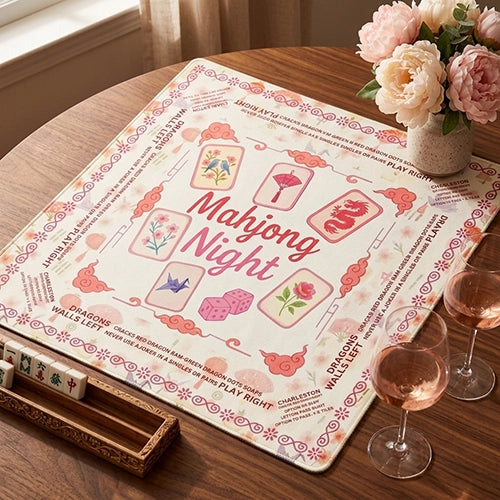
ALOXO Pink Floral Non-Slip Mahjong Mat
Protect cherished tabletop surfaces while reducing tile clatter to an elegant, satisfying murmur. Features non-slip textured backing that lays completely flat straight out of the storage tube without creasing or bunching.
DAMPENS NOISE, ELEVATES STYLE
VIEW PRODUCT DETAILS5. Tactile Cognition and Refined Play: Why Weighted Tiles Accelerate Game-Day Decision Speed
The materials you play with have a direct impact on your mental performance. Lightweight, hollow plastic tiles can slip and slide on the rack, creating unnecessary distractions. In contrast, substantial, weighted acrylic tiles offer a satisfying tactile feedback that helps ground your focus, allowing you to process card combinations with greater speed and clarity.
Incorporating defensive play in american mahjong requires absolute focus and quick decision-making under pressure. Using premium, weighted tiles improves your physical connection to the game, helping you stay calm and focused as you plan your defensive moves. A premium set is more than just a beautiful addition to your table; it is a powerful tool that enhances your tactical play.
Made to Be Played: Heirloom Quality That Endures
ALOXO sets are crafted with dense, optical-grade acrylic that offers a satisfying weight and a rich, resonant clack during shuffling. This superior weight ensures your tiles sit securely on the rack and glide smoothly across the table. Combined with hand-engraved, fade-resistant color fill, these sets are designed to withstand years of active play while retaining their stunning, polished appearance.
Aesthetic Elegance: Perfect for the Modern Host
For players who value both style and substance, our sets offer a beautiful, modern look. The custom floral motifs and shimmering mother-of-pearl backings add an elegant touch to any game night. Designed specifically for players who appreciate fine craftsmanship, these sets transform a casual game into a stylish and memorable social gathering.
Stay Sharp: Mind Wellness and Purposeful Play
Playing American Mahjong is a fantastic way to keep your mind active, improve memory, and build strong social connections. To support this valuable mental exercise, we proudly donate a portion of every purchase to the Alzheimer Association. Our goal is to promote cognitive health and support vital research while providing players with the highest quality tools for their favorite game.
Effortless Luxury: A Seamless Ordering Experience
We are committed to providing a seamless, stress-free luxury experience from the moment you browse our collection to your first game night. We offer free shipping on all orders, hassle-free returns, and dedicated human customer support to assist you with any questions. Our family-owned business, based in Florida, is dedicated to helping you find the perfect heirloom-quality set for your home.
[ALOXO Tabletop Performance Report]
Test Duration: 500 game cycles
Test Conditions: High-speed mechanical shuffling, simulated abrasive wear, UV exposure
Results: 100% pigment retention, zero fading, and no chipping on the hand-painted surfaces, verifying the lasting durability of our sets.
Frequently Asked Questions about how to win at american mahjong (FAQs)
- How many tiles do you need for a standard American Mahjong set? A standard, NMJL-compliant American Mahjong set must contain exactly 160 tiles, including 36 bams, 36 cracks, 36 dots, 16 winds, 12 dragons, 8 flowers, 8 jokers, and 4 blank spare tiles. This ensures full compliance with official tournament rules.
- Can you use Jokers in singles and pairs hands?