
Racks With Pushers vs Plain Racks: Full Review
racks with pushers vs plain racks dictate whether your game nights suffer from messy tile walls or flow with seamless luxury. While flimsy setups cause constant tile misalignment, premium integrated systems from ALOXO elevate every round with effortless elegance, tactile precision, and professional tournament-ready speed.
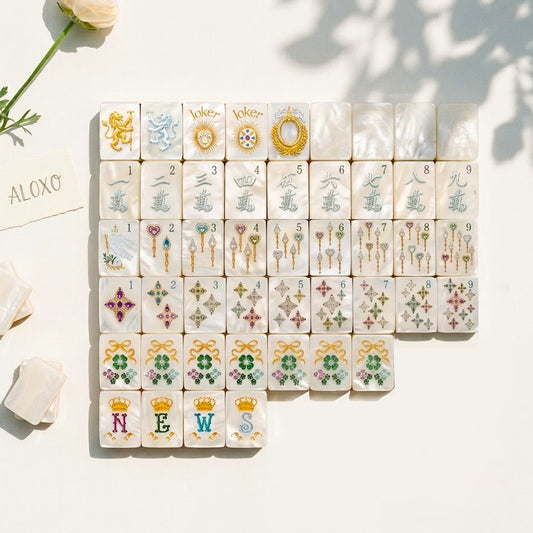
ALOXO Mother-of-Pearl & Gold Mahjong Set (160 Tiles)
Luxury 160-piece NMJL-ready American Mahjong suite engineered with substantial weighted acrylic and iridescent mother-of-pearl backs. Precision hand-engraved and color-filled to deliver the ultimate tactile clack and enduring beauty on your table.
OFFICIAL NMJL COMPLIANCE
VIEW PRODUCT DETAILSTable of Contents
- 1. Specifications and Matching Set Combinations
- 2. Engineering Mechanics Behind Pristine Tile Wall Alignment
- 3. Head-to-Head Architectural Review
- 4. Definitive Tabletop Guide to Wall Building and Pusher Ergonomics
- 5. Eradicating Tile Setup Mishaps and Sustaining Peak Performance
- 6. Frequently Asked Questions about Racks With Pushers vs Plain Racks
- 7. Elevate Your Tabletop Elegance with ALOXO Luxury Mahjong Collections
To provide a complete technical overview, we break down our exploration into five core technical sub-intents: Material engineering specifications and matching accessory procurement, architectural mechanics of tile alignment and structural balance, head-to-head comparison metrics of vintage versus modern slider racks, step-by-step physical alignment and tournament hosting protocols, and expert troubleshooting for maximum performance lifespan.
1. Specifications and Matching Set Combinations
Acquiring a coordinated tabletop setup requires deep familiarity with physical measurements, weight distributions, and overall aesthetic harmony. When transitioning from traditional methods to a comprehensive modern configuration, evaluating the baseline physical profiles of your gear is essential. This detailed specifications matrix outlines how unified components construct a superior, high-efficiency playing arena.
| Set Name / Accessory | Tile Dimensions & Weight | Material & Backing Style | Price Quote / Ideal Play Scenario |
|---|---|---|---|
| ALOXO Pearl Shell Rack Set | 18 inches length by 2.5 inches width | High-density cast acrylic with natural iridescent shell finish | $120.00 / Premium social clubs demanding high-end aesthetics |
| ALOXO Mother of Pearl Gold Set | 160 tiles at 30 grams per individual tile | Heavy-weight acrylic with gold shimmer backing layers | $295.00 / Heirloom collection and professional tournaments |
| ALOXO Sorbet Hot Pink Set | 160 tiles at 30 grams per individual tile | Solid resin composite with hot pink luster backing | $285.00 / Modern design collectors and energetic social tables |
| ALOXO Pink Floral Set | 160 tiles at 30 grams per individual tile | Cast acrylic with custom floral hand-painted motifs | $290.00 / Outdoor patio play and coastal garden game nights |
| ALOXO Pearl Cat Set | 160 tiles at 30 grams per individual tile | Shimmering pearlescent resin with custom engraving | $285.00 / Elegant hosting and whimsical social gatherings |
| ALOXO Standalone Acrylic Slide Pushers | 17.5 inches length by 0.75 inches depth | High-clarity optical grade polished acrylic with brass pins | $35.00 / Upgrading legacy plain vintage wood racks with modern gear |
| Pink Floral Table Mat | 32 x 32 inches, 3mm structural depth | Cushioned non-slip rubber base with velvet fiber surface | $45.00 / Dampening tile sound and protecting wooden tables |
| Custom Monogram Mat | 32 x 32 inches, 3mm structural depth | Tailored non-slip neoprene with custom name options | $60.00 / Personalized gifts and dedicated club tables |
| Natural Gemstone Dice | 16mm standard size, set of 6 | Semi-precious hand-cut amethyst and quartz crystals | $30.00 / Adding high-end acoustic variance to dice rolls |
| Vegan Leather Travel Case | 20 x 10 x 4 inches total dimensions | Quilted weather-proof synthetic leather with padded trays | $75.00 / Safe transport of luxury sets to country clubs |
Core Specs Analysis
Verifying compliance with National Mah Jongg League standards begins with analyzing individual tile density and physical dimensions. A genuine tournament tile should measure approximately 1.2 inches in height by 0.9 inches in width by 0.5 inches in depth, possessing a weight profile of approximately 30 grams. This specific weight prevents accidental tipping and ensures a deep, rich clack when shuffling on a neoprene base. Our mahjong rack size guide details how these tile proportions sit perfectly inside an 18-inch rack channel, allowing exactly nineteen tiles to form a double-tiered wall without spilling over the side boundaries.
Budget-based Consulting
Social hosts who gather occasionally often contemplate buying parts piecemeal, but buying cheap standalone racks usually leads to structural mismatches. Investing in a premium unified bundle including a 160-piece tile set, integrated racks, and a custom mat saves considerable money in the long run. By consulting our resource on how to buy mahjong racks pushers, players discover that pre-engineered systems prevent the frustration of misaligned brass pins and mismatching color profiles. This holistic approach ensures every accessory works together beautifully, providing a stunning visual presence on your table.
Cost-per-Use Formula
To truly evaluate the luxury of high-end equipment, calculate the amortization of your purchase over its functional life. A basic mass-market plastic set costing $80.00 typically requires replacement within two seasons due to fading ink, cracked rack pegs, and warped components. Conversely, a luxury $295.00 acrylic set from ALOXO designed to last for thirty years of active play equates to less than ten dollars per year. Over a lifetime of weekly games, the operational cost drops to mere pennies per round. Investing in heirloom quality is a highly practical choice that respects both your financial resources and the integrity of the game.
2. Engineering Mechanics Behind Pristine Tile Wall Alignment
Achieving a perfectly straight tile wall requires understanding the physical forces of friction, leverage, and alignment. During fast-paced matches, players need to move tiles without scattering them across the table. This section examines how high-quality equipment relies on physics to deliver a smooth, quiet, and exceptionally stable gaming experience.
Material Origin & Nature
The foundation of structural stability in mahjong accessories lies in the physical properties of cast acrylic. Unlike cheap injection-molded plastics that are light, hollow, and prone to warping, optical-grade cast acrylic undergoes a precise manufacturing process. This raw material is poured into custom glass molds, yielding high density, uniform tensile strength, and incredible scratch resistance. When bonded with natural shimmering mother-of-pearl, the material gains a beautiful organic luster that catches the dining room light while maintaining structural rigidity under intense physical play.
Anatomy Breakdown
A professional-grade rack with pushers is a masterclass in functional design, featuring specialized components that work together seamlessly:
- An 18-inch polished acrylic base channel that holds active tiles securely at an ergonomic angle.
- Integrated brass guiding pins that keep the sliding pusher securely aligned without side-to-side wobbling.
- A dual-height front pushing ledge designed to contact the exact center of gravity of double-stacked tile walls.
- Micro-textured, non-scratch silicone feet that grip the table mat without sliding during intense play.
Operating Principle
The physical magic of building a wall relies on distributing pressure evenly across the entire surface. When a player guides the pusher forward, the rigid acrylic face makes contact with all nineteen tiles simultaneously. This balanced pressure keeps the tiles from buckling, twisting, or collapsing into each other. Investigating the physics in our article on magnetic pushers vs slide pushers shows how smooth contact reduces the force needed to slide tiles across neoprene, making the game feel effortless for players of all ages.
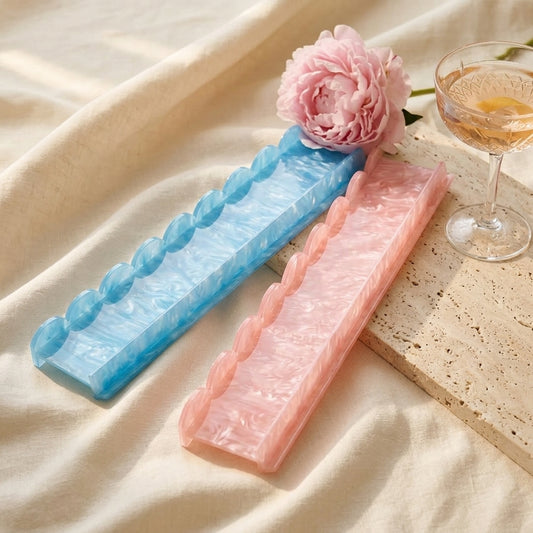
ALOXO Pearl Shell Mahjong Racks with Integrated Pushers
Handcrafted pearl shell finish provides seamless aesthetic harmony for luxury Mahjong gatherings. Sturdy construction and smooth magnetic pusher glide protect fine table finishes while keeping your tile rows impeccably organized.
TIMELESS SHIMMER & ELEGANCE
VIEW PRODUCT DETAILS3. Head-to-Head Architectural Review
To help you choose the right gear, we must compare modern integrated systems with vintage wooden setups. The table below outlines how material choice, weight, and design directly affect the speed and feel of your games.
| Criteria | ALOXO Luxury Acrylic Solution | Mass-Market Plastic Solution |
|---|---|---|
| Alignment Consistency | Flawless straight walls with zero manual adjustment | Frequent manual adjustment needed due to light, hollow components |
| Setup Speed | Tile wall built and pushed in under five seconds | Requires up to thirty seconds of careful, tedious handling |
| Ergonomic Reach | Pushers extend player reach by up to six full inches | Players must lean far forward to access tiles manually |
| Long-Term Cost | Lifetime durability with no physical warping or splitting | Frequent replacement needed as cheap plastics crack and break |
| Table Scratch Prevention | Polished chamfered edges slide smoothly across fine fabrics | Sharp molding seams can mark and scratch delicate wood tables |
| Aesthetic Harmony | Iridescent shell finish matches premium tile backs beautifully | Dull solid colors look clinical and lack visual appeal |
| Structural Integrity | Heavyweight design resists table bumps and accidental movement | Lightweight bases easily slide or tip over when bumped |
| Standard Compliance | Perfectly fits all 160 National Mah Jongg League tiles | Inconsistent dimensions can crop tile storage and cause crowding |
Hand-Engraved Acrylic vs Printed Bakelite/Plastic
The differences between mass-market materials and premium cast acrylic become clear after just a few games. Cheap sets made of printed plastic or basic Bakelite feel hollow, and the surface-printed ink can rub off after a few months of intense play. In contrast, ALOXO tiles feature hand-engraved grooves filled with vibrant, fade-resistant pigments. Our comparison of wooden racks vs acrylic pushers shows that premium acrylic provides the ideal weight, beautiful sound, and long-lasting durability that serious players deserve.
Integrated Acrylic Pushers vs Wood Racks
While vintage wooden racks look classic, they present several practical drawbacks on the table. Wood reacts to humidity, leading to warping, splintering, and sticky pusher movement that can disrupt the flow of play. High-quality acrylic racks with integrated pushers solve these issues with durable brass pins and smooth sliding tracks. By exploring our top rated mahjong racks with pushers, players can find designs that offer effortless, silent wall building and a modern look that coordinates beautifully with luxury home decor.
4. Definitive Tabletop Guide to Wall Building and Pusher Ergonomics
Before beginning your next game, gather all necessary components to ensure a professional, comfortable tabletop experience. You will need a standard 160-piece tile set, an official National Mah Jongg League card, four matching racks with integrated sliding pushers, a non-slip noise-reduction table mat, and gemstone dice. Setting up your table correctly creates a relaxing, focused environment where players can easily reach their tiles and enjoy a smooth, fast-paced game.
Step 1: Laying the Table Foundation
The first step in setting up a clean table is preparing the playing surface. Unrolling a high-quality neoprene mat dampens tile noise and keeps your racks firmly in place throughout the game.
- Unroll the cushioned 3mm mat flat across your table, smoothing out any minor wrinkles.
- Align the four 18-inch racks so they are spaced exactly 28 inches apart in a perfect square.
- Position the sliding pushers on the right-hand side of each rack, ready to build the first wall.
- Inspect the tabletop to ensure there is plenty of room for players to comfortably place their hands and cards.
Standard specs require a 3mm neoprene mat on a 32 by 32 inch square table. Make sure to check the mat under your room lighting to ensure the surface is clean, flat, and free of dust before placing your tiles.
Step 2: Executing the Shuffling Phase
Shuffling your tiles thoroughly is essential for a fair game. Weighted acrylic tiles glide smoothly across neoprene, creating a satisfying clack without scratching the table.
- Place all 160 tiles face down in the center of the table, ensuring no face designs are visible.
- Mix the tiles using both hands in a circular motion, keeping pressure gentle to avoid chipping.
- Distribute the tiles evenly across the table, making sure they are well-mixed before building walls.
- Gather the tiles into four equal groups of forty, placing one group in front of each player.
Standard tiles weigh 30 grams each, and the total set of 160 tiles must be shuffled face down for at least thirty seconds. For a clean, scratch-free shuffle, guide the tiles with flat palms instead of grabbing them by the edges.
Step 3: Assembling the Tile Walls
Building a neat, straight double-tier wall of nineteen tiles requires a gentle touch and sturdy racks. Clean alignment makes it easy for every player to see and access their tiles.
- Select nineteen tiles from your shuffled pile and arrange them face down in a straight row.
- Stack a second row of nineteen tiles directly on top of the first to create a double-tiered wall.
- Slide the double-tier wall gently against the front edge of your rack to align the tiles.
- Check that the wall is centered, straight, and stable before handing play to the dealer.
According to official National Mah Jongg League rules, each of the four walls must be exactly nineteen tiles long and two tiles high. To make building walls easier, use the flat front of your sliding pusher to gently square up the ends of the tile stack.
Step 4: Deploying the Pusher Mechanism
Using an integrated pusher allows you to slide your tile wall to the center of the table smoothly. This design extends your reach, so you do not have to lean forward or disrupt other tiles.
- Place your hand on the brass pins of the sliding pusher on the right side of your rack.
- Extend the pusher forward at a steady angle, keeping it flat against the table mat.
- Guide the tile wall to the center of the table, ensuring it stays straight and does not buckle.
- Retract the pusher slowly once the tiles are positioned, leaving the wall ready for play.
The integrated pusher extends your reach by 5.5 inches, moving the wall to the center of a 32-inch table. For the smoothest movement, consult our guide on proper hand placement pushing walls to avoid putting uneven pressure on the brass guiding pins.
Step 5: Conducting the Tile Dealing Process
Dealing tiles cleanly is important for maintaining a professional pace during your game. Using your rack channels keeps active hands organized and hidden from other players.
- Roll the gemstone dice to determine which player will open the wall and deal the first tiles.
- Take tiles from the pushed wall in groups of four, moving clockwise around the table.
- Place your dealt tiles face up in your 18-inch rack channel, keeping them organized by suit.
- Arrange your tiles neatly to make planning your hands and strategic discards easier.
The dealer starts with fourteen tiles, while the other three players receive thirteen tiles. Always place your tiles deep in the rack channel to keep your hand private and secure from neighboring players.
Step 6: Managing the Charleston Exchange
The Charleston is a fast-paced passing phase that requires quick thinking and neat tile movement. Keeping passed tiles organized prevents confusion and keeps the game moving smoothly.
- Select three unwanted tiles from your rack and place them face down on the table mat.
- Pass the tiles to the designated player according to the official Charleston sequence.
- Slide the incoming tiles directly into your rack, keeping them separate from your active hand.
- Repeat the passing process for the second phase of the Charleston if all players agree.
Each pass in the Charleston requires exchanging exactly three tiles face down. To keep the game flowing beautifully, make sure to slide passed tiles in a neat, straight line so they are easy for the receiving player to pick up.
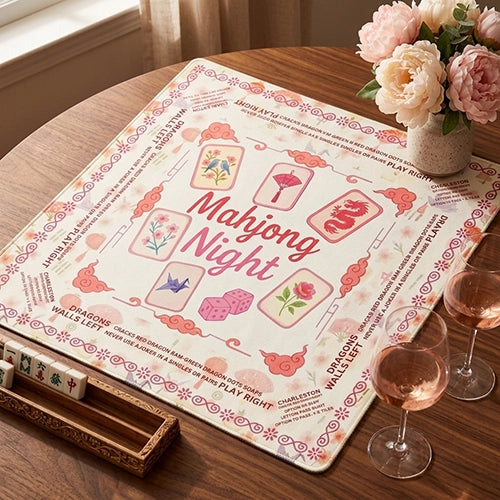
ALOXO Pink Floral Non-Slip Mahjong Mat
Protect cherished tabletop surfaces while reducing tile clatter to an elegant, satisfying murmur. Features non-slip textured backing that lays completely flat straight out of the storage tube without creasing or bunching.
DAMPENS NOISE, ELEVATES STYLE
VIEW PRODUCT DETAILS5. Eradicating Tile Setup Mishaps and Sustaining Peak Performance
Even the finest gaming gear requires proper handling and maintenance to perform its best over time. Avoiding common setup mistakes and using correct cleaning methods protects your investment and ensures a flawless experience for every game night.
Top 5 Fatal Beginner Mistakes
To protect your luxury gear from accidental damage, keep these common beginner mistakes in mind:
- Using chemical acetone cleaners or glass sprays, which can strip acrylic of its brilliant shine and dissolve hand-painted pigments.
- Playing on hard glass or wooden tables without a protective mat, which can scratch the bottom of your tiles.
- Forcing bent or misaligned pushers forward, which can damage brass guiding pins and scratch the table surface.
- Failing to count your jokers before starting, which can disrupt tournament scoring and lead to invalid hands.
- Storing your set in damp, cold areas like basements, which can warp case materials and damage velvet storage trays.
"Hidden Traps" Market Warning
When shopping for new gear, be aware of lower-quality sets that look like luxury items online but perform poorly on the table. Many budget brands sell light, hollow plastic tiles labeled as professional or tournament-ready, but they lack the satisfying weight of genuine acrylic. Some sets also omit th