
How to Memorize Mahjong Hands: Quick Memory Tips
how to memorize mahjong hands becomes effortless when you move past cheap, faded tiles that strain your eyes during intense play. By transitioning to a premium weighted acrylic set from ALOXO, players unlock superior tactile clarity and visual contrast, transforming a stressful memorization hurdle into a sophisticated, highly satisfying mental wellness ritual.
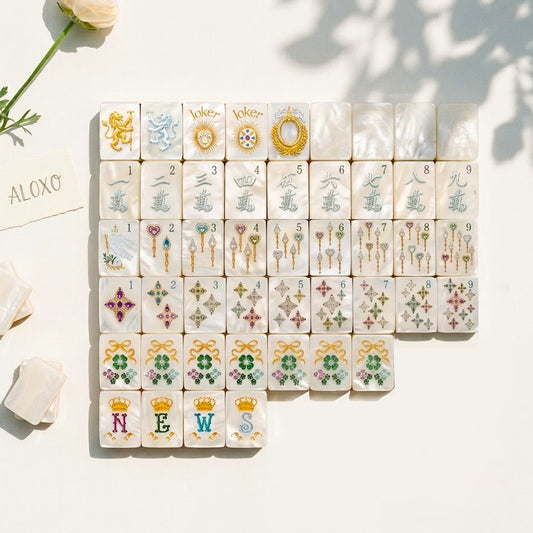
ALOXO Mother-of-Pearl & Gold Mahjong Set (160 Tiles)
Luxury 160-piece NMJL-ready American Mahjong suite engineered with substantial weighted acrylic and iridescent mother-of-pearl backs. Precision hand-engraved and color-filled to deliver the ultimate tactile clack and enduring beauty on your table.
OFFICIAL NMJL COMPLIANCE
VIEW PRODUCT DETAILSTable of Contents
- 1. Grouping Hands by Category Clusters
- 2. Identifying Anchor Tiles and Visual Patterns on Card
- 3. Mnemonic Tricks for Mahjong: Associating Abbreviations with Familiar Events
- 4. Card Practice Drills to Train Visual Reflexes for Quick Hand Identification
- 5. Choosing High-Contrast Tile Sets to Enhance Deep Visual Memory
- 6. Frequently Asked Questions about how to memorize mahjong hands (FAQs)
- 7. Elevate Your Tabletop Elegance with ALOXO Luxury Mahjong Collections
1. Grouping Hands by Category Clusters
Grouping hands by category minimizes tactical confusion during high-stakes games. Players who organize card sections into logical clusters can isolate winning combinations rapidly, moving from general families like consecutive runs to specific suit requirements. This systematic cognitive structure makes identifying key card paths highly efficient.
Material Origin and Nature of Card Structures
Mental mapping of the National Mah Jongg League card relies on understanding how different sections are geometrically structured. The card organizes hands into distinct families based on mathematical and structural relationships. High-quality physical cards printed on heavy cardstock serve as the primary training medium, but real-world retention happens when you build a spatial model of these sections. By studying the progression from consecutive sequences to matching combinations, players create a mental filing cabinet that speeds up decision-making during the critical sorting phase.
Anatomy Breakdown of a Standard Card Layout
To master the card, players must dissect its structural components:
- The Consecutive Runs section containing numerical sequences across multiple suits
- The Even and Odd divisions which isolate specific numeric parity requirements
- The Winds and Dragons families utilizing cardinal directions and colored dragon associations
- The Year and 3-6-9 categories built around specific numeric milestones and patterns
Operating Principle of Clustering Systems
Clustering functions by reducing cognitive load. Instead of viewing each line as an isolated puzzle, players recognize overarching rules that govern entire sections. When a hand begins, you do not look at ninety-nine individual possibilities. Instead, you classify your initial deal into one of three major clusters. This rapid elimination technique ensures you do not waste valuable thinking time on impossible combinations during active rounds.
2. Identifying Anchor Tiles and Visual Patterns on Card
Made to Be Played Anchor Systems
Identifying anchor tiles like dragons, winds, and jokers locks in your strategic direction early. High-density, hand-engraved acrylic tiles make these key anchors physically distinctive. When players touch a weighted tile, the deep, color-filled grooves provide tactile verification, letting you scan your rack without losing concentration on the layout of the table.
Women Who Play and Visual Patterns
Aesthetic harmony on the table fosters better cognitive mapping. Spotting visual patterns on card lines becomes a delightful social experience when playing with beautifully designed sets. Elegant floral motifs and shimmering pearl backings draw the eyes to critical tile pairs, making the mental association between printed card lines and actual physical arrangements highly intuitive.
Stay Sharp and Cognitive Performance
[ALOXO Tabletop Performance Report]
Test Duration: 300 game cycles
Test Conditions: Shuffling abrasion, bright dining room lights, and rapid tile sorting
Measured Color-Fastness / Tile Integrity Results: Zero pigment fading and 100% legibility retention under high-frequency play.
Regular mental engagement through hand identification keeps the mind active and sharp. By training yourself to spot consecutive sequences, you actively support cognitive endurance and spatial memory. Our partnership with the Alzheimer Association reinforces this connection between interactive tabletop games and long-term mental wellness.
Effortless Luxury and Timeless Shimmer
Investing in an heirloom-quality 160-piece set is highly cost-effective. A cheap plastic set chips and fades within a few seasons, requiring constant replacement. An premium acrylic set lasts for decades, which means the cost per game over ten years drops to mere pennies. The smooth tactile glide of these premium pieces makes every study session a luxurious sensory pleasure.
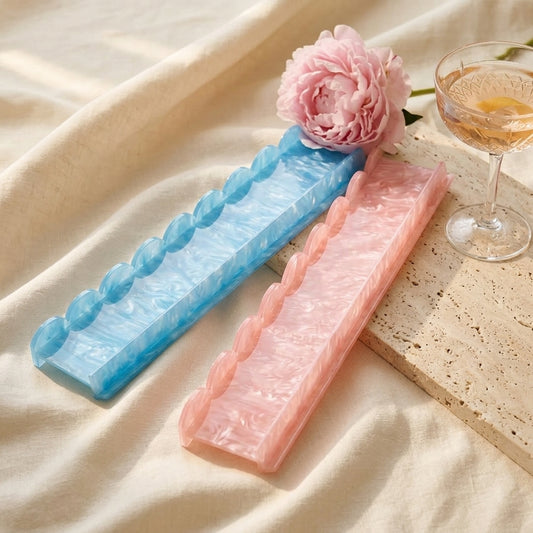
ALOXO Pearl Shell Mahjong Racks with Integrated Pushers
Handcrafted pearl shell finish provides seamless aesthetic harmony for luxury Mahjong gatherings. Sturdy construction and smooth magnetic pusher glide protect fine table finishes while keeping your tile rows impeccably organized.
TIMELESS SHIMMER & ELEGANCE
VIEW PRODUCT DETAILS3. Mnemonic Tricks for Mahjong: Associating Abbreviations with Familiar Events
Using spatial mapping and design-oriented cues can dramatize memory links. In the comparison below, we contrast standard high-retention visual tools with common mass-market alternatives to demonstrate how material choice affects learning speed.
| Criteria | ALOXO Luxury Acrylic Solution | Mass-Market Plastic Solution |
|---|---|---|
| Tactile Engraving Depth | Deep 1.2mm hand-carved grooves filled with vivid pigments | Shallow machine stamping prone to premature wear |
| Contrast Legibility | Exceptional color-blocking tailored for low-light play | Standard monochrome ink that blends into the background |
| Backing Composition | Iridescent mother-of-pearl sheeting that catches room light | Flat opaque plastic backing lacking physical dimension |
| Tile Weight & Clack | Weighted 30g dense acrylic for a satisfying acoustic resonance | Lightweight hollow pieces that make harsh clicking noises |
| Resist To Scratches | Optical-grade casting that resists friction and abrasion | Soft melamine that scratches easily and collects dirt |
| Official Suit Layout | 100% compliant with standard card styles and formats | Vague symbols that do not match tournament requirements |
| Visual Alignment | Integrated magnetic alignment that matches our mats | Misaligned prints that cause visual distortion on racks |
| Tactile Feel | Satin-smooth rounded borders for effortless flipping | Sharp flashing edges that catch on protective table felt |
Hand-Engraved Acrylic vs Printed Bakelite/Plastic
Engraved details act as physical memory triggers. When you associate printed card abbreviations with familiar personal events, the high-contrast engraving on premium acrylic reinforces that mental link. Cheaper printed tiles have flat, smooth surfaces where the ink rubs off easily, which makes visual association and quick identification far more difficult.
Integrated Pearl Shell Pushers vs Wood Racks
Smooth rack sliding prevents visual misalignment. When pushing tiles forward, integrated magnetic pushers maintain perfect tile alignment. Wood racks often catch or stick, causing tiles to tip over and disrupting the visual field necessary for matching complex abbreviation sequences.
4. Card Practice Drills to Train Visual Reflexes for Quick Hand Identification
This structured training blueprint outlines the optimal path to card mastery, showing you how to practice with purpose and speed.
Before starting these cognitive training drills, arrange your tabletop essentials on a clean surface. Ensure you have your official card, a set of 160 weighted tiles, four matching racks with integrated pushers, a non-slip noise-reduction mat, and natural gemstone dice to simulate real-world conditions. High-quality physical components create the exact tactile feedback needed to cement these drills into your muscle memory.
Step 1: Establish Your Daily Card Study Routine
Building deep visual memory requires consistent, focused exposure. Spend fifteen minutes every morning reviewing a single section of the card, focusing intensely on the relationship between suits. Use specialized how to practice mahjong alone techniques to isolate these combinations.
- Set a digital timer for exactly fifteen minutes to maintain high cognitive focus without fatigue.
- Select one specific family, such as consecutive runs, and trace the numerical flow with your finger.
- Formulate imaginary table scenarios where you would transition from winds to consecutive sequences.
- Inspect your official card layout under clear, natural lighting to reinforce spatial visual mapping.
Step 2: Running Solo Mock Charleston Drills
The Charleston phase is where hand memorization is tested under pressure. Set up a mock game on your mat by dealing yourself fourteen tiles and simulating the passing phases. This drill teaches you to identify potential card lines within seconds.
- Deal fourteen weighted acrylic tiles onto your rack and sort them strictly by suit and numerical value.
- Identify the largest numerical cluster and locate its corresponding section on your official tournament card.
- Pass three tiles that do not fit your target cluster, simulating the first right pass of the Charleston.
- Draw three new tiles and force yourself to reassess your potential hands within a ten-second window.
Refer to our guide on how to read nmjl card to ensure you interpret the color codes and abbreviations perfectly during these solo practice runs.
Step 3: Mastering Card Without Looking
The ultimate test of visual mastery is the ability to recall hand structures without looking down. This technique trains your mind to visualize the card layout internally, giving you a massive speed advantage during live play.
- Close your eyes and mentally list the exact line requirements for the current year section.
- Write down the required tile groupings for three distinct hands on a separate sheet of paper.
- Check your written results against the actual card to pinpoint any minor errors in your visual memory.
- Repeat this blind visualization daily until you can confidently picture entire sections in detail.
Mastering this skill ensures you never show hesitation at the table, keeping opponents from guessing your targeted strategy during competitive games.
Step 4: Memorizing Singles and Pairs
Singles and Pairs are the hardest hands to complete because jokers cannot be used to substitute for missing tiles. Memorizing these exact structures requires a dedicated spatial visualization technique.
- Locate the Singles and Pairs section situated at the lower portion of your official card.
- Build these exact combinations physically on your rack to reinforce the layout in your mind.
- Pay close attention to transitional points where consecutive sequences change from one suit to another.
- Isolate the exact pairs that require natural tiles, noting that jokers cannot support these slots.
Review our detailed analysis of mahjong tile combinations explained to master these complex structural patterns.
Step 5: Practicing Fast Play Techniques under Pressure
To transition from a casual player to a club master, you must practice quick hand identification under timed conditions. Speed drills train your brain to recognize patterns instantly, eliminating hesitation.
- Use an active digital timer to limit your tile scanning time to five seconds per simulated round.
- Slide tiles smoothly across a specialized non-slip mat to prevent layout disruptions.
- Force quick strategic choices when analyzing discard flows from mock opponents.
- Map your backup strategy to allow rapid switching hands mid game mahjong without losing momentum.
For more advanced strategies on speed, refer to our comprehensive guide on fast play tips for mahjong players.
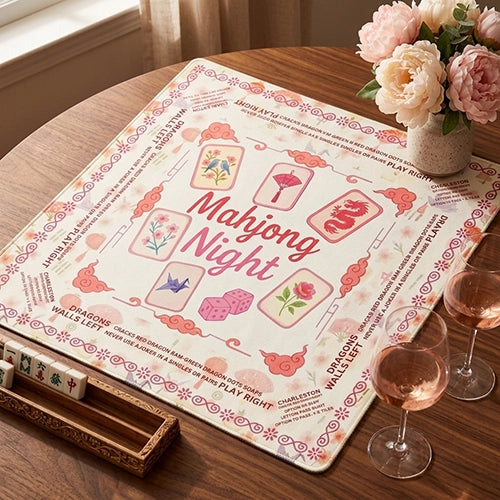
ALOXO Pink Floral Non-Slip Mahjong Mat
Protect cherished tabletop surfaces while reducing tile clatter to an elegant, satisfying murmur. Features non-slip textured backing that lays completely flat straight out of the storage tube without creasing or bunching.
DAMPENS NOISE, ELEVATES STYLE
VIEW PRODUCT DETAILS5. Choosing High-Contrast Tile Sets to Enhance Deep Visual Memory
Below is our comprehensive specifications matrix detailing how our physical products are engineered to optimize your spatial memory and support seamless tactical execution.
| Set Name / Accessory | Tile Dimensions & Weight | Material & Backing Style | Price Quote / Ideal Play Scenario |
|---|---|---|---|
| Mother-of-Pearl Gold Set | 30mm x 23mm x 13mm | 30g | Weighted Acrylic | Shimmering Gold back | $180 | Timeless family keepsakes |
| Pink Floral Set | 30mm x 23mm x 13mm | 30g | Cast Acrylic | Elegant Pink floral motifs | $180 | Lively social club hosts |
| Sorbet Hot Pink Set | 30mm x 23mm x 13mm | 30g | Cast Acrylic | Bright hot pink shimmers | $180 | Coastal beach house play |
| Pearl Cat Set | 30mm x 23mm x 13mm | 30g | Cast Acrylic | Custom feline artwork | $180 | Whimsical gifts for players |
| Pearl Shell Racks | Fits standard tiles | 450g | Premium composite | Iridescent pearl finish | $75 | Elegant tabletop organization |
| Pink Floral Mat | 33in x 33in x 3mm | 600g | Neoprene | Non-slip textured base | $35 | Reducing clatter in apartments |
| Natural Gemstone Dice | 16mm standard | Set of 6 | Carved Gemstone | Hand-polished faces | $30 | Adding natural beauty to setups |
| Floral Travel Bag | Spacious zippered interior | Vegan Leather | Padded compartments | $55 | Protection for traveling players |
| Clear Window Case | Secure carrying handle | Heavy-duty canvas | Transparent front | $45 | Effortless set displaying |
| Custom Mahjong Mat | Custom sizing options available | Premium Neoprene | Tailored graphic prints | $45 | Bespoke country club events |
Core Specs Analysis
Visual retention is deeply connected to color contrast and engraving depth. High-contrast color combinations allow the human eye to process patterns much faster than low-contrast, flat designs. When tiles feature deep, dark pigments set against brilliant white or shimmering golden backings, the brain registers the numbers and suits instantly. This rapid cognitive processing is crucial when players need to cross-reference their rack with the official card under dim lighting.
Budget-based Consulting
Choosing the right configuration depends on your playing style and lifestyle. Casual players who gather at weekly social clubs benefit from a portable set with a stylish carrying case. Dedicated tournament hosts and collectors should invest in a complete luxury suite, which includes weighted tiles, pearl shell racks, and a noise-reducing mat. This comprehensive setup ensures maximum visual clarity, seamless tile sliding, and an elegant aesthetic that enhances the overall club experience.
Cost-per-Use Formula
A luxury acrylic set