
Rolling Dice to Break Mahjong Wall: Full Steps
Mastering the precise mechanics of rolling dice to break mahjong wall represents the dividing line between casual play and true tabletop mastery. Weekly gaming clubs often struggle with lightweight, sliding tiles and flimsy wooden racks, making it essential to understand how proper setup and authentic weighted sets from ALOXO elevate every round.
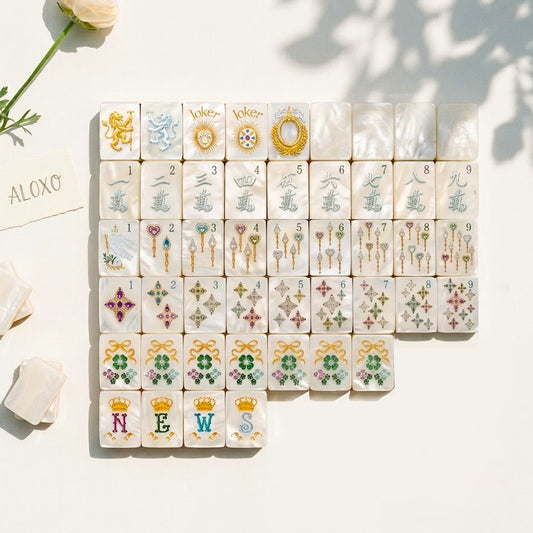
ALOXO Mother-of-Pearl & Gold Mahjong Set (160 Tiles)
Luxury 160-piece NMJL-ready American Mahjong suite engineered with substantial weighted acrylic and iridescent mother-of-pearl backs. Precision hand-engraved and color-filled to deliver the ultimate tactile clack and enduring beauty on your table.
OFFICIAL NMJL COMPLIANCE
VIEW PRODUCT DETAILSTable of Contents
- Formula and Mathematics of rolling dice to break mahjong wall
- Ensuring Tabletop Integrity Through fair dice rolling and Randomness Audits
- Practical Step-by-Step SOP for counting wall from east and Dealing
- Elevating Setup Elegance with Premium Dice and Tile Craftsmanship
- Table Etiquette and Care Protocols for Luxury Gaming Accessories
- Frequently Asked Questions about rolling dice to break mahjong wall (FAQs)
- Elevate Your Tabletop Elegance with ALOXO Luxury Mahjong Collections
Formula and Mathematics of rolling dice to break mahjong wall
Determining the exact point of entry into the structured tile barrier requires a precise mathematical sequence that ensures total game integrity. Players rely on the combined numerical values of two tossed dice to dictate which wall will be breached and the exact stack where the break occurs. This method eliminates human bias and guarantees that the distribution of tiles remains entirely random and unpredictable for all participants at the table.
Material Origin and Nature
The physics of a perfect wall break begins with the physical properties of the tiles and tools in use. High-grade tiles utilize optical-grade cast acrylic bonded seamlessly to natural mother-of-pearl composite backs. This composite structure prevents warping and guarantees that every tile remains uniform in thickness, which is vital when stacking the tiles into neat, double-layered walls. Cheap alternatives often suffer from minor height variations, causing the walls to lean or crumble when subjected to the physical pressure of the pusher arm.
Anatomy Breakdown
To execute the wall-breaking sequence correctly under National Mah Jongg League standards, the table setup must include the following specific components:
- One complete suite of 160 weighted acrylic tiles including eight official jokers and specialized custom floral motifs.
- Four precision-engineered acrylic racks featuring integrated brass pushers and smooth magnetic guides.
- One non-slip noise-reduction tabletop mat designed to dampen the impact of shuffling and keep tile walls securely in position.
- Two calibrated natural gemstone dice of equal weight to ensure true, non-biased rolling results.
Operating Principle
The mathematical tracking begins with the dealer, designated as East, who rolls the two dice onto the open center of the table. The sum of these two dice determines which player face serves as the starting point for the count, moving in a strict counter clockwise counting pattern. East always represents one, five, or nine. The player to the right of East represents two, six, or ten. The player opposite East represents three, seven, or eleven, while the player to the left of East represents four, eight, or twelve. Once the target wall is identified by this sum, the player of that wall counts from the right-hand corner of their rack, moving leftward by the exact number rolled. The wall break math dictates that the stacks to the right of this point remain intact, while the player breaks the wall immediately to the left of the calculated stack to begin tile extraction.
Ensuring Tabletop Integrity Through fair dice rolling and Randomness Audits
In highly competitive environments and friendly social matches alike, the physical quality of the rolling accessories dictates the fairness of the game. Flimsy plastic dice often possess internal air pockets or uneven weight distribution, which leads to biased results and predictable rolls. Conducting regular audits of your gaming equipment ensures that every roll remains random, giving each player an equal opportunity to build a winning hand.
Drop and Clack Acoustic Resonance Test
Through real-world playtesting by the ALOXO artisan team, we have established rigorous acoustic benchmarks for premium gaming components. When natural gemstone dice are cast upon a premium 3mm neoprene mat, they produce a rich, low-decibel thud rather than a harsh, high-pitched plastic rattle. This acoustic response is a direct indicator of material density and internal structural consistency. Standard testing protocols involve dropping the dice from a height of twelve inches onto a hard surface to verify that the energy disperses evenly, indicating the absence of internal voids that might cause biased landing positions.
Abrasion and Scrub Resistance Test
The hand-painted grooves of luxury acrylic tiles must withstand thousands of rapid shuffles without losing their vivid pigmentation. During our club durability trials, tiles are subjected to simulated abrasion cycles equivalent to years of weekly play. Premium acrylic tiles feature deep engraving that protects the color fill from the direct friction of neighboring tiles. This ensures that crucial identification markings remain perfectly legible, preventing game play errors and preserving the pristine aesthetic of the custom floral patterns.
Temperature and Humidity Tolerance
Weekly social gatherings often move from indoor dining rooms to breezy outdoor patios or coastal sunrooms. Our technical testing confirms that premium cast acrylic maintains its structural dimensional stability under extreme humidity shifts, resisting the swelling or warping that often ruins cheap wooden sets. By testing material performance against standard ASTM D790 flexural strength parameters, our production team guarantees that every rack and tile set remains perfectly flat and aligned, offering decades of reliable service.
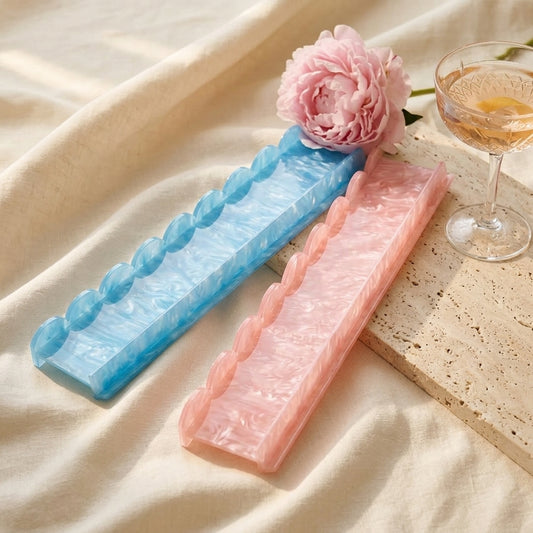
ALOXO Pearl Shell Mahjong Racks with Integrated Pushers
Handcrafted pearl shell finish provides seamless aesthetic harmony for luxury Mahjong gatherings. Sturdy construction and smooth magnetic pusher glide protect fine table finishes while keeping your tile rows impeccably organized.
TIMELESS SHIMMER & ELEGANCE
VIEW PRODUCT DETAILSPractical Step-by-Step SOP for counting wall from east and Dealing
To establish a smooth, professional rhythm during your home tournaments, players must adhere to a standardized sequence of physical setup actions. This standard operating procedure ensures that every wall is built to official dimensions and that the initial distribution of tiles proceeds without confusion or delays. Proper execution saves setup time and builds a sense of quiet sophistication around the table.
Before beginning the game, players must verify they have all the required tabletop essentials. This includes one full set of 160 weighted tiles, four aligned pearl shell racks, an official National Mah Jongg League rules card, a non-slip noise-reduction mat, and two calibrated gemstone dice. Having these elements properly laid out prevents interruptions and protects the high-gloss finishes of your specialized gaming equipment.
Step 1: Unrolling the Acoustic Foundation and Aligning the Racks
Unroll the protective 3mm noise-reduction mat over the center of the table, smoothing out any minor ripples to create a perfectly flat playing surface. Align the four pearl shell racks so that each player sits comfortably behind a rack, leaving a uniform spacing of 28 inches between opposing player edges. Place the integrated pushers flush against the back of the racks to ensure they do not obstruct the initial tile setup. Ensure the table lighting is positioned directly overhead to minimize shadows on the tile faces during play.
Standard specifications require a 3mm thick neoprene backing on the table mat to absorb structural vibrations. Each of the four racks must sit parallel to the table edge, with a clear distance of eight inches from the rack front to the edge of the table to allow comfortable space for player hands. This spacing ensures that cards and discarded tiles remain neatly organized throughout the match.
Before proceeding, inspect the table surface to confirm that the mat lies completely flat without bunching at the corners. To avoid minor scratching on the high-gloss mother-of-pearl backs, never drag tiles face-down across bare wooden surfaces; always utilize the padded mat for all shuffling and building phases.
Step 2: Shuffling the 160 Acrylic Masterpieces and Executing the Charleston
Place all 160 tiles face down on the center of the mat and begin a vigorous, circular shuffling motion using both hands. Distribute the tiles evenly among all four players so that each individual can begin building their segment of the protective barrier. Build a double-layered wall of tiles directly in front of each rack, with each layer consisting of nineteen to twenty tiles stacked neatly on top of one another. Execute the standard Charleston phase by passing unwanted tiles to neighboring players in the prescribed sequence outlined on the official league card.
According to official mahjong wall building rules, each player must construct a wall that is exactly two tiles high and nineteen to twenty tiles long. The completed walls must sit snugly against the front face of the pusher arms, ensuring they can be smoothly extended into the central playing area when called upon.
Verify that the double-layered walls are perfectly straight and do not lean forward or backward. A quick tap with the edge of the rack can quickly align any misaligned tile stacks, preventing accidental wall collapses during the subsequent dice rolling phase.
Step 3: Rolling Dice and Applying the wall break math
Hand the two calibrated gemstone dice to the designated player who is acting as the East wind for this round. determining first dealer in mahjong is often decided by a preliminary dice throw, with the highest roller earning the East position. Toss the dice gently into the open center of the table, ensuring they bounce multiple times on the padded mat to guarantee a completely random result. Add the two numerical values shown on the upward faces of the landed dice to calculate the final sum for the wall-breaking position.
Under official east wind dealer rules mahjong, the dealer must roll a combined sum between two and twelve. This total dictates both the target wall and the exact tile stack where the physical break will occur, adhering strictly to the counter-clockwise rotation starting from East.
Ensure both dice come to a complete, flat rest on the mat before reading the values; if a die lands tilted against a tile or rack, it must be re-rolled immediately. Encourage players to practice a gentle wrist-flick release to maximize the rolling distance without launching the dice off the table.
Step 4: Executing the count from the right-hand corner and leaving loose tiles
Locate the target wall indicated by the dice roll, then begin counting the double-stacked tiles starting from the far right-hand corner of that specific wall. Count toward the left, moving stack by stack until the counted total matches the exact sum of the rolled dice. Push the remaining tile stacks to the left slightly to create a physical gap, leaving the counted stacks on the right untouched. Leave any remaining loose tiles at the end of the wall intact, ensuring they are positioned securely for the end-of-game draws.
The rules of breaking wall from right state that the count must always proceed from right to left, stack by stack. For example, if the dice total wall breaking sum is eight, the player must count off exactly eight double-stacks from the right corner, then make the physical break immediately to the left of the eighth stack.
Double-check the count before making the physical break, as miscounting at this stage can disrupt the tile sequence for the entire game. If a mistake is made, carefully rebuild the wall segment and recount from the right corner to restore the correct order.
Step 5: Tapping and separating the first two tiles for the East dealer to begin dealing rounds
Separate the first two stacks of tiles to the left of the break point to initiate the tile distribution process. Slide the first block of four tiles toward the East player, who will place them onto their rack to begin building their hand. Proceed to distribute tiles in blocks of four, moving in a clockwise direction around the table to each player in turn. dealing tiles in american mahjong requires each player to receive twelve tiles, followed by a final draw where East takes two tiles and the remaining players take one tile each.
The initial deal requires three complete rounds of four-tile blocks for each player, bringing everyone to a total of twelve tiles. East then takes the first and third tile from the top layer of the next stack, while the remaining players take one tile in turn, leaving East with fourteen tiles and the others with thirteen.
Verify that the tile faces remain hidden from view during the entire dealing process to maintain total game secrecy. Once all tiles are distributed, players should immediately organize their hands on their racks, preparing to begin the active discard and call phase.
Elevating Setup Elegance with Premium Dice and Tile Craftsmanship
The aesthetic choices made for your tabletop setup directly influence the atmosphere of your weekly games. While mass-market plastic options provide basic functionality, they lack the satisfying weight, precise balance, and artistic beauty of premium luxury materials. Upgrading to hand-engraved acrylic and natural gemstone dice transforms each match into a memorable, elegant ritual.
Comparison of Luxury vs. Mass-Market Tabletop Solutions
| Criteria | ALOXO Luxury Acrylic & Gemstone Solution | Mass-Market Plastic Solution |
|---|---|---|
| Material Density | Solid 30g cast acrylic with premium gemstone core | Lightweight hollow molded plastic |
| Backing Style | Iridescent mother-of-pearl with gold accents | Plain solid color injection molded backing |
| Engraving Style | Deep hand-engraved and hand-painted lines | Shallow machine-stamped or printed surfaces |
| Acoustic Feedback | Rich, satisfying low-frequency clack sound | Harsh, hollow high-pitched plastic rattle |
| Dice Calibration | Natural gemstone hand-carved to balance standards | Uncalibrated plastic with potential air pocket bias |
| Pusher Glide | Smooth magnetic pusher alignment system | Sticky wooden racks with metal peg sliders |
| Scratch Resistance | High scratch-resistant protective resin coat | Easily scuffed and dulled by table friction |
| NMJL Compliance | Full 160-tile compliance with official jokers | Often limited to 144 tiles lacking extra jokers |
Hand-Engraved Acrylic vs Printed Bakelite/Plastic
When selecting your permanent set, understanding how to choose mahjong dice and matching tiles is critical. Hand-engraved acrylic tiles feature deep, precise grooves that hold rich pigment secure from surface wear. In contrast, cheap printed plastic or Bakelite sets often lose their face designs after a few months of active play, leaving players struggling to distinguish between characters and suits. The weight of premium acrylic also provides a substantial feel in the hand, making every draw and discard feel intentional and satisfying.
Integrated Acrylic Pushers vs Wood Racks
The movement of the tile walls during play should be effortless and silent. Traditional wooden racks often feature metal pins or rough-cut wood pushers that snag on the tabletop mat, disrupting the flow of the game. Modern acrylic racks with integrated magnetic pushers glide smoothly across the non-slip mat surface, allowing the player to extend their wall segment with a simple, fluid motion. This elegant design keeps the playing field neat and organized while protecting the delicate mother-of-pearl backing on your custom tiles.
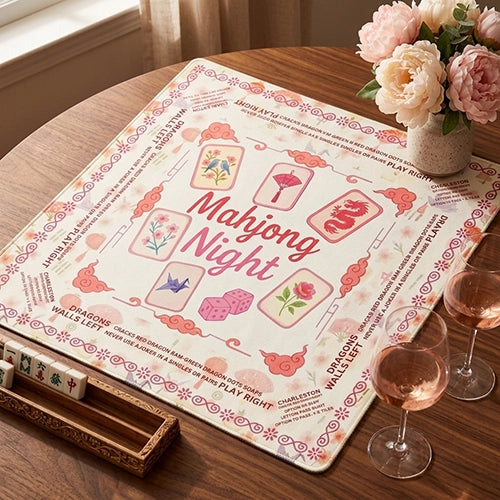
ALOXO Pink Floral Non-Slip Mahjong Mat
Protect cherished tabletop surfaces while reducing tile clatter to an elegant, satisfying murmur. Features non-slip textured backing that lays completely flat straight out of the storage tube without creasing or bunching.
DAMPENS NOISE, ELEVATES STYLE
VIEW PRODUCT DETAILSTable Etiquette and Care Protocols for Luxury Gaming Accessories
To ensure your premium acrylic tiles and natural gemstone dice remain in pristine condition for decades, players should follow specific care and handling guidelines. Proper maintenance preserves the high-gloss shine and prevents the subtle buildup of finger oils that can dim the shimmer of mother-of-pearl elements. Establishing clear rules for table use also prevents accidental physical damage during intense matches.
Post-Game Cleaning Protocol
At the conclusion of each gaming session, take a moment to wipe down the faces and backs of the tiles using a dry, lint-free microfiber cloth. This simple action removes trace oils, moisture, and dust without the need for harsh chemicals. Avoid using paper towels or abrasive sponges, as these can create microscopic scratches on the polished acrylic surfaces over time, gradually dulling their brilliant clarity.
Safe Polishing and Luster Care
If your tiles require a deeper clean after a season of active play, use a damp cloth with mild soapy water, taking care to avoid any ammonia-based glass cleaners or solvents. Alcohol-based solutions can cause fine acrylic structures to craze or crack along the engraved lines, ruining the hand-painted designs. Gently buff the mother-of-pearl backs with a dry cloth to restore their natural luster, ensuring they continue to catch the light beautifully during your next gathering.
Climate-Controlled Storage Checklist
To protect your investment from environmental wear, always utilize a structured, padded storage case between games. This prevents the tiles from clacking together during transport and safeguards the delicate corners of your precision racks. Adhere to the following storage practices:
- Store the tile set in a dedicated climate-controlled room to avoid extreme heat or freezing temperatures.
- Keep tiles arranged flat in their custom felt-lined trays rather than piling them loosely in a bag.
- Avoid placing heavy objects on top of the storage case to prevent structural warping of the racks.
- Roll the non-slip mat face-out and store it inside its protective tube to keep the edges flat.
- Place gemstone dice in their individual velvet pouches to protect them from chipping.
- Never leave the set in direct sunlight for extended periods to preserve pigment vibrancy.
- Ensure all components are completely dry before closing the storage case to prevent moisture buildup.
Frequently Asked Questions about rolling dice to break mahjong wall (FAQs)
- How does the dealer calculate the exact wall-breaking point? - The dealer rolls two dice and adds the values together. Starting with their own wall as number one, they count counter-clockwise around the table to identify the target wall, then count that many stacks from the right corner of the target wall to locate the exact break point.
- In which direction do players count the tiles to break the wall? - Players must always count the tile stacks starting from the far right-hand corner of the designated wall and move toward the left. The physical break is then made immediately to the left of the last counted stack, keeping the right-side tiles intact.
- What happens to the remaining loose tiles on the dealer rack? - The loose tiles remaining on the right side of the break point are left untouched on the rack. They serve as the final tiles of the game, used only if the round continues to the very end of the wall.
- Why are gemstone dice preferred over lightweight plastic alternatives? - Gemstone dice provide a superior physical weight and balanced density, ensuring a truly random roll on the mat. Their refined aesthetic and satisfying roll sound elevate the overall atmosphere of the game, reflecting a commitment to quality.
- How does a noise-reduction mat affect the dice rolling experience? - A premium 3mm neoprene mat dampens the sharp clatter of tumbling dice, transforming it into a soft, luxurious murmur. The textured surface also prevents the dice from sliding excessively, ensuring they bounce naturally and land flat for easy reading.
Elevate Your Tabletop Elegance with ALOXO Luxury Mahjong Collections
Invest in Heirloom Quality for Your Weekly Club Gatherings
Elevate your table presence and enjoy a flawless playing experience with the premium collections from ALOXO. Our hand-engraved 160-piece acrylic sets, natural gemstone dice, and noise-reduction mats are designed for players who appreciate true craftsmanship and timeless elegance on every turn. Discover the difference of weighted tiles that are crafted to endure and designed to be passed down through generations.
Explore the Complete ALOXO Tabletop Collection
*Disclaimer: All craftsmanship insights and gameplay recommendations in this article are based on the hands-on experience of the ALOXO design team and feedback from seasoned American Mahjong players. Always store luxury acrylic pieces in padded cases and avoid chemical cleaning agents. Contact us anytime for personalized set care and consultation.