
Dealing Tiles in American Mahjong: Step by Step
Mastering the art of dealing tiles in american mahjong transforms routine social gatherings into highly refined, seamless luxury experiences on your ALOXO table setup. Eliminating the hollow clatter of cheap plastic sets while ensuring perfect National Mah Jongg League compliance establishes your reputation as an elite tabletop host.
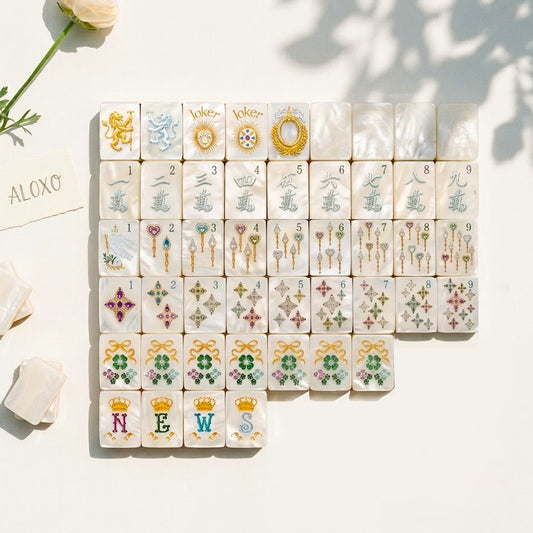
ALOXO Mother-of-Pearl & Gold Mahjong Set (160 Tiles)
Luxury 160-piece NMJL-ready American Mahjong suite engineered with substantial weighted acrylic and iridescent mother-of-pearl backs. Precision hand-engraved and color-filled to deliver the ultimate tactile clack and enduring beauty on your table.
OFFICIAL NMJL COMPLIANCE
VIEW PRODUCT DETAILSTable of Contents
- The Physics and Anatomy of Wall Building with Weighted Acrylic Tiles
- Evaluating Tabletop Performance: Hand-Engraved Acrylic versus Mass-Market Plastic
- The Definitive Step-by-Step Guide to dealing tiles in american mahjong and Dice Rolls
- Troubleshooting Dealing Errors and Rectifying Disrupted Tile Walls
- Luxury Setup Specifications and Investment Value for Tournament Hosts
- Frequently Asked Questions about dealing tiles in american mahjong (FAQs)
- Elevate Your Tabletop Elegance with ALOXO Luxury Mahjong Collections
The Physics and Anatomy of Wall Building with Weighted Acrylic Tiles
The foundation of any beautiful game of American Mahjong lies in the tactile perfection of the components. Understanding the material science behind modern luxury tiles explains why premium sets elevate the entire table experience. When players construct walls or slide tiles across a surface, they are interacting with a carefully engineered physical environment. The weight, texture, and density of the materials dictate the flow of play, the accuracy of the deal, and the satisfying physical feedback of every movement.
Material Origin and Nature
Luxury game pieces utilize optical-grade cast acrylic that is molecularly bonded with a natural mother-of-pearl composite backing. This high-density construction offers exceptional structural integrity and scratch resistance. Unlike molded plastic pieces that exhibit hollow cavities and unsightly seams, premium cast acrylic is cut from solid sheets, polished to a high luster, and weighted to simulate natural gemstone. The inclusion of a pearlescent shimmer layer adds a dynamic visual depth, catching room lighting elegantly during the tile washing phase.
Anatomy Breakdown
A standard luxury set engineered for National Mah Jongg League play consists of 160 tiles to accommodate all eventualities of American rule sets. The breakdown is as follows:
- Thirty-six Craks or character tiles split into four identical sets numbered one through nine.
- Thirty-six Bams or bamboo tiles featuring hand-engraved stalks and a custom bird motif on the one-bam.
- Thirty-six Dots or circle tiles showing nested geometric patterns with vivid color fills.
- Sixteen Wind tiles representing the four cardinal directions of East, South, West, and North.
- Twelve Dragon tiles featuring matching floral framing or traditional symbolic motifs.
- Eight Flower tiles decorated with custom hand-painted botanical artwork.
- Eight Jokers essential for wild-card combinations in standard American patterns.
- Eight Blank tiles intended as replacement spares or custom table markers.
Operating Principles for dealing tiles in american mahjong
The mechanical physics of weighted acrylic tiles significantly improves the speed and precision of the deal. With a density of approximately 30 grams per tile, these pieces possess a low center of gravity that prevents them from tipping over during the wall-pushing phase. When slid across a premium neoprene mat, the friction coefficient is minimized, enabling a smooth glide. The acoustic signature is deep and resonance-dampened, replacing the harsh high-frequency clicking of lightweight hollow plastic with a soft, authoritative clack that preserves a calm, luxurious room environment.
Evaluating Tabletop Performance: Hand-Engraved Acrylic versus Mass-Market Plastic
Discerning hosts and active club players often face the choice between investing in a high-end heirloom set or utilizing basic mass-market alternatives. The tactile differences influence not only the beauty of the room but also the flow and integrity of tournament-level play. Below is a structured analysis comparing premium custom sets against mass-produced commercial alternatives.
| Performance Criteria | ALOXO Luxury Acrylic Solution | Mass-Market Plastic Solution |
|---|---|---|
| Tile Weight and Density | 30 to 32 grams per tile, ultra-stable weighted core | 16 to 18 grams, hollow feeling and easily tipped |
| Graphic Application | Deep mechanical engraving with hand-painted resin fill | Surface printed silk-screen ink that wears off quickly |
| Backing Design | Multi-layered iridescent mother-of-pearl or gold foil | Solid flat color plastic prone to showing scratches |
| Acoustic Quality | Deep resonance, dampened clack, luxurious audioscape | Sharp, annoying clinking sounds that cause ear fatigue |
| Durability Rating | Tested for 10000+ shuffles with zero fading | Shows wear, yellowing, and pigment chipping within months |
| Official Compliance | Full 160-piece configuration for all NMJL cards | Often lacks proper joker counts or flower styles |
| Tactile Friction | Smooth polished edges, effortless gliding action | Sharp mold lines that snag on table mats and fabrics |
| Environmental Impact | Made to endure decades, supporting mind wellness causes | Disposable construction destined for landfills |
Hand-Engraved Acrylic versus Printed Plastic
The visual legibility of a tile is crucial during the rapid-fire decision-making of competitive play. Hand-engraved acrylic features deep groove cuts that prevent the painted color pigments from contacting the tabletop surface during shuffling. This preserves the design for decades. Mass-market plastic sets utilize flat surface printing where the ink is continuously exposed to fingernail scratches, skin oils, and friction. Over time, crucial details on characters and bamboo stalks fade, leading to reading errors and delayed game flow.
Integrated Acrylic Pushers versus Traditional Wood Racks
Modern premium racks fabricated from dense acrylic or brass-accented materials glide smoothly over table surfaces without leaving scuffs. Traditional wooden racks often suffer from splinters, loose brass hinges, or warped alignment that snags tiles. Using smooth, pearl shell patterned acrylic racks with integrated pushers ensures your walls are extended with effortless alignment, maintaining the neatness of the table and providing a beautiful presentation for all four players.
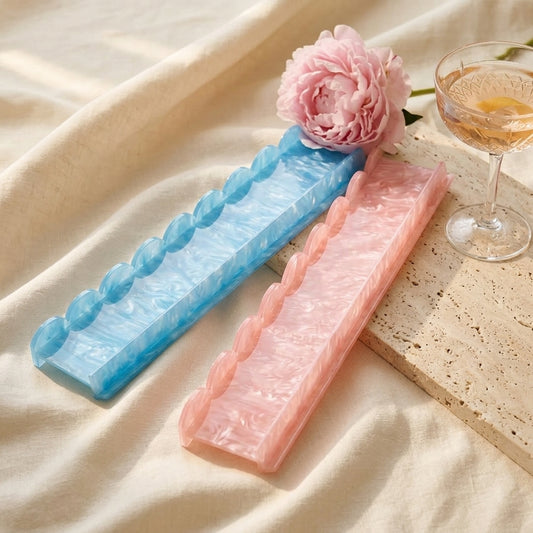
ALOXO Pearl Shell Mahjong Racks with Integrated Pushers
Handcrafted pearl shell finish provides seamless aesthetic harmony for luxury Mahjong gatherings. Sturdy construction and smooth magnetic pusher glide protect fine table finishes while keeping your tile rows impeccably organized.
TIMELESS SHIMMER & ELEGANCE
VIEW PRODUCT DETAILSThe Definitive Step-by-Step Guide to dealing tiles in american mahjong and Dice Rolls
To execute a flawless deal, the host must set up a quiet, structured environment and understand the mechanical sequence of the game. Before starting the deal, ensure you have gathered the essential elements: an official National Mah Jongg League rules card, a complete set of 160 weighted tiles, four matching racks equipped with integrated pushers, a non-slip noise-reduction mat, a set of natural gemstone dice, and a set of coin or token counters if tracking scores manually. Setting these items up on a dedicated, flat playing surface ensures that the subsequent deal proceeds with mechanical beauty and zero disruptions.
Step 1: The Ritual Washing and Wall Construction Setup
Begin the game by performing the traditional washing the tiles ritual mahjong. Place all 160 tiles face down on the center of the non-slip noise-reduction mat. All four players must use both hands to thoroughly shuffle the pieces in circular motions, producing a soothing clacking sound. This process ensures complete randomness and cleanses the energy of the table. Once the tiles are mixed, each player constructs a solid wall of tiles in front of their rack. Under official mahjong wall building rules, each of the four walls must consist of exactly 38 tiles, arranged in 19 stacked pairs, stacked two tiles high. Align the walls neatly against the front edge of the racks, ensuring the face-down backings remain completely hidden from view.
Step 2: Determining the First Dealer and rolling the Dice
With all four walls built, players must establish the starting dealer position. Refer to standard seat selection wind tiles rules to position players as East, South, West, and North. If players are already seated, use the natural gemstone dice to determine who will act as the first dealer. The active player rolls two dice onto the center of the mat. Under standard rules for determining first dealer in mahjong, the roller counts clockwise around the table, starting with themselves as one, South as two, West as three, and North as four, continuing until the total value of the dice roll is reached. The player identified by this count becomes the starting East Wind dealer. East now prepares to initiate the formal wall-breaking procedure.
Step 3: Breaking the Wall and Initiating Tile Distribution
The East Wind player rolls two natural gemstone dice onto the table to determine where the wall will open. This is known as the rolling dice to break mahjong wall procedure. East sums the values of the two dice. Starting from the right-hand end of the wall belonging to East, count leftward by stacked pairs of tiles until you reach the number rolled. For example, if the dice total is eight, count eight stacked pairs from the right edge. East breaks the wall by separating the eighth and ninth stacked pairs, creating a visible gap. The tiles to the right of the break remain on the rack, while the tiles to the left of the break are now ready for distribution. This precise count ensures tournament-level fairness and eliminates manual packing bias.
Step 4: dealing tiles in american mahjong four at a time
Once the wall is broken, tile distribution proceeds in a clockwise direction around the table. However, the movement of hands selecting the tiles from the wall must follow a clockwise flow. East begins the deal by taking the first two stacked pairs (a block of four tiles) immediately to the left of the wall break. The player to the right of East (South Wind) then takes the next two stacked pairs from the open wall. West Wind follows, taking the next four tiles, and North Wind takes four tiles after them. This clockwise distribution continues until each player has received three blocks of four tiles, giving everyone twelve tiles in total. Ensure that the tiles are taken directly from the open wall, moving from left to right around the broken wall structure, maintaining proper alignment of the remaining stacks.
Step 5: Finalizing the Deal and picking up fourteenth tile in american mahjong
With each player holding twelve tiles, East now proceeds to distribute the final tiles to complete the deal. East takes the first and third tiles from the top layer of the next two stacked pairs in the wall, which is the standard action under east wind dealer rules mahjong. This leaves East with fourteen tiles. East then hands the second tile from the top layer to South Wind, the next tile to West Wind, and the final tile in that sequence to North Wind. This ensures that South, West, and North each hold exactly thirteen tiles to begin their hands. This method complies fully with the official rules for picking up 14th tile. Players arrange their tiles secretly on their racks, preparing for the upcoming Charleston exchange phase.
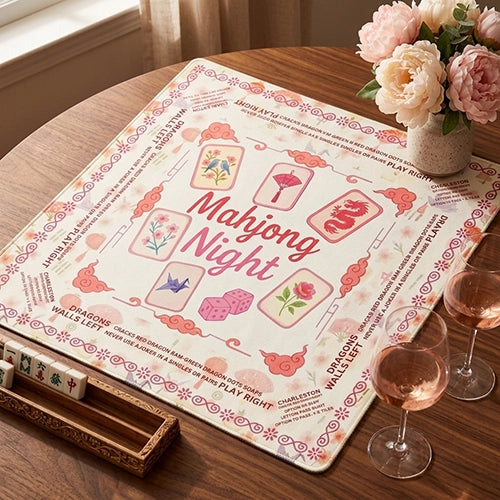
ALOXO Pink Floral Non-Slip Mahjong Mat
Protect cherished tabletop surfaces while reducing tile clatter to an elegant, satisfying murmur. Features non-slip textured backing that lays completely flat straight out of the storage tube without creasing or bunching.
DAMPENS NOISE, ELEVATES STYLE
VIEW PRODUCT DETAILSTroubleshooting Dealing Errors and Rectifying Disrupted Tile Walls
Even at highly experienced tables, mistakes during the deal can happen. Knowing how to handle these errors calmly and efficiently prevents disputes and keeps the game moving gracefully. Implementing standard protocols is the hallmark of a skilled tabletop host.
Top Five Fatal Beginner Mistakes
- Using harsh acetone cleaners or chemical solvents on acrylic tiles, which strips the protective shine and dissolves the hand-painted details.
- Playing directly on hard wood or glass dining tables without a protective non-slip mat, causing scratches to the table and damaging the corners of the tiles.
- Forcing warped or bent pushers against the tile walls, which can scratch the delicate mother-of-pearl backing.
- Failing to verify the 160-tile count before starting, leading to frustrating missing-joker errors during late-stage play.
- Storing the set in damp, non-ventilated spaces, which can degrade the carrying bag and cause the painted fill colors to fade.
Hidden Traps in the Market
Buyers must beware of mass-produced sets that use flat, printed plastic stickers instead of real mechanical engraving. These cheap stickers slide off or peel after a few game sessions. Additionally, many sellers market traditional 144-piece Chinese sets as American-ready without including the extra jokers, flowers, and blank tiles required by the National Mah Jongg League. Always confirm that your set contains a full 160-tile configuration and utilizes genuine engraved cast acrylic to ensure long-term durability.
Professional Tile Care Standard Operating Protocol
If a mistake occurs during the deal, such as a player taking the wrong number of tiles or a wall stack getting accidentally knocked over, refer immediately to the rules on how to handle a misdeal in mahjong. If the error is discovered before any player has made a discard, the deal is declared a misdeal. The tiles are returned to the center of the table, reshuffled, and redealt. If a single stack is disrupted, the dealer carefully reconstructs the wall using the pusher on the rack, ensuring no tile faces are exposed. Keep a microfiber cloth on hand to gently wipe away finger oils after cleanups, keeping the mother-of-pearl backs clean and shiny.
Luxury Setup Specifications and Investment Value for Tournament Hosts
For players who host regular social games or run competitive clubs, selecting the right equipment is a long-term investment. High-quality acrylic sets hold their value for decades, reducing the need to buy cheap replacements every season. Below are the key specifications and consulting options for our premium tabletop collections.
| Set Name or Accessory | Tile Dimensions and Weight | Material and Backing Style | Price Quote or Ideal Play Scenario |
|---|---|---|---|
| Mother-of-Pearl and Gold Set | 30mm x 23mm x 13mm, 31 grams | Cast acrylic with gold leaf shimmer backing | $385 USD, Timeless heirlooms for formal hosting |
| Sorbet Hot Pink Set | 30mm x 23mm x 13mm, 30 grams | Glossy pink acrylic, modern floral engraving | $365 USD, High-energy social clubs and weekend brunches |
| Pearl Cat Set | 30mm x 23mm x 13mm, 31 grams | Polished resin base, custom feline detailing | $375 USD, Whimsical styling for pet lovers and cozy spaces |
| Pink Floral Set | 30mm x 23mm x 13mm, 30 grams | Soft cream face, pink cherry blossom reverse | $365 USD, Spring garden parties and coastal getaways |
| Pearl Shell Racks Set | Length 18 inches, integrated brass pins | Hand-polished shell veneer, magnetic pushers | $125 USD, Premium table setup with smooth sliding action |
| Pink Floral Mat | 32 inches x 32 inches, thickness 3mm | Natural rubber base with soft polyester top | $55 USD, Noise reduction and table scratch protection |
| Floral Travel Bag | Custom fit, heavy-duty handle straps | Vegan leather accents with water-resistant fabric | $85 USD, Stylish transit for traveling hosts |
| Gemstone Dice Set | Set of 6 dice, 16mm standard cube | Natural quartz and amethyst, hand-carved | $45 USD, Elegant rolls for breaking the wall accurately |
| Custom Monogram Mat | 32 inches x 32 inches, thickness 3mm | Sublimated rubber, personalized lettering | $75 USD, Custom gifts for tournament directors and milestones |
| Clear Window Carry Case | Compact double-deck tray layout | Reinforced stitching, transparent viewing panel | $65 USD, Displaying beautiful tile backings while in transit |
Core Specs Analysis
When evaluating a new purchase, look closely at the tile dimensions and overall weight. A true tournament-quality American Mahjong tile should measure approximately 30mm high by 23mm wide by 13mm thick. This size fits perfectly on standard 18-inch racks while remaining easy to handle. Sets that weigh less than 28 grams per tile are usually made of cheap, hollow plastics that slide too easily and make a sharp, annoying sound during play. Insist on a 160-tile count to guarantee compatibility with all future National Mah Jongg League cards.
Budget-Based Selection Guidance
For casual social clubs that meet weekly for lunch or coffee, a combination of the Pink Floral Set and a Floral Travel Bag offers the perfect balance of portability and style. If you are a dedicated home host or are buying a milestone gift for a loved one, we recommend our complete Tabletop Suite. This premium package includes the Mother-of-Pearl and Gold Set, the Pearl Shell Racks, and a matching Noise-Reduction Mat. It provides everything needed to host elegant, tournament-level games right at home.
Lifetime Cost-per-Use Formulation
Investing in a high-end, hand-engraved acrylic set is highly cost-effective over time. A cheap, $80 printed plastic set often begins to fade, chip, or lose its look within a year of active play, requiring you to buy a replacement. In contrast, a premium $365 set is built to last for decades. Over ten years of regular weekly games, this high-end set costs less than $1 per game session. This makes it an exceptional, long-term investment that you can proudly pass down to the next generation of players.
Frequently Asked Questions about dealing tiles in american mahjong (FAQs)
- How many tiles are dealt to each player in American Mahjong? East Wind receives fourteen tiles, while South, West, and North Wind each receive thirteen tiles to begin. This ensures East can make the first discard to start the game.
- Which direction do you count when breaking the wall in American Mahjong? Always count from right to left along the top of the wall belonging to East, using the exact number rolled on the gemstone dice.
- What happens if there is a misdeal during tile distribution? If a player takes the wrong number of tiles or a wall stack is knocked over before anyone discards, the deal is canceled. Return all tiles to the center, wash them, and redeal.
- Why are natural gemstone dice preferred over lightweight plastic dice? Gemstone dice have a balanced, solid weight that ensures a truly random roll on fabric ma