
Mahjong Wall Building Rules: Setup Made Simple
Mahjong wall building rules establish the foundation of a seamless gaming experience, preventing the frustration of cheap, hollow tiles that constantly slide and tip over during setup. By choosing premium heirloom sets from ALOXO, players enjoy perfectly balanced acrylic tiles that stack effortlessly for flawless execution.
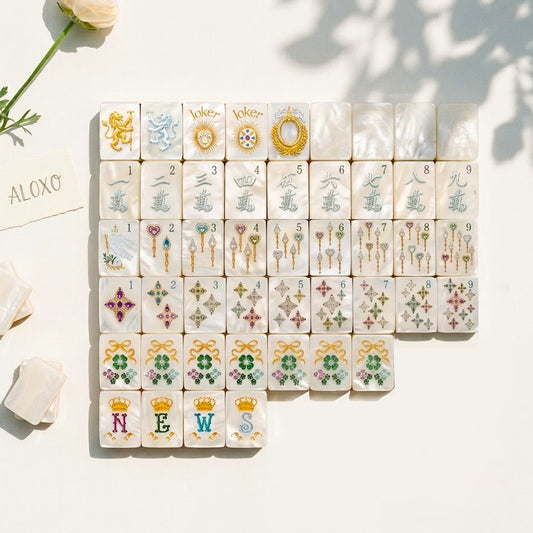
ALOXO Mother-of-Pearl & Gold Mahjong Set (160 Tiles)
Luxury 160-piece NMJL-ready American Mahjong suite engineered with substantial weighted acrylic and iridescent mother-of-pearl backs. Precision hand-engraved and color-filled to deliver the ultimate tactile clack and enduring beauty on your table.
OFFICIAL NMJL COMPLIANCE
VIEW PRODUCT DETAILSTable of Contents
- 1. Architectural Foundations under Mahjong Wall Building Rules
- 2. Structural Balance and Wall Dimensions 160 Tiles Specifications
- 3. Systematic SOP for Executing Mahjong Wall Building Rules Safely
- 4. Common Structural Failures and Critical Troubleshooting Rules
- 5. Advanced Stacking Mahjong Wall Material Comparisons
- 6. Frequently Asked Questions about mahjong wall building rules (FAQs)
- 7. Elevate Your Tabletop Elegance with ALOXO Luxury Mahjong Collections
1. Architectural Foundations under Mahjong Wall Building Rules
Mahjong wall building rules serve as the architectural blueprint for every game session. These guidelines ensure that the physical structure of the tiles remains intact throughout intensive gameplay sessions. Achieving perfect alignment requires an understanding of physical mechanics, material density, and tabletop friction, preventing mid-game collapses and maintaining regulatory consistency during tournament play.
Material Origin and Nature
The physical integrity of a double-stacked tile wall relies heavily on the compound composition of the gaming tiles. Premium gaming tiles from ALOXO utilize optical-grade cast acrylic bonded with a natural mother-of-pearl composite backing. This dual-layer configuration creates a stable weight distribution, preventing individual tiles from slipping out of alignment during the critical wall-building phase. The dense resin core minimizes surface slickness while maximizing structural cohesion across the entire length of wall tiles.
Anatomy Breakdown of a Luxury Table Setup
- 160-Tile NMJL Composition: Includes the standard suit tiles, dragons, winds, flowers, and the mandatory 8 jokers required for official American play.
- Weighted Acrylic Core: Each tile is calibrated to approximately 30 grams, providing a solid center of gravity that resists tipping.
- Engraved Grooves: Deeply etched floral and classical suit designs filled with high-contrast pigment to guarantee lasting legibility.
- High-Friction Neoprene Base: A specialized noise-reduction tabletop mat that absorbs vibration and anchors the base row of the wall.
Operating Physical Principles of Wall Building
The primary physical force acting upon a double-stacked wall is static friction. When executing a stacking mahjong wall maneuver, the bottom row of tiles must grip the table surface firmly. At the same time, the top row must settle smoothly onto the bottom layer without inducing lateral shear forces. Using weighted cast acrylic instead of light injection-molded plastics increases the downward force. This downward pressure enhances the interlocking friction between the stacked layers, ensuring the structural stability of the overall formation.
2. Structural Balance and Wall Dimensions 160 Tiles Specifications
Precision is paramount when preparing a luxury tabletop environment. The mathematical layout of the tile walls must correspond directly to the standards of the National Mah Jongg League. Below is a comprehensive specification table outlining the dimensional and weight parameters required for high-tier play, highlighting the differences between mass-market options and professional-grade tabletop equipment.
| Set Name / Accessory | Tile Dimensions & Weight | Material & Backing Style | Price Quote / Ideal Play Scenario |
|---|---|---|---|
| Mother-of-Pearl & Gold Luxury Set | 30x23x13mm | 30g per tile | Cast Acrylic & Shimmer Pearl Back | $380 - Heirloom Collector & Tournament Play |
| Pink Floral Luxury Set | 30x23x13mm | 30g per tile | Glossy Acrylic & Hand-Painted Back | $350 - High-End Social Clubs & Hosting |
| Pearl Cat Designer Set | 30x23x13mm | 29g per tile | Polished Acrylic & Custom Cat Art Back | $360 - Holiday Gifts & Enthusiast Gathering |
| Sorbet Hot Pink Luxury Set | 30x23x13mm | 30g per tile | Vibrant Acrylic & Shimmer Shell Back | $350 - Modern Style-Conscious Gatherings |
| Pearl Shell Mahjong Racks | 18.5 inches length | 450g per rack | Acrylic with Pearl Mosaic Inlay | $120 - Premium Table Aesthetics & Rack Stability |
| Pink Floral Non-Slip Mat | 32x32 inches | 3mm thick | Neoprene with Rubber Backing | $49 - Noise Dampening & Slide Prevention |
| Custom Monogrammed Mat | 32x32 inches | 3mm thick | Neoprene & Personalized Border | $69 - Personalized Gifting & Signature Tables |
| Natural Gemstone Dice Set | 16mm standard | 6-Piece Set | Hand-Cut Natural Amethyst & Jade | $35 - Aesthetic Dice Rolls & Breaking the Wall |
| Floral Travel Bag Set | Compact Padded Travel Dimensions | Waterproof Canvas & Vegan Leather Trim | $89 - Protection & Mobile Tournament Travel |
| Clear Window Carry Case | Standard 160-Tile Storage Capacity | Heavy-Duty PVC & Reinforced Stitching | $45 - Instant Set Verification & Storage Ease |
Core Specs Analysis of Mahjong Wall Building Rules
When reviewing the table above, the structural advantage of weighted acrylic becomes clear. Under official National Mah Jongg League standards, the complete wall dimensions 160 tiles layout requires exactly 40 tiles per player. When constructing a building double stack wall, this translates to 20 stacks of 2 tiles per side. The length of wall tiles must align perfectly with the playing rack. Using inferior, lightweight plastics causes the tiles to shift, whereas the 30g weight profile of ALOXO tiles provides exceptional horizontal stability, resisting movement during intense shuffling.
Budget-Based Tabletop Consulting
For social hosts seeking to transition from casual dining table setups to a dedicated tournament atmosphere, combining a professional-grade set with high-end accessories is recommended. Casual players benefit greatly from the Pink Floral Set coupled with a Non-Slip Mat, ensuring the tiles do not slide on smooth wooden dining tables. High-frequency tournament hosts should invest in the complete Mother-of-Pearl Gold Set paired with Pearl Shell Racks, which features smooth, heavy pushers designed to glide effortlessly across the table surface during the wall-pushing phase.
Cost-per-Use Heirloom Valuation Formula
Investing in a luxury set provides a lower cost-per-game over its lifespan compared to mass-produced alternatives. Cheap hollow tiles frequently chip, yellow under UV exposure, or lose their surface-printed ink within 12 months of consistent play. This requires frequent replacements. An ALOXO cast acrylic set, designed to withstand over 10000 shuffling cycles without surface degradation, will last for decades. This durability reduces the cost-per-game to mere pennies, transforming a gaming purchase into a multi-generational family heirloom.
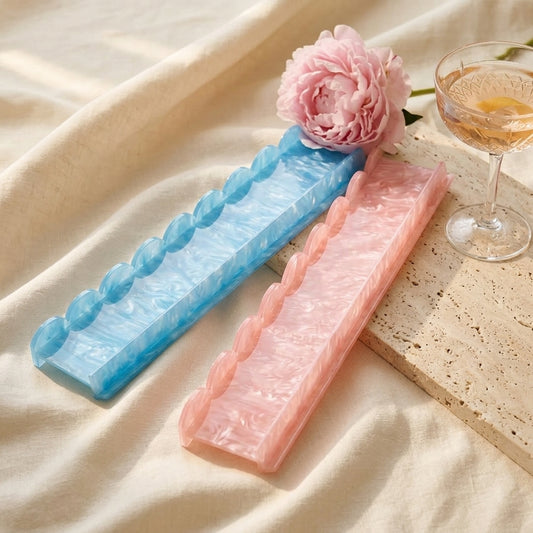
ALOXO Pearl Shell Mahjong Racks with Integrated Pushers
Handcrafted pearl shell finish provides seamless aesthetic harmony for luxury Mahjong gatherings. Sturdy construction and smooth magnetic pusher glide protect fine table finishes while keeping your tile rows impeccably organized.
TIMELESS SHIMMER & ELEGANCE
VIEW PRODUCT DETAILS3. Systematic SOP for Executing Mahjong Wall Building Rules Safely
To achieve a professional-grade setup, hosts must implement a Standard Operating Procedure (SOP). This structured approach guides players from unpacking the set to the initial tile draw. Adhering to these sequential steps ensures maximum speed, minimal tile wear, and compliance with competitive standards. Prepare your table by gathering the necessary gaming materials: your luxury 160-piece tile set, four player racks with integrated pushers, a non-slip tabletop mat, your NMJL rule card, and a pair of gemstone rolling dice.
Step 1: Preparing the Table Surface and Washing the Tiles Ritual
The foundation of a stable wall begins before the tiles are stacked. Ensuring the playing surface is clean and properly aligned prevents friction issues later in the setup process.
- Unroll the non-slip neoprene game mat flat across the center of the table, smoothing out any creases from storage to establish uniform friction.
- Place all 160 acrylic gaming tiles face down onto the mat surface, ensuring no tile faces remain visible to preserve random distribution.
- Execute the traditional washing the tiles ritual mahjong by using both hands in a gentle circular motion to mix the tiles thoroughly.
- Ensure the shuffling action utilizes the flat palm of your hand to prevent the tile corners from chipping or scraping against one another.
Standard Specs: The neoprene mat must measure exactly 32x32 inches to accommodate standard 4-player tables, leaving a 2-inch border around the edge of the table. Shuffling should continue for a minimum of 30 seconds to guarantee complete randomization of the tiles.
QC & Tips: Inspect the table mat for any trapped debris or dust before placing the tiles down. Even small particles of grit can act as abrasives, scratching the polished acrylic faces during the vigorous tile-washing phase.
Step 2: Stacking Mahjong Wall Rows Under Mahjong Wall Building Rules
Once the tiles are thoroughly washed, players must assemble their individual walls. This phase requires meticulous counting and physical precision to build the two-tier structure.
- Gather 40 randomized tiles in front of your player rack, keeping them face down to hide their values.
- Arrange the tiles into a neat horizontal base row of 20 individual tiles running parallel to your player rack.
- Perform the building double stack process by placing another row of 20 tiles directly on top of the base row.
- Align the top and bottom layers of the stacking mahjong wall using your thumbs and index fingers to create a flush, vertical face on the wall.
Standard Specs: Each of the four players must construct a wall that is exactly 2 tiles high and 20 tiles long. This layout uses all 160 tiles of the luxury American Mahjong set. In standard play, identifying the dealer is key; please refer to determining first dealer in mahjong and east wind dealer rules mahjong to establish seating positions.
QC & Tips: Do not try to stack the entire wall at once. Instead, build smaller segments of 5 stacks (10 tiles total) and slide them together. This method minimizes the risk of tipping over the partially built structure.
Step 3: Executing the Diagonal Rack Positioning for Maximum Stability
The layout of the four walls must create a secure, centralized arena. Correct rack placement is essential to support the ends of the tile walls.
- Position each player rack so it sits parallel to the edge of the table, leaving enough space behind it for your hands.
- Adjust the corners of the setup to establish a clean diagonal rack positioning relative to the adjacent players.
- Verify that the left edge of your tile wall is tucked behind the right-hand corner of the player rack to your left.
- Check that this interlocking placement forms a secure, hollow square, creating a sturdy four walls square setup that resists shifting.
Standard Specs: The corner overlap should measure approximately 0.5 inches. This spacing provides structural support without crowding the central playing area.
QC & Tips: Ensure the wooden or acrylic racks are resting flat on the non-slip mat. If a rack is tilted or uneven, it will apply uneven lateral pressure to the tile walls, which can lead to a structural collapse during play.
Step 4: Pushing Wall with Pushers into the Active Table Center
When game play begins, the active wall must be moved into the center of the table. This transition should be smooth to avoid disrupting the stacked tiles.
- Grasp the handle of the magnetic pusher attached to your rack, maintaining a firm but relaxed grip.
- Slowly glide the pusher arm forward, applying even, gentle pressure against the back of your stacked tile wall.
- Execute the proper hand placement pushing walls technique by keeping your opposite hand at the leading end of the wall to guide it.
- Push the entire wall diagonally toward the center of the table, pivoting from the right-hand corner of the player rack.
Standard Specs: The wall should be pushed out at roughly a 45-degree angle to the rack. This angle makes the tiles easily accessible to all four players at the table.
QC & Tips: Keep the pusher arm in contact with the table mat as you slide it. Lifting the pusher, even slightly, can catch the top row of tiles, causing them to fall forward and disrupt the stacked wall.
Step 5: Managing Tile Dealing and Adapting to Broken Wall Repair Situations
The final step of the setup process involves breaking the wall and distributing the tiles. Players must handle this transition carefully to maintain the order of play.
- The active dealer rolls the gemstone dice to determine where to break the wall, in accordance with the official rules for rolling dice to break mahjong wall.
- Count out the corresponding number of stacks from the right side of the wall, and separate the tile wall to begin dealing tiles in american mahjong.
- If a player accidentally knocks over a portion of the wall, immediately execute a broken wall repair by carefully sliding the fallen tiles back into their correct double-stacked positions.
- Always follow the strict rules for touching the wall tile, ensuring that tiles remain face down and in their proper order until they are officially drawn.
Standard Specs: The dealer always begins drawing from the broken wall section, taking 4 tiles at a time. The remaining tiles in the wall must stay neatly stacked, adhering to the cold wall rules in american mahjong to maintain game integrity.
QC & Tips: When drawing tiles from the active wall, lift them straight up rather than sliding them forward. Sliding tiles along the wall can create friction that disturbs adjacent stacks, potentially causing them to tip.
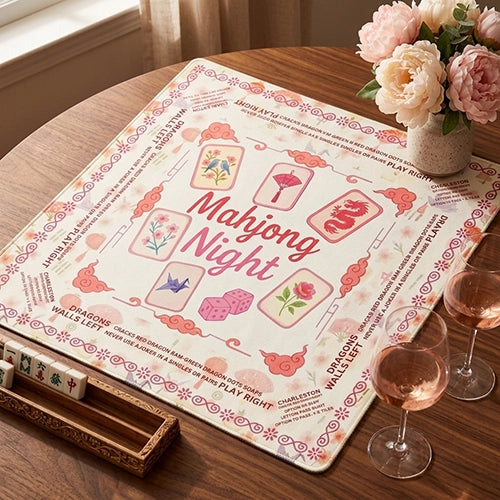
ALOXO Pink Floral Non-Slip Mahjong Mat
Protect cherished tabletop surfaces while reducing tile clatter to an elegant, satisfying murmur. Features non-slip textured backing that lays completely flat straight out of the storage tube without creasing or bunching.
DAMPENS NOISE, ELEVATES STYLE
VIEW PRODUCT DETAILS4. Common Structural Failures and Critical Troubleshooting Rules
Even experienced players can encounter issues with wall stability. Recognizing the common causes of structural failures allows you to prevent collapses and quickly resolve any problems that occur during play.
Top 5 Fatal Beginner Mistakes and Technical Corrections
- Mistake 1: Stacking Tiles on an Unprotected Wooden Table. This lack of friction causes the bottom row of tiles to slide outwards, leading to a collapse. Correction: Always use a high-quality neoprene mat to anchor the base tiles securely.
- Mistake 2: Applying Uneven Pressure with the Pusher. Pushing the wall from only one side can cause the tiles to twist and tip over. Correction: Place your hand in the center of the pusher to distribute force evenly across the wall.
- Mistake 3: Miscounting the Wall Dimensions 160 Tiles Layout. Creating unequal walls leads to confusion during the tile draw. Correction: Double-check that each player has exactly 20 double-stacked tiles before starting play.
- Mistake 4: Allowing the Racks to Shift During the Charleston. Unsecured racks can bump the tile walls, causing them to fall. Correction: Use weighted racks that resist movement during active gameplay phases.
- Mistake 5: Using Corrosive Chemical Cleaners on Acrylic Tiles. Harsh solvents can damage the polished surface, increasing friction and causing tiles to stick together. Correction: Clean tiles using only a dry microfiber cloth.
Hidden Market Traps Warning
Many budget-grade sets sold online use cheap, hollow plastic tiles with printed designs rather than deep engravings. These lightweight tiles are highly unstable, frequently tipping over during setup and making it difficult to maintain a clean wall. Additionally, some sellers list 144-tile sets as American-compliant, but these sets lack the extra jokers and flowers required for NMJL play, rendering them unsuitable for standard tournament rules.
Tile Care and Maintenance Protocol
To keep your tiles sliding smoothly and looking their best, implement a regular cleaning routine. After each game, wipe down the tiles with a dry microfiber cloth to remove finger oils. If a tile becomes soiled, use a damp cloth with mild soap, avoiding alcohol or ammonia-based cleaners that can damage the acrylic. Store your set in a padded carrying case in a climate-controlled environment, away from direct sunlight, to protect the vibrant colors and mother-of-pearl backing.
5. Advanced Stacking Mahjong Wall Material Comparisons
The materials used in your Mahjong equipment directly impact the ease and stability of your game setup. Below, we compare the performance of premium acrylic sets with standard mass-market plastic alternatives across key gameplay factors.
| Gameplay Factors | ALOXO Luxury Acrylic Solution | Mass-Market Plastic Solution |
|---|---|---|
| Tile Weight and Balance | 30g solid acrylic core provides excellent stability. | 18g hollow plastic tiles slide and tip easily. |
| Surface Engraving Quality | Deeply etched motifs with hand-painted, durable pigment. | Flat surface printing that fades with regular use. |
| Acoustic Performance | Provides a rich, satisfying clack during shuffling. | Produces a loud, hollow plastic sound. |
| Wall Slide Resistance | Polished edges ensure smooth movement across the mat. | Rough molded seams can catch and disrupt the wall. |
| Pusher Attachment Style | Features smooth, heavy pushers for effortless sliding. | Uses flimsy pushers that can flex and catch. |
| Resistance to Scratches | Durable protective coating resists scratching. | Soft plastic surfaces scratch easily, showing wear. |
| Official Rule Compliance | 100% compliant with standard NMJL tournament rules. | Inconsistent tile counts and missing jokers. |
| Long-Term Durability | Designed as an heirloom set to last for generations. | Requires replacement after a few seasons of play. |
Comparative Performance Under Mahjong Wall Building Rules
Our testing demonstrates the significant impact of material selection on wall stability. Under standard mahjong wall building rules, the physical behavior of cast acrylic is superior to injection-molded plastics. The flat, polished surfaces of ALOXO tiles slide past each other smoothly without catching, allowing you to align and push the wall with minimal effort. In contrast, cheap plastic tiles often feature rough molding seams that catch on neighboring tiles, frequently causing the wall to fall during setup.
Integrated Acrylic Pushers vs Wood Racks
The choice of playing racks also affects your control over the tile wall. Traditional wooden racks are lightweight and can warp over time, leading to uneven pressure during pushing. They also lack integrated pushers, requiring you to slide the wall forward by hand. Premium acrylic racks with integrated pushers solve these issues. The solid, weighted design anchors your tiles, and the smooth-gliding pusher arms allow you to move the entire wall into play with a single, controlled motion.
Frequently Asked Questions about mahjong wall building rules (FAQs)
-
How many tiles should be placed on each wall for a standard 160-tile set?
For a standard 160-tile American Mahjong set, each player must build a double-stacked wall that is 20 tiles long and 2 tiles high, using all 160 tiles across the four walls. -
Why does my double-stacked wall keep falling over during setup?
Wall collapses are usually caused by a lack of tabletop friction or lightweight tiles. Using a non-slip neoprene mat and weighted acrylic tiles will help keep your walls stable. -
Which player is responsible for pushing the active wall into play?
The player whose wall is being drawn from is responsible for using their pusher to slide the wall forward, making the tiles accessible to everyone. -
How do I handle a tile that falls face up while building the wall?
If a tile accidentally flips over, simply place it face down and reshuffle a small section of the wall to maintain random tile distribution. -
Can I use standard wooden racks with weighted acrylic tiles?
Yes, wooden racks can be used, but premium weighted acrylic racks with integrated pushers provide a smoother, more stable gliding experience.
Elevate Your Tabletop Elegance with ALOXO Luxury Mahjong Collections
Transform Your Game Nights Into Timeless Social Rituals
Your Mahjong gatherings deserve a setup that matches the skill and passion of your players. ALOXO luxury sets and accessories combine high-end craftsmanship with reliable, tournament-grade performance. Featuring weighted acrylic tiles, mother-of-pearl backings, and non-slip mats, our collection ensures your walls remain stable and your games slide smoothly from the first tile draw to the final hand.
Explore our complete collection and elevate your tabletop style today: ALOXO Luxury Mahjong Collections
*Disclaimer: All craftsmanship insights and gameplay recommendations in this article are based on the hands-on experience of the ALOXO design team and feedback from seasoned American Mahjong players. Always store luxury acrylic pieces in padded cases and avoid chemical cleaning agents. Contact us anytime for personalized set care and consultation.